


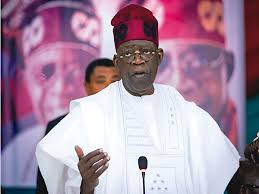
On May 29, 2023, President made a declaration that would redefine Nigeria’s economy and shape the realities of millions of citizens: “Subsidy is gone.”
The statement, delivered during his inauguration at Eagle Square in Abuja, marked the end of Nigeria’s decades-long petrol subsidy regime and signaled the beginning of one of the boldest economic reform programmes in the country’s modern history.
Three years later, the impact of that decision continues to dominate national conversations.
While supporters describe the reforms as painful but necessary steps toward economic recovery, critics argue that ordinary Nigerians have borne the heaviest burden of policies implemented without adequate social protection.
The Tinubu administration’s economic reforms have produced two parallel realities. On one side, key macroeconomic indicators have shown signs of improvement, investor confidence is gradually returning, and Nigeria is regaining credibility in global financial markets. On the other side, millions of Nigerians continue to struggle with rising living costs, inflation, currency depreciation, unemployment and declining purchasing power.
The central debate is no longer whether reforms were needed. Increasingly, many economists agree that the previous economic system had become unsustainable. The real question is whether the reforms were implemented in a manner that adequately protected citizens while laying the foundation for long-term prosperity.
The Economy Tinubu Inherited
When Tinubu assumed office in 2023, Nigeria’s economy was already under severe pressure. The government was spending trillions of naira annually on petrol subsidies despite being one of Africa’s largest crude oil producers.
The subsidy regime had become one of the biggest drains on public finances. In 2022 alone, subsidy payments reportedly exceeded N4 trillion more than the federal government’s combined spending on some key sectors such as health and education during certain budget cycles.
At the same time, Nigeria’s foreign exchange system had become deeply distorted. Multiple exchange-rate windows existed simultaneously, encouraging corruption, currency speculation and arbitrage.
Businesses struggled to access foreign exchange for raw materials and machinery, while foreign investors found it increasingly difficult to repatriate profits. Investor confidence weakened significantly, capital inflows declined and pressure mounted on Nigeria’s foreign reserves.
Public debt also reached worrying levels. In some quarters before Tinubu took office, the government reportedly spent almost all federally retained revenue servicing debt obligations, leaving little room for infrastructure, healthcare, education or social investment.
Rather than introducing gradual reforms, the Tinubu administration chose to confront several economic distortions at once. Fuel subsidies were removed, the exchange rate was liberalised and the Central Bank of Nigeria adopted tighter monetary policies aimed at stabilising inflation and restoring investor confidence.
The reforms represented Nigeria’s most ambitious shift toward market-driven economic policies in decades.
Why Economists Supported the Reforms
From an economic perspective, many experts believed the reforms were inevitable.
Economists had long argued that fuel subsidies were inefficient, corrupt and economically regressive. Although subsidies were politically defended as a way of helping poor citizens, studies repeatedly showed that wealthier Nigerians benefited more because they consumed larger quantities of fuel through vehicles, generators and industrial activities.
The subsidy regime also encouraged large-scale smuggling of petrol into neighbouring countries where fuel prices were higher, resulting in enormous financial losses for Nigeria.
Similarly, the multiple exchange-rate system distorted investment decisions and rewarded politically connected businesses with access to cheaper official dollars.
Manufacturers and productive businesses struggled under the system, while speculative traders profited from exchange-rate gaps.
International institutions such as the and the welcomed the reforms, arguing that Nigeria was finally confronting long-postponed structural problems.
Global investors also viewed the reforms as evidence that the Tinubu administration was willing to make politically difficult decisions that previous governments had repeatedly avoided.
The Immediate Shock on Nigerians
While the reforms improved economic credibility in some international circles, they also triggered one of Nigeria’s worst cost-of-living crises in decades.
Petrol prices rose sharply almost immediately after subsidy removal. Fuel prices jumped from about N185 per litre in May 2023 to over N600 within weeks and later climbed close to N1,000 in some areas during supply disruptions.
Transportation costs surged nationwide because transport affects virtually every part of Nigeria’s economy, from food distribution to manufacturing and trade.
Food prices rose dramatically as inflation accelerated. By December 2024, inflation reportedly climbed to about 34.8 percent one of the highest levels recorded in recent years.
Basic commodities such as rice, garri, beans, bread, cooking oil and tomatoes became increasingly expensive for ordinary Nigerians.
At the same time, the liberalisation of the foreign exchange market caused the naira to depreciate sharply against the dollar. Within months, the naira lost more than two-thirds of its value, exposing years of pressure that had previously been suppressed through administrative controls.
The weaker naira made imported goods more expensive, affecting pharmaceuticals, industrial equipment, telecommunications infrastructure, school fees and manufacturing inputs.
Many businesses struggled to survive under rising operational costs, while households faced worsening economic hardship.
Supporters Say Reforms Prevented a Bigger Crisis
Supporters of Tinubu’s policies argue that the reforms were not optional but necessary to prevent a larger economic collapse.
According to them, Nigeria was heading toward a dangerous fiscal and foreign exchange crisis before 2023. Continuing fuel subsidies and maintaining artificial exchange rates could eventually have resulted in severe debt distress, import shortages and worsening economic instability.
They argue that the reforms helped stabilise the economy by improving foreign exchange transparency, reducing fiscal leakages and rebuilding investor confidence.
Since the reforms began, Nigeria’s foreign reserves have improved and the foreign exchange market has shown periods of greater stability compared to the chaotic conditions before 2023.
Investor sentiment has also improved. One major development came in March 2026 when FTSE Russell announced plans to upgrade Nigeria from “Unclassified” to “Frontier Market” status, effective September 2026.
The decision reflected improvements in market accessibility, regulatory oversight and capital repatriation systems.
For years, Nigeria had struggled to attract foreign investment because investors feared foreign exchange restrictions and difficulties accessing their funds.
The liberalisation of the exchange market under Tinubu, despite its painful domestic effects, was viewed externally as a major step toward restoring transparency and investor confidence.
The positive sentiment was further strengthened when upgraded Nigeria’s sovereign credit outlook, citing improving policy credibility and relative stability in the foreign exchange market.
Such upgrades are important because they influence how international investors assess risk and determine borrowing costs for countries like Nigeria.
Critics Question the Management of the Reforms
Despite the macroeconomic gains, critics argue that the reforms were implemented too abruptly and without sufficient protection for vulnerable citizens.
Many analysts believe the government failed to properly sequence the reforms before removing subsidies and floating the naira.
Public transportation systems remained weak before fuel prices rose sharply. Social protection programmes were limited and poorly coordinated. Domestic refining capacity was still inadequate, forcing Nigeria to continue importing large volumes of refined fuel.
Critics also argue that wage adjustments did not keep pace with inflation, leaving workers and low-income households struggling under severe financial pressure.
Economic reforms, they argue, are not merely technical decisions but political choices that redistribute pain and opportunities across society.
Countries that successfully implemented adjustment programmes often combined reforms with strong welfare systems, industrial policies, institutional reforms and credible communication strategies.
Nigeria, however, attempted reforms within a fragile environment marked by insecurity, weak infrastructure, poor governance and widespread public distrust.
Signs of Gradual Stabilisation
Despite the hardship, there are indications that parts of the economy may be entering a more stable phase compared to the immediate post-reform period.
Inflation, although still high, has shown periods of moderation. Interest rate differentials have narrowed, and investor confidence in Nigerian financial assets has improved.
Foreign portfolio investors have gradually returned to Nigeria’s debt and equity markets after years of caution.
The government argues that these improvements demonstrate that the reforms are beginning to produce results, even though the benefits have yet to fully reach ordinary Nigerians.
Still, many citizens remain unconvinced because daily economic realities continue to be harsh.
For most households, economic performance is measured not by global investor ratings or macroeconomic indicators, but by the cost of food, transportation, electricity, school fees and rent.
That disconnect explains why the administration continues to face criticism despite improvements in some financial indicators.
The Real Balance Sheet
Three years after Tinubu declared that “subsidy is gone,” Nigeria stands at a difficult crossroads.
The reforms have undeniably changed the structure of the economy. Fuel subsidies were removed, the exchange-rate system became more transparent and investor confidence has shown signs of recovery.
Yet the social cost has been immense. Millions of Nigerians continue to battle inflation, declining purchasing power and economic uncertainty.
The Tinubu administration argues that temporary pain is necessary for long-term economic stability. Critics counter that reforms without adequate social protection risk deepening poverty and widening inequality.
Ultimately, the success or failure of the reforms may depend less on whether the policies were economically correct and more on whether ordinary Nigerians eventually feel tangible improvements in their daily lives.
For now, the real balance sheet of Tinubu’s reforms remains deeply divided between improving economic statistics and the harsh realities facing millions of citizens.


