


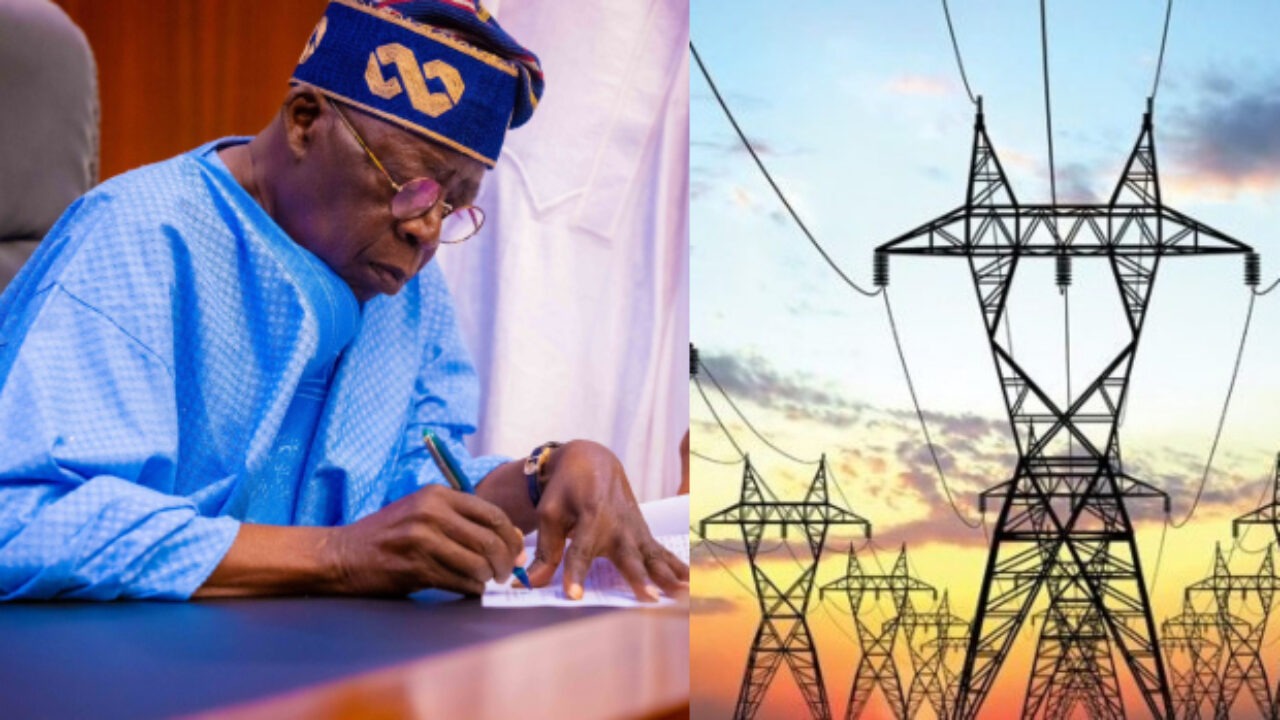
Three years after President promised to transform Nigeria’s electricity sector, millions of Nigerians are still battling poor power supply, repeated grid collapses, high electricity tariffs and widespread estimated billing.
When Tinubu assumed office in May 2023, he vowed to tackle the longstanding crisis in the power sector and famously declared that Nigerians should not vote for him again if he failed to improve electricity supply. However, with only a year left in his first term, many citizens and industry experts believe the sector has seen more reforms than actual results.
Nigeria’s electricity sector has remained one of the country’s most difficult challenges since independence. Despite decades of reforms, privatisation efforts and billions of naira invested by successive governments, stable electricity supply remains largely elusive for homes, businesses and industries.
One of the Tinubu administration’s earliest reforms was the signing of the 2023 Electricity Act into law. The legislation was widely praised as a landmark reform because it removed electricity from the Exclusive Legislative List to the Concurrent List, thereby allowing state governments to participate directly in power generation, transmission and distribution.
The Act was designed to decentralise the sector, encourage competition and reduce the monopoly enjoyed by Electricity Distribution Companies, popularly known as DisCos, within their franchise areas. It also provided for the restructuring of the Transmission Company of Nigeria into separate operational entities, including the Nigerian Independent System Operator, aimed at improving grid management and efficiency.
At the time, experts described the law as a turning point that could eventually rescue Nigerians from chronic blackouts. However, three years later, only about 15 states have fully adopted the law, while disagreements have already emerged between state regulators and DisCos over issues such as tariff control and market authority.
Several state governments have announced plans to build independent power plants, but many of the projects remain at planning or early construction stages, leaving residents uncertain about when they will begin to enjoy improved electricity supply.
Another major policy introduced by the administration was the Presidential Metering Initiative, under which the federal government approved N700 billion for the supply of electricity meters. The programme was expected to provide two million meters and reduce Nigeria’s longstanding estimated billing crisis.
The initiative was also expected to complement the World Bank-backed Distribution Sector Recovery Programme, which is providing an additional 3.2 million meters across the country.
However, while some meters under the World Bank programme are currently being distributed, implementation of the Presidential Metering Initiative has suffered delays, leaving more than six million Nigerians still without prepaid meters.
The continued use of estimated billing remains one of the biggest sources of public anger in the electricity sector, with many consumers accusing DisCos of arbitrary and exploitative charges despite poor service delivery.
Industry analysts have also questioned the government’s leadership choices in the sector. Critics argue that the administration has consistently appointed individuals with financial and administrative backgrounds rather than professionals with deep technical expertise in power engineering and electricity infrastructure.
Former Power Minister , a former deputy governor of the Central Bank of Nigeria, championed several reforms, including subsidy removal and expansion of renewable energy solutions, particularly solar power for off-grid communities.
Under his tenure, the government intensified efforts to reduce electricity subsidy payments, arguing that the subsidy regime had become financially unsustainable and was preventing investment in the sector.
This policy led to a sharp increase in electricity tariffs for Band A customers consumers expected to receive between 20 and 24 hours of power supply daily.
The government defended the increase by insisting that wealthier Nigerians benefiting from Band A could afford to pay more, while subsidy funds could be redirected toward infrastructure and social development.
However, many Band A customers complained that despite paying significantly higher tariffs, they still did not receive the minimum hours of electricity promised by the Nigerian Electricity Regulatory Commission, NERC.
Although NERC downgraded some customers to lower tariff bands where DisCos failed to meet supply targets, many consumers argued that refunds rather than downgrades should be imposed as penalties.
The tariff policy also widened inequality in electricity distribution, as customers in lower bands experienced even poorer supply while DisCos concentrated resources on higher-paying Band A areas.
One of the most serious challenges under the Tinubu administration has been the repeated collapse of the national grid. The year 2024 was particularly difficult for the sector as vandalism, sabotage and aging infrastructure caused multiple nationwide blackouts.
One of the most severe incidents occurred when bandits attacked the Shiroro-Mando transmission line, plunging 17 northern states into darkness for nearly two weeks. Backup infrastructure designed to restore supply also reportedly failed during the crisis.
Several transmission stations across the country also caught fire due to aging infrastructure, while vandalism of electricity facilities left parts of Bayelsa State without electricity for months.
In 2025, the national grid reportedly collapsed four times, while additional collapses were recorded in 2026 within days of each other, intensifying concerns over the fragility of Nigeria’s electricity infrastructure.
Despite these setbacks, the government recorded some progress in electricity generation. Available generation capacity reportedly exceeded 6,000 megawatts during the review period, driven partly by the Siemens power project initiated by the previous administration and the completion of a 700-megawatt hydroelectric power plant.
Still, experts argue that generating 6,000 megawatts remains grossly inadequate for a country of more than 200 million people, especially when much of the power generated is lost through transmission and distribution inefficiencies.
Financial instability remains another major threat to the sector. The government reportedly accumulated over N2 trillion in electricity subsidy debt between 2024 and 2026, in addition to over N2 trillion in legacy debts owed to generation companies and gas suppliers.
The debt crisis strained relationships between the government, electricity generation companies and gas suppliers, many of whom complained about delayed payments.
In February 2026, some gas suppliers reportedly reduced supply to power plants over unpaid debts, forcing several electricity generation facilities to shut down temporarily and worsening supply shortages nationwide.
Although the government later introduced a N500 billion bond to settle part of the debt owed to electricity generation companies, the payment process became controversial after generation companies accused authorities of reducing verified debt figures without proper consultation.
The Tinubu administration also created several new agencies and task forces within the sector, including the Presidential Metering Initiative, the Generation Assets Management Company and the Presidential Task Force on Power Sector Reset and Restoration.
However, critics argued that many of these agencies perform functions already assigned to existing institutions, raising concerns about duplication, bureaucratic confusion and possible waste of public funds.
Energy expert Odion Omonfoma warned that creating parallel agencies and policy centres could undermine regulatory independence and create uncertainty for investors.
He argued that issues such as tariff regulation, market discipline and consumer protection should remain under the authority of NERC and state electricity regulators rather than presidential task forces.
Similarly, Professor Dayo Ayoade, an energy law expert at the University of Jos, acknowledged that the 2023 Electricity Act was a major legislative achievement but said governance failures continue to undermine the sector.
According to him, poor planning, weak implementation and lack of accountability remain the biggest obstacles to stable electricity supply in Nigeria.
He warned that creating new institutions alone would not solve the crisis unless the government addresses deeper structural problems, including corruption, inefficiency and poor coordination between federal and state authorities.
For millions of Nigerians, the reality remains unchanged. Homes and businesses continue to rely heavily on expensive diesel and petrol generators, manufacturers struggle with high energy costs and many communities still experience daily blackouts.
As President Tinubu enters the final year of his first tenure, many Nigerians are still waiting for the stable electricity supply repeatedly promised by successive administrations. While reforms have increased discussions around decentralisation, metering and cost recovery, the real impact on ordinary citizens remains limited.
The central question now is whether the government can move beyond policy announcements and deliver practical improvements that Nigerians can truly feel in their homes, businesses and industries.


