


The Federal Government has said the 2026 Democracy Day celebration will be used to highlight what it describes as key achievements of the President Bola Ahmed Tinubu administration, particularly in the areas of governance reforms, democratic consolidation, and national development.
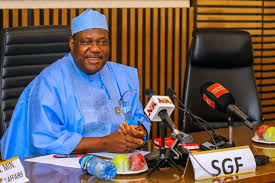
The Secretary to the Government of the Federation, George Akume, made this known on Tuesday in Abuja while inaugurating the Inter-Ministerial Committee for the 27th Democracy Day celebration.
According to him, the annual June 12 event goes beyond ceremonial observance, serving instead as a national platform to showcase progress made in strengthening democratic institutions, improving governance structures, and addressing socio-economic challenges facing the country.
Akume explained that this year’s celebration will also provide the Federal Government with an opportunity to present to Nigerians what it considers milestones recorded under the Tinubu administration, especially ongoing reforms aimed at repositioning the economy and reinforcing democratic values.
He stressed that Democracy Day remains a symbolic reminder of Nigeria’s democratic journey, noting that it offers space for reflection on both achievements and challenges since the return to civilian rule in 1999.
The SGF paid tribute to the heroes of the June 12, 1993 pro-democracy struggle, with special recognition of the late MKO Abiola, whose presidential mandate was annulled by the military regime of the time. He said Abiola’s sacrifice, alongside other pro-democracy activists, eventually led to the formal recognition of June 12 as Nigeria’s Democracy Day.
Akume further noted that Nigeria’s democratic institutions have continued to evolve through the contributions and sacrifices of patriots who fought for civil rule, adding that the annual commemoration remains important for assessing national progress and renewing commitment to democratic ideals.
He assured that preparations for the celebration are underway, with the Inter-Ministerial Committee expected to coordinate activities that will reflect both the nation’s democratic history and its current governance priorities.