


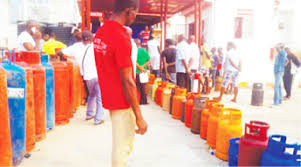
A sharp and sustained rise in cooking gas prices across Nigeria is forcing many households to abandon Liquefied Petroleum Gas (LPG) and return to traditional fuels such as charcoal, firewood, and other low-cost alternatives, raising concerns over health, environmental impact, and the country’s clean-energy transition.
Across several states including Kaduna, Kano, Rivers, Bayelsa, Borno, Lagos, Gombe and Plateau, residents say the cost of refilling gas cylinders has become increasingly unaffordable, with prices rising significantly in recent weeks. Many families now reserve gas for limited use such as boiling water or quick meals, while relying on charcoal and firewood for daily cooking.
Energy marketers under the Nigerian Association of Liquefied Petroleum Gas Marketers (NALPGAM) say the price surge is driven by soaring depot costs, supply constraints, high logistics expenses and broader operational challenges. The association warns that marketers are currently paying over N25 million for 20 metric tonnes of LPG, a cost that is ultimately passed on to consumers.
The situation has triggered a noticeable shift in household energy use. In Kaduna, some families say they alternate between gas and charcoal depending on income, while others have completely switched due to repeated price hikes. In Kano, residents report that a bag of charcoal now lasts longer and is more affordable than frequent gas refills, despite the inconvenience and smoke.
In Rivers and Bayelsa states, households are increasingly adopting charcoal stoves and green gel alternatives, citing affordability and reduced pressure on family budgets. In Lagos, some residents have turned to electric or pellet-based “power stoves,” which users say significantly reduce monthly cooking costs where electricity is available.
However, the transition back to biomass fuels is raising serious concerns among experts and health professionals. Energy analysts warn that increased reliance on charcoal and firewood could worsen deforestation, environmental degradation, and indoor air pollution. Public health experts also caution that prolonged exposure to smoke from traditional cooking fuels increases the risk of respiratory diseases, carbon monoxide poisoning, and other long-term health complications, particularly for women and children who spend more time in kitchens.
Economists further note that rising energy costs are deepening household poverty, as families divert limited income toward basic cooking needs. Many small food vendors and low-income earners are also struggling to sustain their businesses under the pressure of volatile fuel prices.
Experts are urging government intervention to stabilise LPG pricing through improved supply chains, infrastructure investment, and targeted policy support that promotes clean cooking energy. They warn that without urgent action, Nigeria risks reversing years of progress made in encouraging the adoption of safer and more environmentally friendly cooking fuels.