


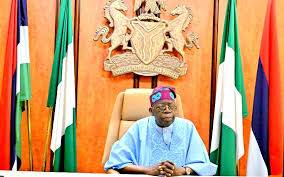
President Bola Ahmed Tinubu has called on Nigerians to continue defending and strengthening the nation’s democracy despite its imperfections, describing democratic governance as the collective achievement of generations who sacrificed for freedom, justice, and the rule of law.
In his 2026 Democracy Day address, the President noted that since the return to civilian rule on May 29, 1999, Nigerians have consistently chosen their leaders through elections, witnessed peaceful transfers of power, and resolved political disagreements through constitutional institutions rather than violence.
While acknowledging existing challenges, Tinubu stressed that democracy remains the best framework for national development and citizen participation. He urged Nigerians, particularly young people, to believe in the country’s future and contribute actively to nation-building through innovation, entrepreneurship, civic engagement, and responsible leadership.
The President also paid tribute to the heroes of the June 12 democratic struggle, including journalists, activists, labour leaders, students, politicians, and military officers who endured imprisonment, harassment, exile, and even death in their pursuit of democratic governance. According to him, the sacrifices of these patriots laid the foundation for the freedoms Nigerians enjoy today.
As part of activities marking Democracy Day, Tinubu announced national honours for several pro-democracy advocates and renamed the Institute of Petroleum Studies in Kaduna as the General Shehu Musa Yar’Adua University of Geological Sciences and Engineering Technology in honour of the late military officer and democracy advocate.
Addressing security concerns, the President expressed sadness over the recent abduction of schoolchildren and teachers in Oyo and Borno States, assuring affected families that efforts are ongoing to secure their safe release. He emphasized that democracy cannot thrive without security and highlighted measures taken by his administration to tackle terrorism, banditry, kidnapping, and other criminal activities.
According to Tinubu, the government has declared a security emergency, approved the recruitment of more than 50,000 additional police officers, and increased military recruitment to strengthen national security. He disclosed that the 2026 federal budget allocated a record N5.41 trillion to defence and security operations, reflecting the administration’s commitment to protecting lives and property.
The President further stated that Nigeria’s security forces have recorded significant successes against terrorist groups, with thousands of insurgents neutralized and many others surrendering through rehabilitation programmes. However, he warned bandits, kidnappers, and sponsors of violence that the government would continue to pursue them relentlessly and ensure they face the full weight of the law.
Tinubu also urged Nigerians to reject narratives that associate crime with ethnicity, religion, or regional identity, stressing that criminality has no ethnic or religious affiliation. He called for national unity and cooperation in confronting security challenges and safeguarding the country’s democratic gains.
Meanwhile, several political leaders used the Democracy Day celebration to call for greater commitment to democratic values. Bauchi State Governor, Senator Bala Abdulkadir Mohammed, urged citizens to embrace peace, tolerance, accountability, and mutual respect, while supporting efforts to strengthen national security and governance.
Similarly, Gombe State Governor Muhammadu Inuwa Yahaya described democracy as the most reliable path to sustainable development, pointing to achievements in infrastructure, healthcare, education, agriculture, and industrial growth as evidence of the benefits of democratic governance.
Also speaking, the National Chairman of the All Progressives Congress, Professor Nentawe Yilwatda, called on Nigerians to protect the country’s hard-earned democratic freedoms and support ongoing economic and institutional reforms. He described June 12 as a symbol of resilience, electoral justice, and the enduring power of the people’s voice in governance.
As Nigeria marks another Democracy Day, leaders across the country have emphasized the need for unity, security, good governance, and active citizen participation to ensure that the sacrifices of past democracy champions continue to yield lasting benefits for future generations.
This version is suitable for a 2–3 minute television news report or anchor presentation.