


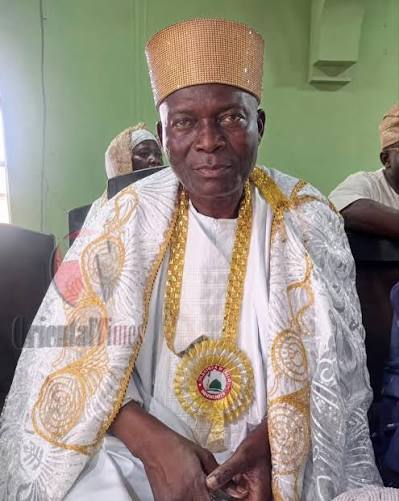
Tragedy has struck the Olayinka community in Ifelodun Local Government Area of Kwara State following reports that its traditional ruler, Oba Salman Olatunji Aweda, died while being held by kidnappers several weeks after his abduction.
The monarch, who was kidnapped last month by armed criminals operating within the area, was reportedly being held despite extensive efforts by family members, community leaders, and other stakeholders to secure his freedom. Reports indicate that the abductors demanded a ransom of ₦21 million, two brand-new motorcycles, and a jerrycan of petrol as conditions for his release.
According to community sources, the demands were eventually met in a desperate attempt to save the monarch’s life. However, despite the payment of ransom and provision of additional items requested by the kidnappers, Oba Aweda was allegedly not released and later died in captivity under circumstances that remain unclear.
Information about the monarch’s death first emerged after a recently freed victim, who had reportedly been held by the same gang of kidnappers in the Sagbe axis, informed community members that the traditional ruler had died. The former captive reportedly urged residents to stop making further payments to avoid additional extortion by the criminals.
The development initially generated confusion, with local authorities expressing caution over the reports. The Kwara State Commissioner of Police described the information as unverified at the time, while the Chairman of Ifelodun Local Government, Hadji Femi Yusuf, stated that he had not received any official briefing regarding the monarch’s reported death.
However, the situation took a tragic turn when officials of the Ifelodun Traditional Council later confirmed the news. Speaking on behalf of the council, Secretary Elder Chief Omisola Amos Olayinka said community leaders initially believed the reports were rumours but later received confirmation from members involved in efforts to secure the monarch’s release.
According to him, the community exhausted all available options to rescue the monarch, including meeting the financial and material demands of the abductors. Despite these efforts, the monarch reportedly died while still in captivity, leaving residents devastated and raising fresh concerns about the growing insecurity in parts of Kwara State.
Community leaders also disclosed that the whereabouts of the monarch’s remains remain unknown. The uncertainty surrounding the location where he was held has complicated efforts to recover his body and conduct final burial rites. Nevertheless, arrangements are being made for Janazah prayers in accordance with Islamic tradition as residents mourn the loss of their traditional ruler.
The death has generated widespread grief across the Olayinka community, particularly because Oba Aweda had recently been elevated to first-class traditional ruler status. Community members expressed sadness that the official ceremonies and celebrations associated with the elevation could not be completed before his death.
The incident has once again drawn attention to the worsening security situation affecting several rural communities across Kwara State and parts of North-Central Nigeria. In recent years, kidnapping for ransom has become a major security challenge, with criminals increasingly targeting traditional rulers, farmers, travellers, and other prominent community figures.
Security experts warn that attacks on traditional institutions not only threaten lives but also weaken community leadership structures and create fear among residents. The continued targeting of local leaders has also raised concerns about the effectiveness of current security measures in vulnerable rural areas.
Although security agencies have intensified patrols, intelligence gathering, and coordinated operations across affected communities, residents continue to demand stronger intervention, improved surveillance, and faster emergency response mechanisms to prevent further attacks.
As investigations continue into the circumstances surrounding the monarch’s death, many residents are calling for renewed efforts to dismantle kidnapping networks operating within forested and remote communities. The tragedy serves as another reminder of the human cost of insecurity and the urgent need for sustained action to protect lives and restore public confidence in affected regions.
The death of Oba Salman Olatunji Aweda represents not only a painful loss for his family and community but also a sobering reflection of the security challenges confronting many rural communities across the country.