


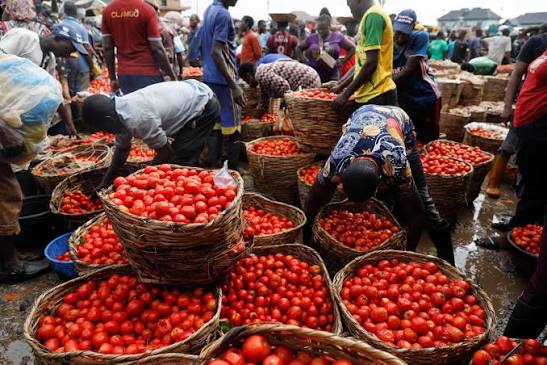
Nigeria’s inflation rate rose slightly to 15.93 percent in May 2026, marking its highest level in six months as increasing prices of essential food items such as maize, onions, tomatoes, yam, cassava products, pepper and other staples continued to exert pressure on household budgets.
According to the latest Consumer Price Index report released by the National Bureau of Statistics (NBS), headline inflation increased from 15.69 percent recorded in April to 15.93 percent in May, representing a 0.24 percentage point rise. Despite the increase, inflation remains significantly lower than the 26.06 percent recorded in May 2025, reflecting progress in the country’s broader inflation management efforts.
The report shows that food inflation remained a major contributor to the overall rise in prices. On a year-on-year basis, food inflation stood at 16.96 percent in May 2026, driven largely by higher costs of onions, maize grains, tomatoes, fresh pepper, cassava flour, yam tubers, sweet potatoes, ginger, crayfish, plantain and other widely consumed food products.
However, on a month-to-month basis, food inflation moderated slightly to 2.98 percent from 3.63 percent in April, suggesting that while food prices continue to rise, the pace of increase has slowed. Similarly, headline inflation on a month-on-month basis declined from 2.13 percent in April to 1.75 percent in May.
The NBS report also highlighted significant variations across states. Yobe, Anambra and Sokoto recorded the highest annual inflation rates, while Niger, Plateau and Edo states posted the lowest year-on-year inflation figures. On a monthly basis, Benue, Bayelsa and Borno experienced the sharpest inflation increases, whereas Niger, Zamfara and Taraba recorded declines.
For food inflation, Adamawa, Kwara and Rivers states recorded the highest year-on-year increases, reflecting growing pressure on food affordability. In contrast, Borno, Taraba and Bayelsa reported the slowest growth in food prices. Monthly food inflation was highest in Bauchi, Ogun and Jigawa states.
Reacting to the report, the Centre for the Promotion of Private Enterprise (CPPE) attributed the slight rise in inflation to geopolitical tensions in the Middle East, which triggered higher crude oil prices, increased shipping costs, rising marine insurance premiums and disruptions to global supply chains. These developments, according to the group, contributed to increased import costs and added pressure to domestic prices.
CPPE Chief Executive Officer, Dr. Muda Yusuf, noted that despite the marginal increase, underlying inflation indicators remain positive. He pointed out that the substantial decline from the 26.06 percent inflation rate recorded a year earlier demonstrates that inflationary pressures have eased considerably over the past twelve months.
The economic policy group identified food, transportation, housing, energy, healthcare and education as the sectors contributing most to inflation, accounting for nearly 87 percent of the headline figure. It stressed that food inflation continues to weaken household purchasing power and increase the cost of living for millions of Nigerians.
The CPPE further warned that persistent insecurity in major farming regions remains one of the biggest threats to food production. According to the organisation, attacks on farming communities, displacement of farmers and disruptions to agricultural supply chains have reduced food output and contributed to rising market prices across the country.
The group urged government authorities to focus on improving food security, strengthening transportation networks, expanding rail and mass transit systems, enhancing energy supply and restoring security in agricultural communities. It argued that tackling these structural challenges would be more effective in reducing inflation than relying solely on monetary policy measures.
Looking ahead, CPPE expressed cautious optimism that inflationary pressures could ease in the coming months if tensions in the Middle East continue to subside and global supply chains stabilise. The organisation noted that crude oil prices have already fallen from around 90 dollars per barrel to approximately 83 dollars, a development that could help moderate import and transportation costs from the third quarter of 2026.