


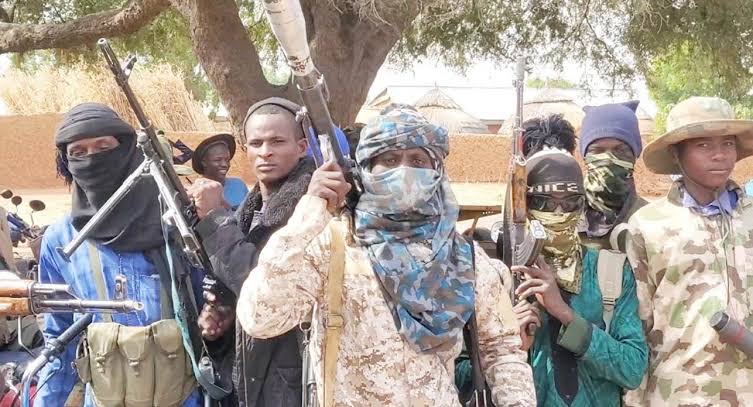
Fresh concerns have emerged in parts of eastern Sokoto State following reports that notorious bandit leader, Bello Turji, and members of his armed network are allegedly conducting weapons training and tactical drills in some communities within Isa Local Government Area.
Residents and security-linked sources say the suspected activities have been observed in border settlements such as Bingabale, Bafarawa, Bargaja, and Gebe-areas long regarded as operational strongholds for armed groups linked to Turji. The development has heightened fear among rural communities that have endured years of attacks, kidnappings, and cattle rustling across the Sokoto–Zamfara corridor.
According to security sources and local accounts, the alleged drills involve weapons handling and coordinated movement exercises, suggesting an effort to strengthen operational capacity. The claims also indicate that remote and hard-to-reach locations along the border are being used to avoid military surveillance under ongoing operations in the region.
Bello Turji is widely regarded by security authorities as one of the most prominent leaders of armed bandit networks operating across northwestern Nigeria, particularly in Zamfara, Sokoto, and parts of Niger State. He has been linked to multiple deadly raids, mass abductions, and attacks on both civilian populations and security personnel over several years.
Authorities have previously accused his network of operating across multiple forested and cross-border communities, where fighters reportedly move between camps in areas such as Zurmi, Sabon Birni, and Anka. Despite repeated military operations and public declarations targeting him, he has remained at large.
Over the years, several peace initiatives aimed at reducing violence in affected communities reportedly failed, as Turji and his group were accused of rejecting reconciliation efforts and continuing armed operations. This has left many rural settlements cut off from farmlands, schools, markets, and healthcare access due to insecurity.
The latest concerns were amplified by a social media post attributed to a local activist, who alleged that Turji’s fighters were undergoing structured training with newly acquired weapons, including advanced equipment such as night-vision devices. The claims further suggested possible involvement of additional armed elements with combat training experience, potentially increasing the group’s operational capability.
The post also alleged emerging alliances between Turji’s network and other armed commanders operating across border areas of Sokoto and Zamfara, raising fears of coordinated attacks on local government headquarters and strategic communities. However, these claims remain unverified by independent security authorities.
In recent days, reports also circulated online claiming that a video released by Turji showed armed operatives displaying weapons and celebrating recent attacks against security forces along the Isa-Bargaja axis. Authorities have not officially confirmed the authenticity of the footage.
The heightened tension comes shortly after deadly incidents in the region, including an explosion targeting a military vehicle responding to a distress call in Bargaja, which reportedly led to the death of three soldiers and injuries to others. The attack has been widely attributed to armed groups operating in the area, although official confirmation remains limited.
Security agencies have not yet issued a formal statement on the latest allegations regarding training activities, though military sources suggest that intelligence reports are being assessed and surveillance operations are ongoing across affected communities.
Meanwhile, residents in Isa and surrounding villages say insecurity continues to worsen, with some communities already deserted due to repeated attacks, extortion, and fear of renewed violence. Many displaced families have relocated to safer towns or temporary camps, abandoning farming and trading activities that once sustained local economies.
Political leaders in the region have also renewed criticism of the federal security response, arguing that despite increased military deployments and equipment, armed groups continue to operate with relative freedom in some rural areas. Some lawmakers have called for stronger coordination between security agencies and improved intelligence-driven operations.
In separate incidents reported in Sokoto State, security forces recently repelled an armed attack on Tureta town, though the confrontation resulted in casualties on both sides, including the deaths of two police officers who were reportedly ambushed while pursuing fleeing attackers. The number of casualties among the armed group remains unconfirmed.
As insecurity persists across parts of Sokoto and neighbouring states, communities continue to call for stronger protection, sustained military presence, and long-term strategies aimed at dismantling armed networks and restoring stability to the region.