


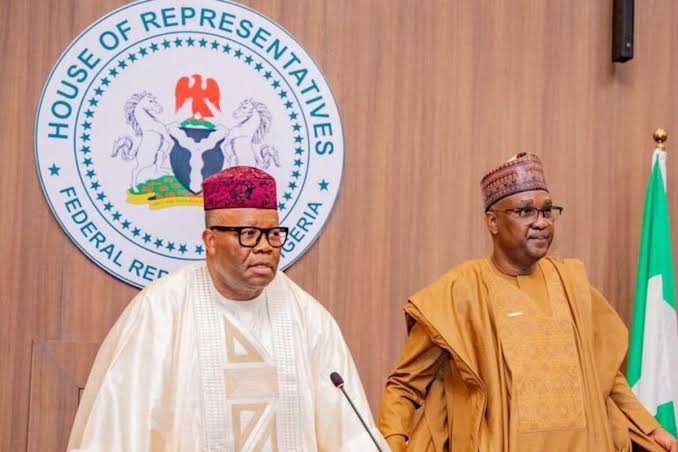
The Socio-Economic Rights and Accountability Project (SERAP) has issued a seven-day ultimatum to Senate President Godswill Akpabio and Speaker of the House of Representatives Tajudeen Abbas, demanding that members of the National Assembly refund all monies, allowances, and benefits received under the controversial N110 billion vehicle procurement and support allowance schemes recently declared unlawful by the Federal High Court.
In a statement, SERAP called on the leadership of both chambers to ensure that lawmakers return the funds to the public treasury in line with a judgment delivered by Justice Yellim Bogoro of the Federal High Court in Lagos. The court, in Suit No. FHC/L/CS/1606/2023, reportedly ruled that the expenditure violated procurement laws, constitutional provisions, and principles of public accountability.
According to the judgment, the National Assembly spent N40 billion on the procurement of 465 vehicles for lawmakers, while an additional N70 billion was allocated as support allowances for newly elected members. The court held that the expenditures failed to meet statutory requirements and amounted to a breach of public trust.
Reacting to the verdict, SERAP argued that there must be consequences for the unlawful spending and insisted that legislators should not be allowed to retain benefits obtained from actions already adjudged unconstitutional. The organization maintained that permitting lawmakers to keep the proceeds of the expenditure would undermine public confidence in democratic institutions and weaken efforts to combat corruption and abuse of office.
SERAP stressed that restitution is essential to uphold the rule of law and reinforce the principle that no public official should benefit from conduct that has been judicially determined to be unlawful. The group argued that accountability is necessary not only to recover public funds but also to strengthen trust in governance and democratic processes.
Beyond the issue of refunds, the rights organization called on the National Assembly leadership to institute reforms aimed at improving transparency and accountability in the management of public resources. It urged Senate President Akpabio and Speaker Abbas to establish mechanisms that would ensure all future procurements and expenditure strictly comply with due process and deliver value for money.
SERAP also recommended that the legislature institutionalise public hearings on the National Assembly budget during each budget cycle. According to the group, opening the budgeting process to public scrutiny would encourage greater citizen participation and enhance confidence in the management of public funds.
Furthermore, the organization urged the National Assembly to proactively publish detailed budgetary and expenditure records to promote transparency and enable Nigerians to track how legislative funds are allocated and spent.
The development has reignited debate over accountability and spending within the National Assembly, with civil society groups and governance advocates expected to closely monitor the response of lawmakers to the court ruling and SERAP’s demands.
As of the time of reporting, neither the Senate leadership nor the House of Representatives had issued an official response to the ultimatum. However, the issue is likely to intensify discussions on transparency, procurement practices, and the broader question of fiscal responsibility in Nigeria’s democratic institutions.