


Former Presidents Olusegun Obasanjo and Goodluck Jonathan, alongside other political leaders and stakeholders, have called for major reforms to Nigeria’s democratic and governance structure, arguing that the current system is struggling to deliver effective leadership, justice and inclusive development.
The calls were made at the 2026 Democracy Dialogue organised by the Goodluck Jonathan Foundation in Bauchi under the theme, “Beyond Elections: Can Political Parties and the Judiciary Save African Democracy?”
Obasanjo: Nigeria needs an African-style democracy
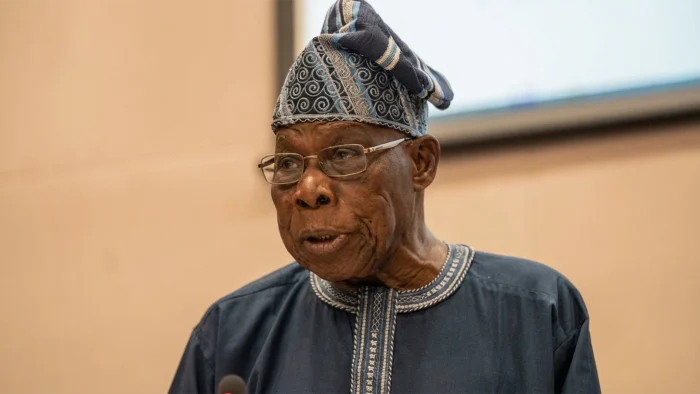
Former President Olusegun Obasanjo, who chaired the conference, questioned whether the Western liberal democratic model inherited from colonial rule is suitable for Africa.
Obasanjo argued that African countries adopted the system without sufficiently adapting it to their own cultures, values and traditions.
He said the failure of the existing model to properly manage diversity, deliver good governance and ensure accountability should force Nigerians and other African countries to rethink how democracy is practised.
According to him, democracy should improve people’s quality of life, protect lives and property, promote fairness and ensure that no group is marginalised or excluded.
Obasanjo also criticised the winner-takes-all nature of Nigeria’s political system, saying a government that wins by a narrow margin can end up exercising almost total control despite the country’s diverse population.
He advocated an African democratic model built around local values and called for innovative thinking about how political representatives are selected.
Jonathan wants return to parliamentary system
Goodluck Jonathan, chairman of the foundation, called for a review of Nigeria’s presidential system, arguing that too much power is concentrated in one office.
He suggested that Nigeria should consider returning to a parliamentary system, similar to the structure operated during the country’s earlier years.
Jonathan also pointed to Switzerland as an example of a system where major decisions require wider agreement among members of government.
He proposed a model in which executive responsibilities are shared, with a prime minister overseeing government administration while a president or head of state focuses on responsibilities such as command of the armed forces.
According to Jonathan, such an arrangement could create stronger checks and balances and reduce the dangers associated with excessive concentration of power.
He also criticised the growing tendency for political disputes, especially electoral disagreements, to end up in court rather than being resolved through the electoral process.
Jonathan stressed the importance of an independent judiciary but questioned the expanding role of courts in deciding party candidates and, in some instances, determining which faction of a political party is recognised.
He described democracy as an ecosystem involving political parties, electoral bodies, security agencies, the judiciary, civil society organisations, the media, international observers and voters.
Diri demands true federalism
Bayelsa State Governor Douye Diri linked Nigeria’s democratic challenges to what he described as injustice in the distribution of national resources.
He argued that the country needs true federalism, particularly to address inequalities in resource allocation and development.
Diri cited the Niger Delta and resource-producing communities as examples, arguing that regions responsible for generating significant wealth have not always received corresponding development.
He maintained that without greater fairness and equity in the federation, Nigeria risks continuing with what he described as a system that is democratic in name but fails to provide genuine justice.
Obi attacks elite involvement in electoral malpractice
Former Anambra State Governor and NDC presidential candidate Peter Obi expressed concern over declining public confidence in key institutions, including the judiciary, legislature and academia.
He accused sections of the elite of enabling electoral malpractice and criticised what he described as growing compromises within institutions that should protect democracy.
Obi urged Nigerians to examine the direction of the country and reverse practices that could create deeper problems for future generations.
IPAC warns political parties are being weakened
Chairman of the Inter-Party Advisory Council (IPAC), Yusuf Mamman Dantalle, said political parties have become increasingly vulnerable to interference from those in government.
He argued that parties were previously more independent and capable of enforcing their manifestos on elected officials.
According to him, the weakening of party structures has created a situation where political influence and financial power increasingly determine how parties operate.
Dantalle called for efforts to restore the independence and strength of political parties, warning that some factions emerging within parties are allegedly being created by powerful interests.
Foundation says elections alone are not enough
Executive Director of the Goodluck Jonathan Foundation, Ann Iyonu, said Africa cannot strengthen democracy simply by conducting periodic elections.
She noted that although many African countries have experienced repeated electoral cycles and peaceful transfers of power, concerns about accountability, institutional performance and public trust remain.
According to her, citizens increasingly want democratic systems that deliver not only elections but also good governance, constitutional protection, accountability and better socio-economic conditions.
Labour Party urges 2027 aspirants to emulate Jonathan
Meanwhile, Labour Party National Chairman Senator Nenadi Usman urged politicians preparing for the 2027 elections to learn from Jonathan’s response to the 2015 presidential election.
She argued that Jonathan’s decision to concede defeat helped prevent a potentially dangerous crisis and demonstrated the importance of placing national interest above personal political ambition.
Usman called on political aspirants to reject inflammatory rhetoric, respect democratic rules and avoid actions that could threaten Nigeria’s stability.
A growing debate over Nigeria’s democracy
The wide-ranging views presented at the dialogue reveal growing concerns among political leaders and democratic stakeholders about the direction of Nigeria’s political system.
From calls for an African-style democratic model and a possible return to parliamentary government to demands for true federalism, stronger political parties and a more independent judiciary, the central message was that Nigeria’s democratic system may need fundamental reform if it is to deliver the accountability, inclusion and development citizens expect.
Obasanjo, Jonathan Lead Calls for Major Shake-Up of Nigeria’s Political System


- Advertisment -