


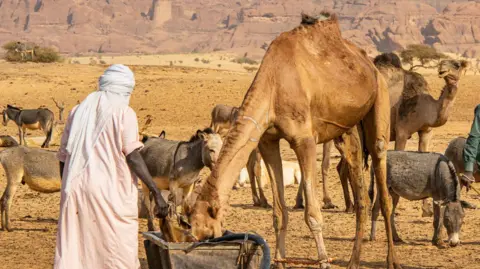
There are frequently disputes over access to water in Chad.
At least 42 people have been killed and 10 others injured in renewed communal violence in eastern Chad after a dispute over access to a water well escalated into deadly clashes between rival ethnic groups, government officials have confirmed.
The violence occurred in Wadi Fira Province, a region already vulnerable to insecurity and resource shortages. Authorities said what began as a disagreement between two families quickly spiralled into a broader cycle of retaliatory attacks involving multiple communities.
Officials reported that several villages were burned during the unrest, forcing residents to flee and raising fears of further displacement in the affected area.
Government Sends Emergency Delegation
Chadian authorities said on Sunday that the situation had been brought under control following the deployment of a high-level government delegation led by Deputy Prime Minister Limane Mahamat.
The delegation was dispatched to help calm tensions, assess the humanitarian impact, and coordinate security measures aimed at preventing further violence.
Government representatives said security forces had been mobilised to restore order and monitor flashpoint communities across the province.
Officials also stressed that additional measures were being taken to stop unrest in neighbouring Sudan from spilling across the border into Chad.
Long History of Communal Violence
Deadly communal clashes are not uncommon in Chad, where disputes over land, water, grazing routes and ethnic rivalries have repeatedly triggered violence.
The country has faced a longstanding pattern of tension between farming communities and nomadic herders, especially in rural regions where access to water and fertile land is increasingly scarce.
As desertification, drought and changing rainfall patterns continue to affect livelihoods, competition for natural resources has become more intense.
In many parts of Chad, wells and water sources are critical for both household use and livestock survival. When communities feel excluded from access, disputes can quickly escalate.
Analysts say weak local mediation systems, poor infrastructure, and limited state presence in remote areas often allow small disagreements to turn into large-scale confrontations.
Sudan Conflict Adding Pressure
The crisis has also been worsened by the ongoing civil war in Sudan, which has pushed large numbers of refugees across the border into eastern Chad.
Thousands of displaced Sudanese civilians have fled fighting in western Sudan and sought safety in Chad’s eastern provinces, placing new pressure on already stretched resources.
The arrival of refugees has increased demand for food, shelter, water and security in host communities that were already struggling economically.
Deputy Prime Minister Limane Mahamat said the Chadian government was closely monitoring the border situation and taking all necessary steps to prevent instability in Sudan from destabilising Chad’s frontier regions.
Humanitarian agencies have repeatedly warned that the overlap of refugee displacement, poverty and communal tension could worsen insecurity unless more support is provided.
Hundreds Killed in Recent Years
The latest violence adds to a growing toll from communal conflict in Chad.
In November last year, at least 33 people were killed in another clash over a disputed well in Dibebe, in the country’s southwest.
According to the International Crisis Group, around 1,000 people were killed and 2,000 injured in roughly 100 separate communal clashes across Chad between 2021 and 2024.
The figures highlight how local disputes have become one of the country’s most persistent security threats.
Amnesty Raises Alarm Over Impunity
Human rights organisation Amnesty International said last year it had documented seven major incidents of herder-farmer violence between 2022 and 2024 that left at least 98 people dead.
Amnesty said the recurring violence is being driven by a combination of climate change, weak governance, and unresolved grievances.
The organisation also criticised the response of security forces, saying intervention was often delayed and those responsible for killings were rarely held accountable.
According to Amnesty, this failure to prosecute perpetrators has fuelled a growing sense of impunity and marginalisation among affected communities.
Calls for Lasting Solutions
Security analysts say restoring calm in Wadi Fira will require more than troop deployments.
They argue Chad needs stronger local mediation systems, fair access to land and water, better rural investment, and quicker conflict-response mechanisms.
Without long-term reforms, experts warn that climate pressure, displacement from Sudan, and ethnic divisions could continue to ignite deadly violence.
For now, authorities say the immediate priority is preventing reprisals, assisting displaced families, and ensuring the latest conflict does not spread further across eastern Chad.