


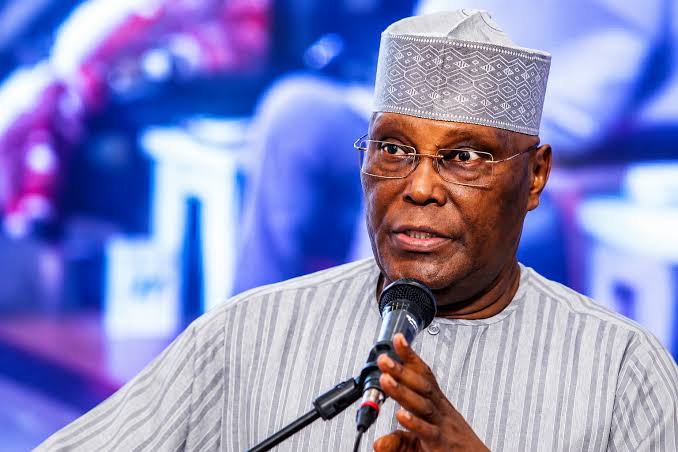
Former Vice President and presidential candidate of the African Democratic Congress (ADC), Atiku Abubakar, has strongly criticised a court ruling that reportedly seeks to deregister the ADC and other opposition political parties, describing the development as a serious threat to Nigeria’s constitutional democracy and political stability ahead of the 2027 general elections.
In a statement issued through his Senior Special Assistant on Public Communication, Phrank Shaibu, Atiku said the judgment should concern all Nigerians who value democratic governance, political competition, and the rule of law. He warned that any action capable of weakening opposition parties could have far-reaching consequences for Nigeria’s multiparty system.
Atiku’s reaction comes amid growing political tension over the fate of several opposition parties affected by the court decision. He argued that the ruling raises fundamental legal and constitutional questions, especially concerning compliance with existing court orders.
According to him, the judgment was delivered despite a subsisting order of the Court of Appeal in Abuja, which had reportedly stayed further proceedings in the case pending the determination of an appeal. He described this as a direct challenge to the hierarchy of the judiciary and the principles governing legal procedure in Nigeria.
The former vice president explained that a stay of proceedings is meant to halt all further actions in a case until an appellate court gives a final decision. He therefore argued that any judgment delivered under such conditions calls into question the validity of the process and the respect for judicial authority.
Atiku said the development reflects a deeper concern about the state of democratic institutions in the country, warning that disregard for court orders could undermine public confidence in the justice system and weaken constitutional governance.
He further alleged that the ruling forms part of a broader pattern of political developments aimed at weakening opposition parties ahead of the 2027 elections. According to him, rather than focusing on governance and urgent national issues, attention is increasingly shifting toward political competition and control of opposition structures.
The former vice president listed insecurity, rising poverty, unemployment, inflation, and economic hardship as key challenges currently facing Nigerians, arguing that these issues require urgent and sustained government attention. He cautioned that political disputes should not distract from addressing the country’s socio-economic difficulties.
Atiku also accused political actors of attempting to use institutional processes to limit opposition activity, describing such actions as harmful to democratic growth. He maintained that democracy thrives only when citizens have genuine choices and when political competition is not restricted.
Despite the controversy, Atiku urged members of the ADC and supporters of opposition politics to remain calm and law-abiding, assuring them that the party would continue to explore all constitutional and legal avenues to challenge the ruling.
He stressed that the struggle was not only about the ADC but about the broader protection of Nigeria’s democratic system. According to him, the battle is between those who support political freedom and those who seek to concentrate power and limit opposition voices.
Atiku called on the judiciary, civil society organisations, the media, and the general public to remain vigilant and protect democratic institutions from any actions that could undermine their independence or credibility. He emphasised that Nigeria’s democracy was achieved through significant struggle and must not be weakened by political or institutional interference.
Political observers say the dispute could deepen debates about electoral fairness, judicial authority, and the future of opposition politics in Nigeria, especially as political alignments begin to take shape ahead of the 2027 general elections.
As the legal process continues, attention remains focused on how the courts will interpret the conflicting issues surrounding the case, and what implications the final outcome may have for Nigeria’s political landscape and democratic stability.