


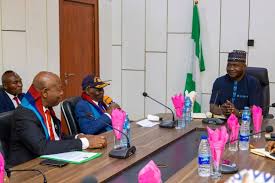
Nigeria’s Minister of Defence, , has called for a more proactive and technology-driven approach to securing the country’s borders against growing transnational crimes and emerging security threats.
Speaking at a national workshop on “Border Security, Resilience and Cross-Border Cooperation” organised by the (NBC), the minister emphasized the need for Nigeria to move beyond conventional security methods and adopt modern strategies capable of addressing the complex challenges facing border regions.
Musa stressed that effective border management is a critical component of national security, economic stability, and regional integration. According to him, Nigeria’s borders are not merely geographical demarcations but strategic gateways that facilitate trade, cultural exchanges, and social interactions among neighbouring countries.
However, he noted that the same borders have increasingly become vulnerable routes for illegal activities, including arms trafficking, smuggling, human trafficking, irregular migration, terrorism financing, and the movement of criminal networks across West and Central Africa.
To address these challenges, the defence minister advocated the deployment of advanced surveillance technologies, stronger intelligence-sharing mechanisms, early warning systems, and improved collaboration among security agencies. He also highlighted the importance of strengthening partnerships with neighbouring countries to combat threats that transcend national boundaries.
According to Musa, modern border security must be resilient and adaptive. He explained that resilient borders should not only be capable of preventing criminal activities but should also withstand broader challenges such as climate-induced displacement, economic disruptions, and humanitarian crises that can create security vulnerabilities.
Earlier, the Director-General of the NBC, , underscored the importance of collective responsibility in safeguarding Nigeria’s territorial integrity. He revealed that Nigeria shares approximately 4,454 kilometres of land borders with neighbouring countries including , , , and , in addition to an 853-kilometre coastline.
Adaji noted that the commission has established several cross-border cooperation platforms involving traditional rulers, local communities, security agencies, and civil society organisations. These platforms are designed to promote dialogue, intelligence gathering, conflict prevention, and peaceful coexistence among communities living along international borders.
The Commandant of the , Rear Admiral Abdullahi Ahmed, also stressed that no country can effectively tackle border security challenges in isolation. He called for stronger regional frameworks and greater cooperation among African nations to address shared threats such as terrorism, organized crime, and illegal migration.
Traditional rulers attending the workshop equally advocated greater involvement of community leaders in border security operations. Speaking on behalf of border communities, the Emir of Machina, , urged government authorities to integrate traditional institutions more actively into security coordination efforts.
He argued that traditional rulers remain the closest link between government and local populations and are often the first to detect unusual movements, suspicious activities, and emerging security concerns within border communities.
Security experts believe that Nigeria’s vast and often porous borders continue to pose significant challenges to national security. Weak border control has frequently been linked to the movement of illegal arms, infiltration by criminal groups, and cross-border insurgent activities that have contributed to insecurity in several parts of the country.
The workshop concluded with renewed calls for a comprehensive border management strategy that combines technology, intelligence, community participation, and regional cooperation to protect Nigeria’s borders while promoting economic development and peaceful relations with neighbouring countries.
Analysts say the recommendations emerging from the forum could play a crucial role in shaping future policies aimed at strengthening national security and enhancing Nigeria’s capacity to respond to evolving cross-border threats.