


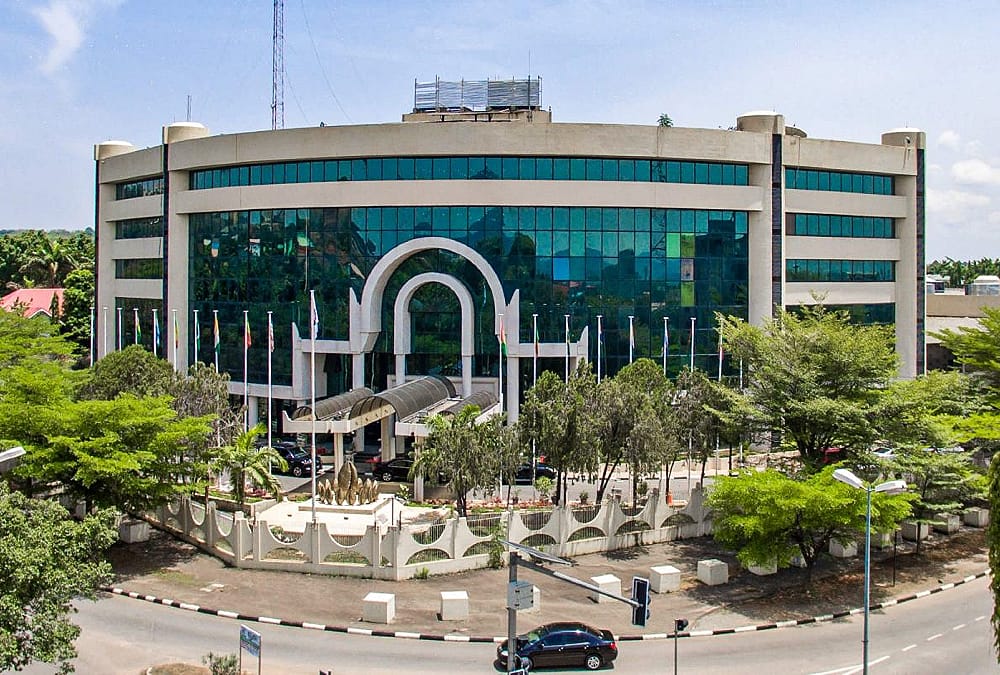
The Economic Community of West African States (ECOWAS) has announced the release of $9 million to support humanitarian interventions for internally displaced persons (IDPs), refugees, asylum seekers, and host communities across the West African sub-region.
The funding package, disclosed at a press briefing in Abuja, is part of ECOWAS’ 2024 humanitarian response strategy aimed at addressing the growing impact of conflict, terrorism, forced displacement, and climate-related disasters affecting populations across member states.
The announcement was made by the ECOWAS Commissioner for Human Development and Social Affairs, Professor Fatou Sow Sarr, who explained that the financial support will be distributed across all 15 member countries to strengthen emergency response systems and provide direct assistance to vulnerable populations.
According to her, $1 million from the allocation has been specifically set aside for stabilization efforts in Nigeria, targeting victims of terrorism, displaced families, injured persons, and communities affected by ongoing insecurity. The intervention also includes support for rehabilitation programmes and initiatives designed to strengthen community resilience in conflict-affected areas.
She further disclosed that the humanitarian funding forms part of a broader $25 million regional security and counter-terrorism support package covering Nigeria, Burkina Faso, Mali, and Niger. Out of this, $4 million has been earmarked for humanitarian-related interventions linked to insecurity and displacement.
The Commissioner emphasized that ECOWAS continues to prioritise preventive action and crisis preparedness in response to the increasing frequency of emergencies across West Africa. She noted that the regional bloc has developed disaster risk reduction strategies and early warning systems designed to monitor population movements, anticipate crises, and improve coordinated responses to floods, conflicts, and other humanitarian shocks.
“Humanitarian action remains a core priority because of the multiple crises affecting our region, including conflict, population displacement, and climate change-related disasters,” she said.
She added that ECOWAS maintains its humanitarian commitments even in politically sensitive situations, including countries under sanctions, underscoring the organisation’s position that humanitarian assistance must remain uninterrupted regardless of political developments.
As an example, she noted that Guinea received nearly $600,000 in January 2024, including emergency support for an oil depot fire and flood-related disasters, despite being under regional sanctions.
Beyond humanitarian support, ECOWAS also highlighted its ongoing investment in youth development, education, science, and innovation. The organisation said its programmes under the Directorate of Education, Science and Culture are largely focused on empowering young people across the region.
Since 2019, ECOWAS has sponsored 42 young Africans to pursue master’s degrees in diplomacy and international relations in Spain. In addition, through its Research and Innovation Support Programme (PARI), more than 30 young researchers have benefited from master’s and doctoral training between 2018 and 2024.
These initiatives, according to the Commission, are aimed at building human capital, strengthening governance capacity, and fostering innovation-driven development across West Africa.
ECOWAS also announced plans to convene a regional Youth Forum in the coming months. The forum is expected to bring together young people from member states to assess current socio-economic challenges, identify emerging trends affecting youth development, and propose solutions to address unemployment, insecurity, and social instability.
The consultations will be held across member countries, engaging young people from diverse social, professional, and geographic backgrounds. The outcomes of the discussions will feed into a broader policy review process aimed at reshaping ECOWAS’ youth development strategies.
At the end of the process, regional stakeholders are expected to meet in a designated member state to consolidate recommendations and update ECOWAS’ policy framework, strategic priorities, and implementation roadmap.
Analysts say the combination of humanitarian assistance and youth development programmes reflects ECOWAS’ dual approach to addressing both immediate crises and long-term structural challenges in West Africa, particularly those driven by insecurity, economic instability, and climate change.
As displacement levels continue to rise across the region, the latest funding is expected to provide critical relief while reinforcing regional cooperation in managing humanitarian emergencies.