


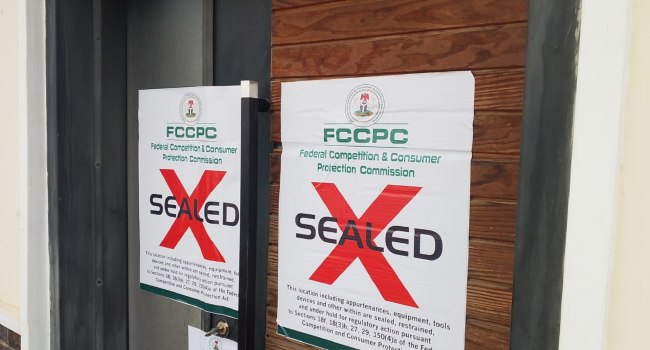
The Federal Competition and Consumer Protection Commission has sealed off Paradise Estate located in Life Camp Extension, Abuja, following allegations of housing fraud and multiple consumer rights violations.
The enforcement action was taken after complaints that the estate allegedly failed to deliver housing units to several buyers despite receiving full payment from subscribers and prospective homeowners.
According to the commission, the decision followed repeated reports from members of the public who accused the estate management of breaching contractual obligations and failing to respond adequately to regulatory directives.
Alleged Failure to Deliver Paid Housing Units
At the center of the dispute are claims that some customers paid in full for residential properties within the estate but were not given possession of the promised housing units.
Real estate disputes of this nature have become an increasing concern in Nigeria’s rapidly expanding property sector, where off-plan sales, installment payment structures, and private estate developments have grown significantly in recent years.
Consumer advocates say cases involving delayed delivery, incomplete projects, title documentation disputes, and unfulfilled promises have affected many homebuyers seeking affordable or secure housing options.
In the Paradise Estate case, the FCCPC said allegations were serious enough to warrant direct enforcement measures.
Public Complaints Trigger Regulatory Action
The commission stated that numerous complaints had been lodged against the estate by aggrieved consumers.
Although full details of the complaints were not immediately made public, the regulator indicated that they involved consumer protection concerns requiring intervention.
The FCCPC noted that management of the estate repeatedly failed to comply with directives issued during the course of its inquiries.
That non-compliance, according to the commission, led to an official visitation and the eventual sealing of the premises.
Regulatory sealing is generally used as an enforcement mechanism to compel cooperation, prevent further transactions under disputed circumstances, and preserve evidence pending further investigation or compliance.
Consumer Protection in the Housing Sector
The Nigerian housing market has become one of the most active sectors of the economy, particularly in urban centers such as Abuja, Lagos, Port Harcourt, and Kano.
As demand for residential property increases, regulators have warned that some developers engage in misleading marketing, contract breaches, hidden charges, and delayed project execution.
The FCCPC has increasingly expanded its oversight into sectors beyond traditional retail markets, including telecommunications, digital services, transport, and real estate.
Its intervention in the housing sector reflects growing concern that homebuyers many of whom invest life savings or long-term loans must be protected from exploitative or deceptive practices.
Buying a home is often one of the largest financial commitments consumers make. When promised units are not delivered after payment, the financial and emotional consequences can be severe.
FCCPC Warns Developers
In its statement, the commission reaffirmed its commitment to protecting Nigerian consumers from unfair business conduct.
It also issued a warning to other real estate developers across the country to comply strictly with contractual obligations and consumer protection laws.
The FCCPC emphasized that developers must honor agreements entered into with buyers and should not take payments for products or services they cannot deliver within agreed terms.
Industry observers say the warning may signal tougher enforcement actions against companies accused of violating consumer trust.
Wider Implications for the Real Estate Industry
The sealing of Paradise Estate is likely to attract significant attention within Nigeria’s property sector, especially among developers relying on advance payments from clients to finance construction.
Many legitimate developers use pre-sales and phased payments as standard financing models. However, experts say transparency, legal documentation, escrow safeguards, and realistic delivery timelines are essential.
Where trust is weak, consumer confidence in the wider market can suffer.
If unresolved disputes become widespread, potential buyers may hesitate to invest in housing projects, slowing market growth and undermining efforts to reduce Nigeria’s housing deficit.
Analysts say stronger enforcement can help professionalize the industry by rewarding credible developers and deterring fraudulent actors.
Need for Due Diligence by Buyers
The case also serves as a reminder for prospective homeowners to conduct due diligence before committing funds to any estate project.
Recommended checks often include:
- Verifying company registration and ownership structure
- Reviewing land title documents
- Confirming planning approvals
- Examining contract terms carefully
- Checking project delivery history
- Seeking legal advice before payment
- Requesting receipts and documented milestones
While regulation is important, consumer awareness also plays a key role in reducing vulnerability to fraud.
What Happens Next
The FCCPC has not yet announced whether criminal charges, refunds, compensation directives, or further sanctions will follow.
Possible next steps may include:
- Formal investigation of complaints
- Orders for restitution to buyers
- Administrative penalties
- Compliance undertakings
- Court action where necessary
Much will depend on the findings of regulators and the response of Paradise Estate management.
Growing Demand for Accountability
The Abuja property market has seen rapid growth over the past decade, with satellite districts and expansion corridors attracting developers and investors.
Life Camp Extension, where Paradise Estate is located, is one of several growing residential areas benefiting from urban expansion in the Federal Capital Territory.
As the city expands, so too does the need for stronger accountability in private housing delivery.
For affected buyers, the sealing of the estate may be viewed as an important first step toward justice.
For the wider market, it sends a message that regulatory agencies are willing to intervene when consumers allege serious wrongdoing.