


The Federal Government is set to launch a new hybrid digital broadcasting platform that will provide Nigerians with access to 100 free-to-air television channels, marking a significant milestone in the country’s long-running Digital Switch Over (DSO) programme.
The initiative is designed to accelerate Nigeria’s transition from analogue to digital broadcasting while expanding access to quality television content, improving picture and sound quality, and creating new opportunities within the country’s media and creative industries.
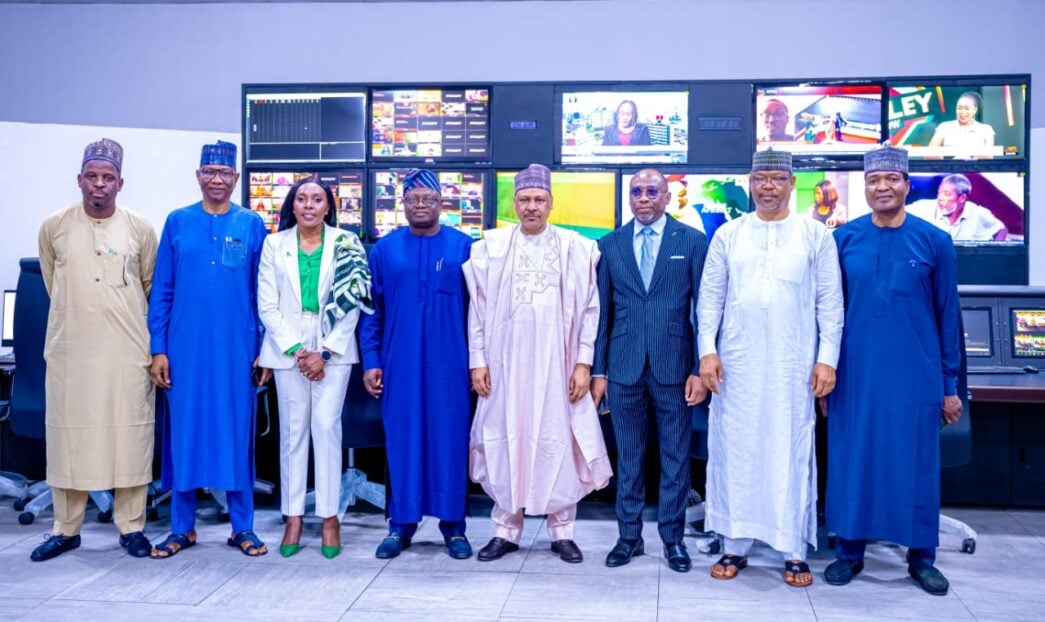
The announcement followed a high-level stakeholders’ meeting convened by the (NBC) in Abuja. The meeting brought together key players in the broadcasting ecosystem, including regulators, television broadcasters, signal distributors, satellite service providers, set-top box manufacturers, technology firms, and content producers.
Chairing the meeting, Nigeria’s Minister of Information and National Orientation, , emphasized that the success of the Digital Switch Over programme should not be measured solely by technological deployment but by its broader economic and social impact.
According to the minister, digital broadcasting has the potential to create thousands of jobs, stimulate local content production, attract investment into the media sector, support indigenous manufacturing, and provide new opportunities for young Nigerians working in the creative and technology industries.
At the conclusion of the meeting, stakeholders unanimously adopted a hybrid broadcasting framework that combines Digital Terrestrial Television (DTT), Direct-to-Home (DTH) satellite services, and internet-enabled digital application platforms. The model is expected to provide greater flexibility and wider coverage, ensuring that viewers in both urban and rural communities can access digital television services.
Under the hybrid system, Digital Terrestrial Television will continue to serve as the foundation of Nigeria’s broadcasting infrastructure, particularly for households that rely on conventional television reception. Stakeholders agreed that DTT remains essential for achieving universal access and should not be abandoned despite the growth of satellite and internet-based services.
Industry experts note that the integration of satellite broadcasting and digital applications will enable viewers to enjoy a broader range of content while improving service reliability, especially in areas where terrestrial signal coverage may be limited.
The meeting also resolved to reconstitute the Digital Implementation Team, popularly known as DigiTeam, which will oversee the execution of the revised digital migration framework. The team is expected to coordinate activities among stakeholders, address technical challenges, monitor implementation progress, and ensure that key objectives of the DSO programme are achieved.
Another major outcome of the meeting was the commitment to protect investments already made by indigenous set-top box manufacturers. Stakeholders acknowledged the role of local manufacturers in supporting the digital transition and emphasized the need for policies that encourage local production, technological innovation, and job creation.
The National Broadcasting Commission was also directed to intensify stakeholder engagement and review outstanding regulatory and technical concerns in consultation with industry operators. These measures are expected to create a more stable and predictable operating environment for investors and broadcasters.
Nigeria’s Digital Switch Over project has experienced several delays since its inception, despite being part of a global initiative led by the International Telecommunication Union (ITU) to migrate from analogue to digital broadcasting. The transition promises numerous benefits, including better picture quality, more television channels, improved spectrum efficiency, interactive services, and expanded opportunities for local content creators.
Analysts believe that the adoption of a hybrid broadcasting model could provide the breakthrough needed to finally complete Nigeria’s digital migration process. By combining terrestrial, satellite, and internet-based technologies, the new platform is expected to expand access to information, entertainment, education, and public service broadcasting for millions of Nigerians.
If successfully implemented, the initiative could transform the country’s broadcasting landscape, boost the creative economy, enhance media accessibility, and strengthen Nigeria’s position as one of Africa’s largest digital media markets.