


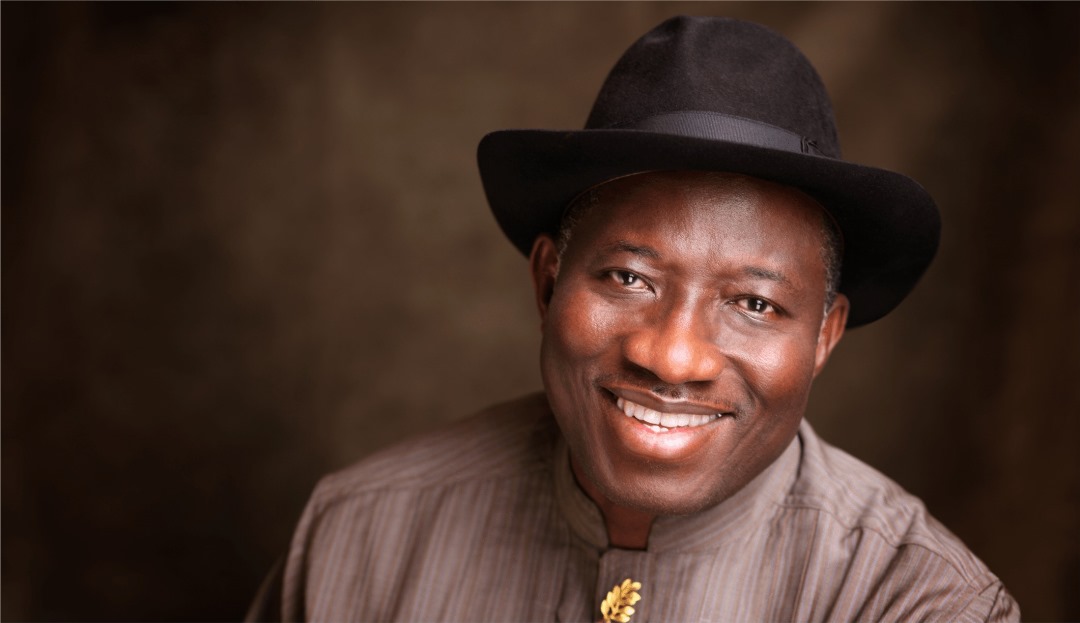
Jonathan made the remarks in Abuja on Monday while speaking at the 2025 awards ceremony of the Association of Retired Career Ambassadors of Nigeria (ARCAN). His comments were in response to criticism by former Vice President Atiku Abubakar, who recently described him as inexperienced during an interview.
Atiku, who is seeking the presidential ticket of the African Democratic Congress ahead of the next general election, had said Jonathan’s lack of experience contributed to what he described as shortcomings in the management of the country during his administration.
The former vice president, in the interview, also assessed the political strength of other opposition figures believed to be interested in the presidency. He downplayed the northern influence of former Kano State governor Rabiu Kwankwaso and former Sokoto State governor Aminu Tambuwal, described Labour Party’s Peter Obi as having a support base largely concentrated in the South-East, and said former Minister of Transportation Rotimi Amaechi’s strength was mainly in the South-South.
He also criticised the current administration of President Bola Tinubu, saying the country had not made the progress many Nigerians expected.
Speaking on Jonathan, Atiku said, “I know Goodluck Jonathan very well. He is a decent young man, but also inexperienced, and I believe that contributed to his inability to manage the affairs of the country, particularly when he was faced with challenges.”
Jonathan, however, rejected the suggestion that age or lack of experience defined his presidency. He argued that no leader governs without making difficult decisions or occasional errors.
“So not too long ago, a very senior politician said, ‘Oh, Jonathan was too young and probably that’s why he made mistakes,’” he said.
“If I made mistakes, yes, nobody who becomes a governor or a president will say you did not make mistakes. Even when you promote yourself to the level of a god, you become a deity. All human beings must make mistakes.”
The former president noted that he assumed office in 2010 at the age of 53 and left in 2015 at 58, questioning the idea that he was too young to lead the country.
“I became president in 2010 at the age of 53. I left in 2015 at the age of 58, and they say I was too young. Must it have been 100 years before I ran the affairs of the state?” he asked.
Jonathan maintained that while his administration, like every government, may have faced challenges, he acted in the best interest of the country and delivered to the best of his ability.
He also highlighted some of Nigeria’s diplomatic gains during his tenure, particularly the country’s successful election to the United Nations Security Council.
“I’m talking to diplomats, so I can say that during my period, I knew what I did for us to appear in the UN Security Council two times. If I were so naive, I don’t think I would have been able to navigate through that process,” he said.
Jonathan used the opportunity to speak on broader regional issues, warning that political instability remains one of the greatest obstacles to economic growth in West Africa.
According to him, the Economic Community of West African States (ECOWAS), despite the lofty vision of its founding fathers, continues to struggle with recurring political crises among member states.
He said the regional bloc was established to drive economic cooperation and integration, but progress would remain limited unless member nations also ensured political order, democratic governance and institutional stability.
“We cannot progress economically if we are very unstable societies politically,” Jonathan said.
The former president explained that efforts by ECOWAS to promote democracy and good governance often run into the challenge of national sovereignty, as member states are sometimes reluctant to accept external intervention in their domestic affairs.
“That means that ECOWAS must interfere with the internal affairs of the states, and the issue of sovereignty becomes a problem,” he said.
He urged leaders across the sub-region to work more closely together and take collective responsibility for restoring confidence in democratic systems and stabilising troubled nations.
“The heads of states of ECOWAS must continue to work together and agree on concrete terms and make sure that the sub-region is politically stable,” he added.
The ceremony also featured tributes to former Head of State, General Yakubu Gowon, one of the key figures associated with the establishment of ECOWAS in 1975.
Gowon described the formation of the regional bloc as a defining moment in West Africa’s history, saying it brought leaders together to pursue shared political and economic goals.
He stressed that the success of ECOWAS was not the effort of one individual, but a collective achievement involving government officials, diplomats and civil servants who worked behind the scenes.
“This would not have been possible without the support of all the staff of the Ministry of External Affairs and the Ministry of Economic Development,” Gowon said.
He added that the honour bestowed on him and other award recipients should be shared with all those who contributed to the success of the regional body.
“The honour that is being done to me today should really go back to all the staff that worked so hard to make sure that this became a reality,” he said.
ARCAN President, Ambassador Joe Keshi, said the awards ceremony was designed to celebrate excellence in diplomacy and recognise individuals who had devoted their lives to the service of Nigeria and Africa.
He noted that diplomatic achievements are often unnoticed by the public because success in the profession is usually measured not by headlines, but by crises avoided, peace maintained and partnerships built.
“Diplomacy is one profession where success is often invisible, reflected not by news coverage, but by maintained stability, prevented conflicts, cultivated partnerships,” Keshi said.
He said this year’s event was particularly significant because it coincided with the 50th anniversary of ECOWAS, paying tribute to its founding visionaries, including Gowon and the late Togolese leader Gnassingbé Eyadéma.
Keshi described ECOWAS as “a bold experiment in regionalism” and called on African diplomats and leaders to adapt to emerging challenges such as insecurity, climate change, economic transformation and shifting global alliances.
He also commended the families of award recipients for their support over the years, noting that public service often requires sacrifices not only from officials, but from their loved ones as well.
The Chief of Army Staff, Lieutenant General Waheed Shaibu, also paid tribute to Gowon, describing him as a symbol of visionary leadership, patriotism and national unity.
According to him, the honour given to the elder statesman provides an opportunity for Nigerians to reflect on a legacy built on courage, stability and unwavering commitment to national progress.
Shaibu said Gowon’s years in leadership demonstrated resilience and a deep sense of duty to the nation, adding that his contributions continue to inspire younger generations of public servants and military officers.
He also praised ARCAN for sustaining important conversations on diplomacy and foreign policy, describing the association as a valuable intellectual platform that continues to shape Nigeria’s engagement with the international community.
Jonathan’s remarks come at a time of increasing political activity ahead of the next electoral cycle, with opposition leaders repositioning and assessing one another’s strengths.
While Atiku’s comments have generated reactions in political circles, Jonathan’s response signals a willingness to defend his legacy as debates over past administrations intensify.
His presidency, which lasted from 2010 to 2015, remains one of the most discussed periods in Nigeria’s democratic history, marked by economic reforms, security challenges, electoral reforms and heightened political competition.
By insisting he did his best in office, Jonathan appeared to draw attention not only to the complexities of leadership but also to the reality that governance is often judged differently depending on political perspective.
For now, the exchange between two former national leaders has added a fresh dimension to Nigeria’s evolving political conversation, even as attention shifts to future alliances, party primaries and the next presidential race.

