


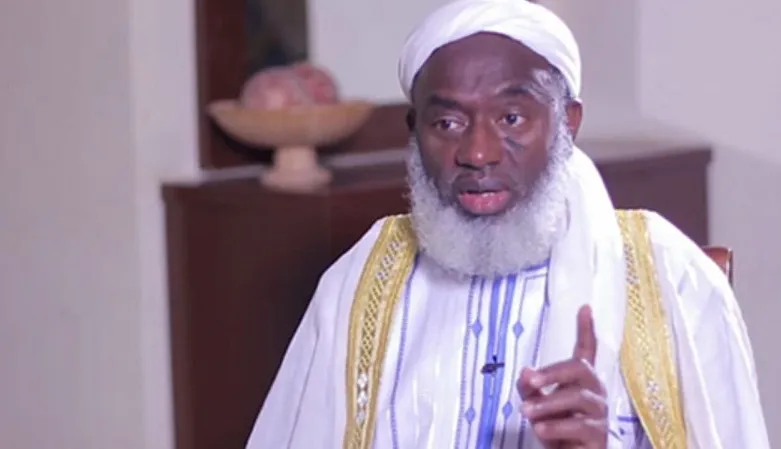
Prominent Islamic scholar Sheikh Ahmad Abubakar Gumi has defended the participation of religious leaders in politics, arguing that clerics who actively engage in governance contribute more to society than those who only pray for political leaders.
Gumi made the remarks amid growing debate over whether Islamic scholars should contest elections or remain focused solely on religious teachings and spiritual guidance.
The discussion has intensified following the political ambitions of several respected clerics, including former Minister of Communications and Digital Economy Sheikh Isa Ali Ibrahim Pantami, who recently emerged as the Peoples Democratic Party (PDP) governorship candidate in Gombe State ahead of the 2027 elections.
Another prominent scholar, Sheikh Bashir Ahmad Sani of Sokoto, had earlier declared his intention to contest the state’s governorship election, while other Islamic scholars have also held or currently occupy political offices across Nigeria.
The development has divided public opinion, particularly among Muslims in northern Nigeria.
Critics argue that politics is often characterised by intense rivalry, public attacks and controversy, making it an unsuitable environment for religious leaders. They believe clerics should instead focus on preaching, offering spiritual guidance, counselling leaders and holding public office holders accountable from outside government.
Supporters, however, insist that competent and principled scholars should not remain on the sidelines while the country grapples with leadership challenges. They argue that meaningful reforms can only be achieved when capable individuals participate directly in governance.
Sharing his views in a post on his official Facebook page, Gumi said there is nothing wrong with clerics seeking elective office or participating in politics.
According to him, religious scholars who endure the demands of public service make a greater contribution than those who limit their role to praying for politicians.
“A religious scholar who gets involved in politics and bears its rigours is better than one who sits on a prayer mat, offering prayers for politicians,” Gumi wrote.
His comments add another voice to the ongoing national conversation about the role of religious leaders in politics as preparations for the 2027 general elections continue.
Gumi Backs Clerics in Politics, Says Leadership Better Than Praying From the Sidelines


- Advertisment -