


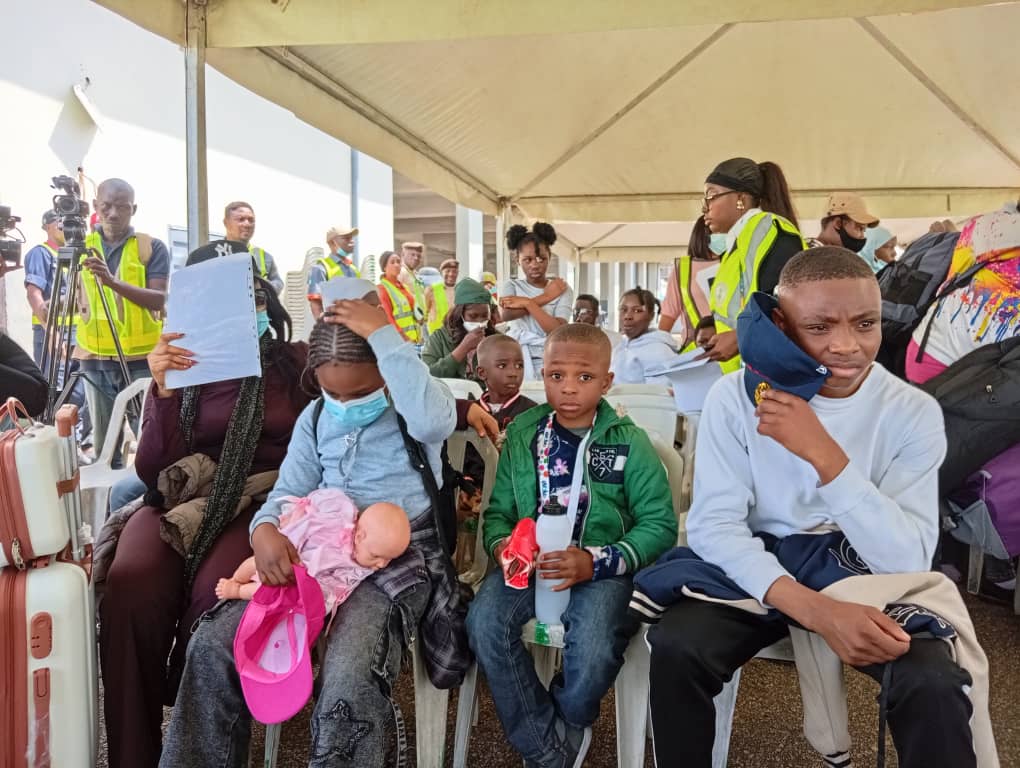
Hundreds of Nigerian nationals seeking to return home from South Africa amid renewed xenophobic tensions are reportedly facing severe hardship due to delays in the Federal Government’s evacuation programme.
The Nigerian Citizens Association South Africa (NICASA) has raised concerns over the plight of affected citizens, warning that many Nigerians who registered for voluntary repatriation are now stranded in various parts of South Africa without adequate shelter, food, transportation or financial support.
The situation follows the Nigerian government’s announcement on June 7, 2026, that it would facilitate the evacuation of citizens willing to return home through five chartered flights operated by Air Peace. The initiative was introduced in response to growing fears among Nigerians following reports of xenophobic attacks and increasing hostility toward foreign nationals in some communities.
However, despite the government’s commitment, only one evacuation flight has been completed so far. The aircraft arrived in Lagos last week carrying 258 Nigerians, leaving hundreds of others who had registered for the programme still awaiting transportation back to Nigeria.
According to NICASA, more than 1,000 Nigerians initially expressed interest in participating in the repatriation exercise. Many of them travelled from distant provinces to designated registration and screening centres after receiving instructions from Nigerian authorities and community leaders.
The association said numerous returnees spent their savings on transportation and logistics in anticipation of imminent departure, only to find themselves stranded after the scheduled flights failed to materialise as expected.
In a statement signed by its National President, Frank Onyekwelu, NICASA described the situation as a growing humanitarian concern that requires urgent intervention by the Nigerian government.
The organisation noted that many affected Nigerians, including women, children and vulnerable individuals, are currently living under difficult conditions while waiting for updates on their return journey.
According to the association, some stranded citizens have exhausted their financial resources after travelling long distances to participate in the evacuation programme. Others have reportedly been forced to rely on the support of friends, community members and charitable organisations for accommodation and daily survival.
NICASA warned that prolonged delays could worsen the humanitarian situation and increase the vulnerability of affected citizens, particularly those who left their jobs, homes or businesses in preparation for repatriation.
The association therefore appealed to the Federal Government, the Ministry of Foreign Affairs, the National Assembly Committees on Foreign Affairs and Diaspora Affairs, and other relevant agencies to take immediate action.
Among its demands, NICASA called for the urgent completion of the evacuation programme through the deployment of the remaining four chartered flights originally promised by the government.
The organisation also urged authorities to establish emergency welfare mechanisms to provide temporary accommodation, food assistance, transportation support and medical care for stranded Nigerians pending their departure.
Furthermore, the group called on the Nigerian High Commission in South Africa to improve communication with affected citizens and work closely with community leaders to address immediate welfare concerns.
The issue has once again drawn attention to the challenges faced by many African migrants during periods of xenophobic unrest in South Africa. Over the years, sporadic outbreaks of anti-foreigner violence have affected migrants from several African countries, including Nigeria, Zimbabwe, Mozambique, Malawi and Ethiopia.
These incidents have often been linked to economic frustrations, unemployment, competition for jobs and social tensions within local communities. Human rights groups have repeatedly called for stronger protections for migrants and more effective measures to combat xenophobia.
Responding to concerns over the delayed evacuation programme, the spokesperson of Nigeria’s Ministry of Foreign Affairs, Kimiebi Imomotimi Ebienfa, stated that there was no fresh update on the situation but assured that information would be provided once new developments emerge.
Similarly, the Nigerians in Diaspora Commission (NiDCOM) reassured affected citizens that all registered Nigerians would eventually be evacuated. The agency’s Head of Media, Public Relations and Protocol, Abdur-Rahman Balogun, urged those awaiting departure to remain patient while government agencies finalise arrangements for the remaining flights.
Balogun emphasized that authorities are working to ensure that the repatriation process is conducted safely, efficiently and in an orderly manner.
Analysts say the situation highlights the importance of effective emergency planning and coordination during large-scale evacuation operations. They note that while the government’s decision to evacuate citizens was welcomed, timely implementation is essential to prevent additional hardship for those already facing difficult circumstances abroad.
For many stranded Nigerians, however, the immediate concern remains uncertainty. Having responded to calls for evacuation and left their communities in anticipation of returning home, they now wait anxiously for the government to fulfil its promise and complete the repatriation programme.
As pressure mounts on authorities to act swiftly, affected citizens and community leaders continue to hope that the remaining evacuation flights will be deployed soon, bringing relief to hundreds of Nigerians caught in a difficult and increasingly challenging situation far from home.


