


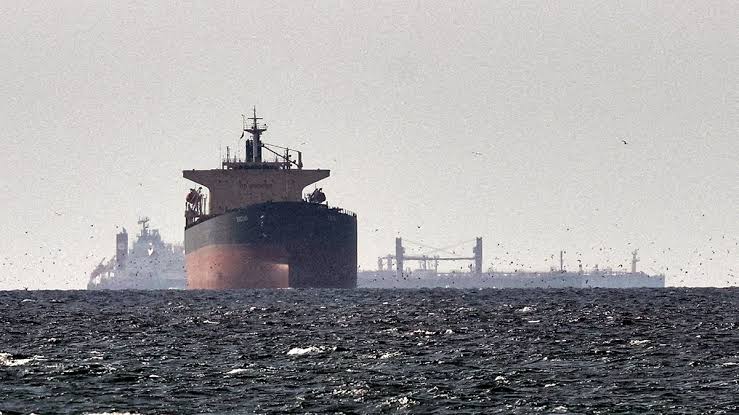
Iran has moved to clarify its position on the status of the Strait of Hormuz, stating that the strategic waterway remains open despite conflicting claims between its military and diplomatic institutions over recent developments involving the United States.
The clarification was issued by the Foreign Ministry of Iran following reports that the Islamic Revolutionary Guard Corps () had announced restrictions or a possible closure of the vital shipping route in response to alleged breaches of a recent understanding with the United States.
According to earlier reports attributed to the IRGC, the group accused the United States of violating elements of a newly signed memorandum of understanding between Washington and Tehran. The agreement, reportedly signed between U.S. President Donald Trump and Iranian President Masoud Pezeshkian, was said to include provisions such as easing naval tensions, lifting certain restrictions on maritime movement, and broader security arrangements in the Persian Gulf region.
The IRGC statement further suggested that conditions tied to the agreement—including Israeli military withdrawal from Lebanon, lifting of maritime blockades, and the reduction of American naval presence in the region—had not been fully met. It warned that the Strait of Hormuz could be closed until compliance with these conditions was achieved, and advised vessels to avoid the area due to potential security risks.
However, Iran’s Foreign Ministry swiftly countered this position, stating that there was no official decision to shut the Strait of Hormuz. Foreign Ministry spokesman Esmail Baghaei dismissed the claims, insisting that the waterway remains open to international navigation and that earlier reports suggesting closure lacked official authorization.
The contradiction between Iran’s military and diplomatic arms has drawn attention to ongoing internal coordination issues within the country’s foreign and security policy structure. While the IRGC is known to operate with significant autonomy in regional security matters, official foreign policy statements are typically issued by the Foreign Ministry, which serves as Iran’s primary diplomatic channel.
The Strait of Hormuz, which connects the Persian Gulf to the Gulf of Oman and the Arabian Sea, is widely regarded as one of the most important maritime chokepoints in the world. A significant portion of global crude oil exports passes through the waterway, making it a critical artery for international energy supply chains.
Any threat to its stability often triggers immediate reactions in global oil markets, with analysts warning that disruptions could lead to price volatility, supply chain uncertainty, and heightened geopolitical tensions across the Middle East and beyond.
The reported tensions emerged amid ongoing diplomatic engagement between Iran and the United States aimed at reducing hostilities and establishing temporary maritime security arrangements. Under the reported framework of the agreement, the Strait of Hormuz was expected to remain open and free of tolls for a limited period while both sides continued negotiations on longer-term maritime and regional security issues.
In exchange, Washington was said to have agreed to scale back certain naval restrictions affecting Iranian ports, although details of the arrangement remain unclear, and neither government has fully released the text of the agreement.
The situation became more uncertain after reports indicated continued presence of U.S. naval vessels in nearby waters, which Iranian hardliners interpreted as a breach of the understanding. The United States Central Command, however, stated that while some vessels remain stationed in the region for operational purposes, there has been no reinstatement of a blockade.
Despite the conflicting narratives, Iran’s Foreign Ministry reiterated that international shipping through the Strait of Hormuz is unaffected and that vessels are free to transit the route under normal conditions.
Observers say the incident highlights the fragile balance between Iran’s diplomatic commitments and the more assertive posture of its military institutions, particularly the IRGC, which has historically taken a hardline stance on U.S. and Western military presence in the Gulf.
Analysts also caution that even unverified reports about potential closures of the Strait can have immediate global economic consequences, given the chokepoint’s role in energy transportation and global trade stability.
For now, Tehran’s official position maintains that the Strait of Hormuz remains open, even as conflicting statements continue to fuel uncertainty in international diplomatic and energy circles.