


Nigeria’s food security challenges have renewed attention on the role of technology and mechanised farming in improving agricultural productivity, reducing import dependence and strengthening the country’s economy.
The National Agency for Science and Engineering Infrastructure (NASENI) has positioned agricultural mechanisation as a key part of its strategy to modernise farming, increase local production and promote indigenous technology.
Under the leadership of its Executive Vice Chairman and Chief Executive Officer, Khalil Suleiman Halilu, the agency says it is implementing initiatives aimed at transforming agriculture from small-scale subsistence farming into a more efficient, commercially driven sector.
Reviving abandoned tractors
One of NASENI’s flagship interventions is the National Tractor Recovery Programme, implemented in partnership with the Mechanisation Equipment Company of Africa (MECA).
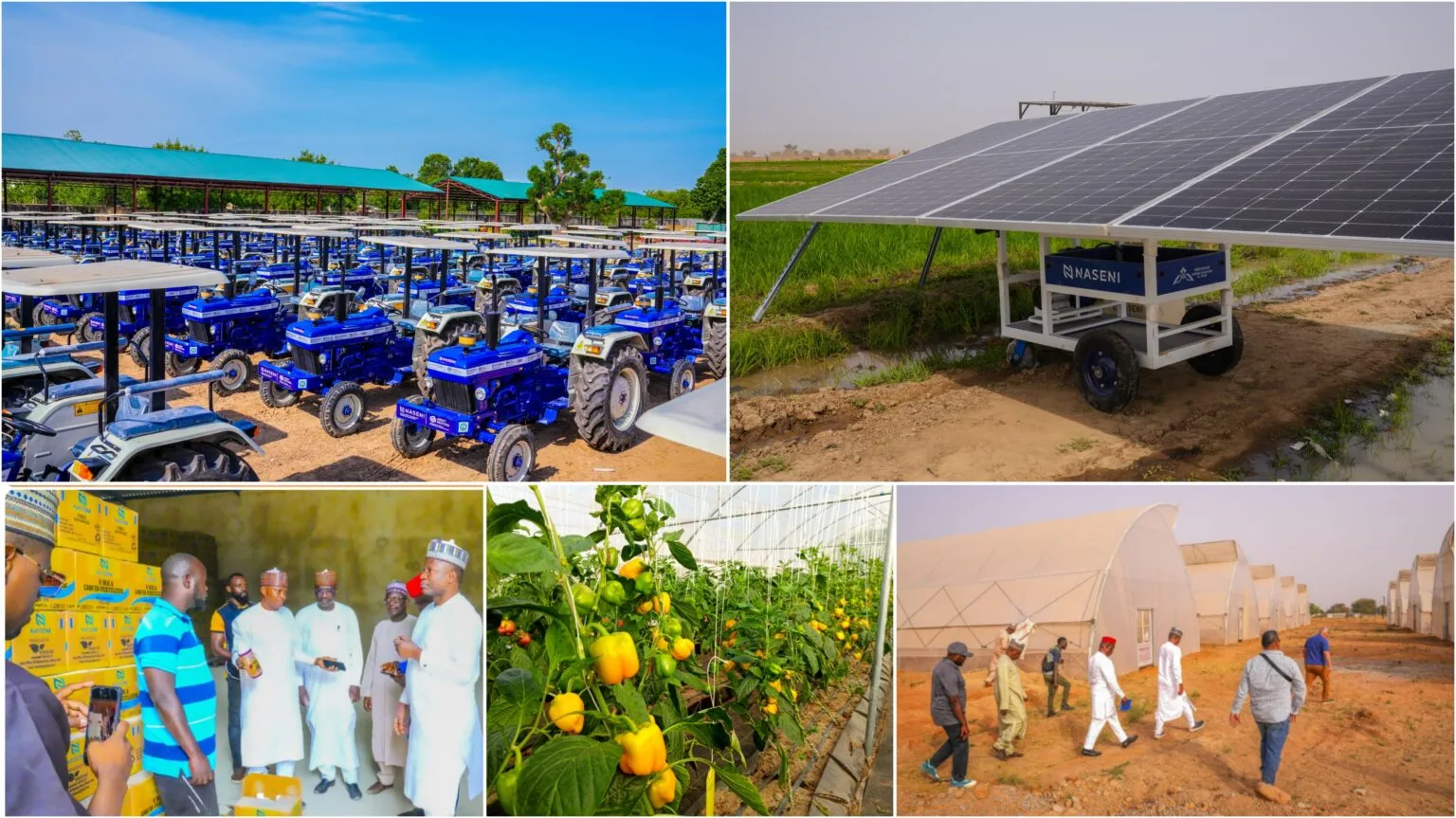
Rather than relying solely on imported machinery, the programme focuses on repairing and redeploying abandoned tractors across the country. According to the agency, more than 1,000 tractors have already been restored in Borno and Niger states, enabling farmers to prepare larger areas of farmland, reduce dependence on manual labour and improve productivity.
Expanding local manufacturing
NASENI is also strengthening domestic production through its Agricultural Machinery and Equipment Development Institute (AMEDI) in Lafia, Nasarawa State.
The institute is producing and assembling agricultural equipment tailored to Nigeria’s farming conditions while advancing research into precision agriculture, greenhouse technology and hydroponic farming. The agency says the initiative is expected to create jobs for young Nigerians and reduce reliance on imported agricultural machinery.
Promoting solar-powered irrigation
To address the country’s heavy dependence on rainfall, NASENI has launched the Irrigate Nigeria Project in collaboration with the Renewed Hope Infrastructure Development Fund (RHIDF).
The project includes the deployment of solar-powered irrigation pumps designed to replace fuel-powered alternatives, lower production costs and enable farmers to cultivate crops throughout the year.
The agency believes expanded irrigation will help increase harvests, improve food availability and reduce seasonal fluctuations in food prices.
Supporting fertiliser production and agro-processing
NASENI is also partnering with international organisations, including Brazil’s CAMPO and Indonesia’s PT Saputra Global Harvest, to develop coal-based organic fertilisers and modern agro-processing equipment.
In addition, the agency is collaborating with Whitefog on local production of liquid fertiliser, with the aim of improving soil fertility, increasing crop yields and supporting the Federal Government’s food security agenda.
Agricultural incubation centres
To strengthen research and innovation, NASENI has begun constructing Agricultural Incubation Centres at the University of Abuja and Bayero University, Kano, with plans to establish similar centres in each of Nigeria’s six geopolitical zones.
The centres are expected to combine crop production, poultry, aquaculture, greenhouse farming and biotechnology research while helping bridge the gap between academic research and practical agricultural solutions.
Long-term targets
As part of its long-term strategy, NASENI aims to reduce Nigeria’s dependence on imported manufactured goods by encouraging local production and commercialising indigenous technologies.
The agency projects that its programmes could contribute to reducing import costs, creating millions of jobs, supporting small and medium-sized enterprises and improving food security over the coming years.
According to NASENI, achieving sustainable food security will depend not only on increased agricultural production but also on expanding local manufacturing, improving access to mechanisation and strengthening technology-driven farming across the country.
NASENI drives agricultural mechanisation to boost Nigeria’s food security


- Advertisment -