


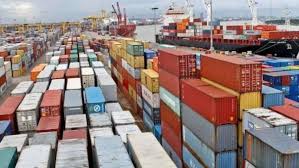
Nigeria is intensifying efforts to reposition its maritime sector as part of a broad economic reform agenda aimed at strengthening trade, boosting revenue, and improving competitiveness under the African Continental Free Trade Area (AfCFTA).
Despite accounting for more than 60 per cent of West Africa’s Gross Domestic Product (GDP), Nigeria currently handles only about 25 per cent of regional cargo traffic, a disparity the government says reflects long-standing inefficiencies in its port system.
The Managing Director of the Nigerian Ports Authority, Abubakar Dantsoho, raised the concern while speaking at a maritime stakeholders’ forum in Lagos, warning that congestion, poor infrastructure, and outdated processes continue to undermine Nigeria’s dominance in regional shipping.
He noted that under the emerging AfCFTA framework, efficiency, speed, and reliability not geography alone will determine which countries control cargo flows across Africa.
According to him, Nigeria must urgently modernise its port operations to remain competitive in a rapidly integrating continental market.
“The time has come for a paradigm shift in the structure of Nigeria’s economy towards full utilisation of our marine resources,” he said, adding that the port sector has the potential to become a major driver of economic growth if properly harnessed.
$1 Billion Port Upgrade Plan
In response, the Federal Government, led by President Bola Ahmed Tinubu, has approved a major port modernisation programme valued at about $1 billion. The initiative targets key facilities, including Lagos Port Complex and Tin Can Island Port, with a focus on addressing decades of infrastructure decay.
The House of Representatives recently approved the loan request to fund the project, which aims to expand cargo handling capacity, reduce vessel turnaround time, and improve safety standards.
The administration says the reforms align with the National Integrated Infrastructure Master Plan and are critical to supporting non-oil exports and economic diversification.
Creation of Marine and Blue Economy Ministry
As part of its restructuring agenda, the government established the Federal Ministry of Marine and Blue Economy, headed by Adegboyega Oyetola, to coordinate maritime development and unlock what officials estimate to be a multi-trillion-dollar blue economy potential.
The ministry is overseeing reforms aimed at improving port efficiency, expanding maritime infrastructure, and attracting private sector investment.
Oyetola has emphasized that the reform agenda is not limited to Lagos ports alone, stressing the need for balanced development across the country’s maritime facilities.
Nationwide Port Modernisation
Beyond Lagos, the government is rolling out upgrades in Warri, Port Harcourt, Onne, and Calabar ports. Procurement processes for rehabilitation works are already underway.
Officials say the goal is to decentralise port activity, reduce congestion in Lagos, and promote regional economic development.
In addition, new deep seaports are being developed in Bayelsa, Cross River, Akwa Ibom, and Ondo States. Projects such as the Lekki Deep Sea Port are already transforming Nigeria’s capacity to receive larger vessels and handle higher cargo volumes.
Digital Transformation of Port Operations
A key pillar of the reform is digitalisation. The government is deploying a Port Community System and a National Single Window platform to streamline cargo processing and eliminate manual bottlenecks.
These systems are expected to reduce clearance times, improve transparency, and lower the cost of doing business at Nigerian ports.
Industry stakeholders believe the shift to a paperless, technology-driven system will significantly reduce corruption risks and improve Nigeria’s ranking as a logistics hub.
Logistics and Inland Connectivity
The reform agenda also extends beyond port terminals to inland logistics. The government is investing in rail connections, inland dry ports, barge operations, and dedicated export corridors to improve cargo evacuation.
Dantsoho warned that without strong hinterland connectivity, gains at the ports would be limited.
He stressed that efficient transport links between ports and industrial centres are essential to sustaining long-term competitiveness.
Maritime Security Improvements
Nigeria’s maritime sector has also recorded improvements in security, with the country reporting over four years without piracy incidents in its waters.
This progress is attributed to enhanced surveillance systems and the implementation of the Deep Blue maritime security programme.
The improved security environment has boosted investor confidence and encouraged private sector participation in port development.
Rising Revenue and Economic Impact
According to the government, reforms are already yielding financial benefits. Agencies under the Marine and Blue Economy Ministry reportedly generated about N1.83 trillion in 2025, up from N700.79 billion in 2023.
Officials attribute the increase to improved efficiency, digital systems, and tighter regulatory oversight.
Economists say efficient ports could significantly reduce logistics costs, enhance export competitiveness, and support industrial growth, especially in manufacturing and agriculture.
Strategic Importance of AfCFTA
With AfCFTA opening access to a continental market of over 1.3 billion people, Nigeria’s ability to efficiently process cargo is seen as critical to its economic future.
Experts warn that countries with faster, more efficient ports will capture a larger share of intra-African trade, while inefficient systems risk being bypassed.
Challenges Ahead
Despite the optimism, challenges remain. Infrastructure gaps, bureaucratic delays, funding constraints, and policy consistency continue to pose risks to implementation.
There are also concerns about whether improvements in port infrastructure will be matched by upgrades in electricity supply, road networks, and industrial capacity.
Outlook
Nevertheless, government officials remain confident that ongoing reforms will reposition Nigeria as a leading maritime hub in Africa.
Oyetola says Nigeria’s geographic advantage, combined with its large economy and coastline of over 800 kilometres, provides a strong foundation for growth.
Dantsoho also expressed optimism, stating that sustained reforms will transform Nigeria’s ports into efficient engines of economic development.
If successfully implemented, the reforms could significantly reshape Nigeria’s trade landscape, strengthen regional competitiveness, and enhance the country’s role in global maritime commerce.
For now, the focus remains on execution, as Nigeria seeks to convert its vast maritime potential into measurable economic gains under the evolving African trade environment.

