


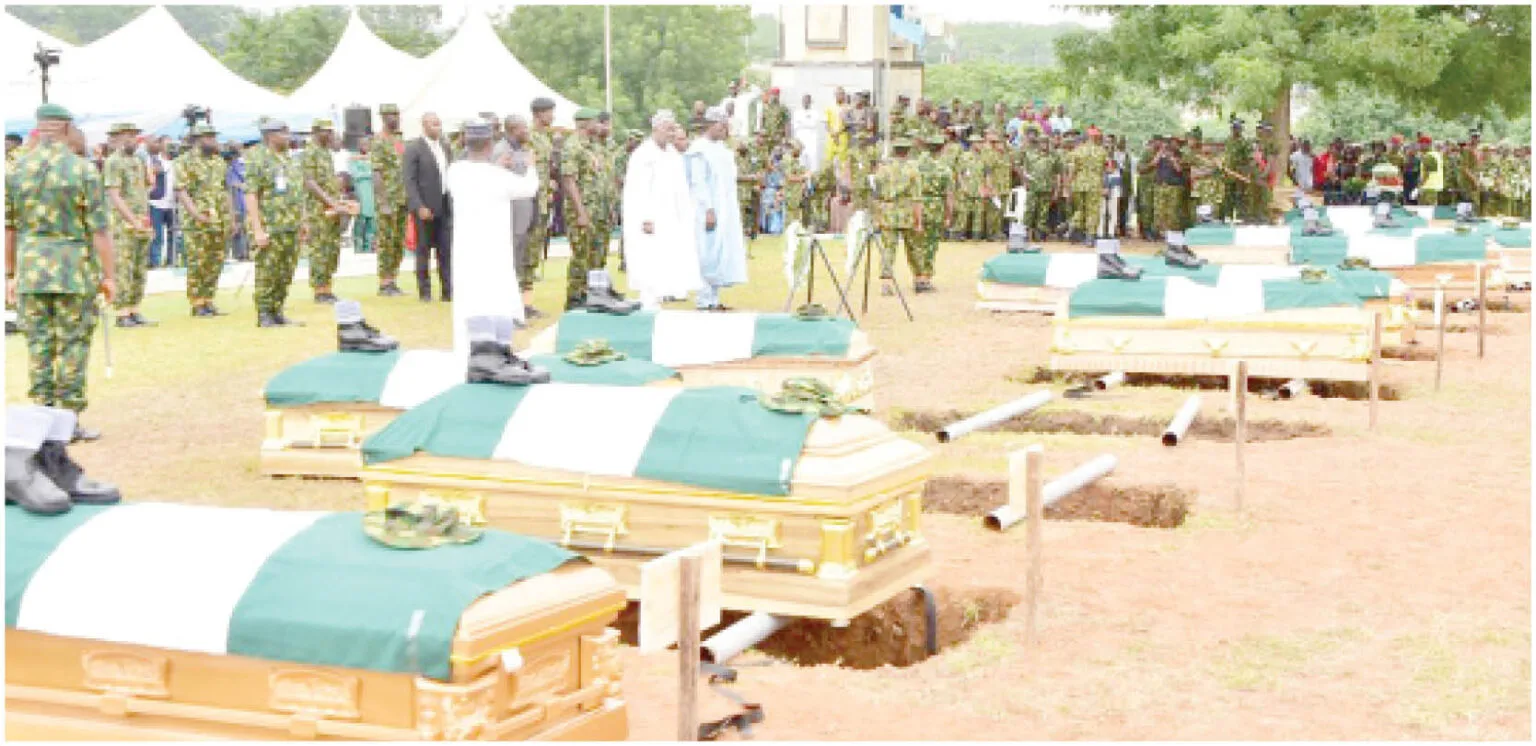
The Nigerian military, in partnership with the International Committee of the Red Cross (ICRC), has launched a specialized training programme aimed at improving the identification and management of soldiers killed or declared missing during military operations.
The five-day Battlefield Mortuary Affairs Training, which began on Monday at the Nigerian Air Force Base in Kaduna, is designed to equip personnel with the skills required to recover, identify and properly handle the remains of fallen service members.
Speaking at the opening ceremony, the Deputy Director of the Defence Identification Centre (DIC), Air Commodore Chukwuma Ohanele, described the initiative as a major step toward strengthening the Armed Forces’ ability to manage battlefield casualties with professionalism and dignity.
He noted that as military operations continue across various parts of the country, casualties have become an unfortunate reality, making it essential for personnel to receive proper training in identifying and caring for the deceased.
According to Ohanele, the programme seeks to reinforce accountability, respect for human dignity and adherence to international humanitarian standards while providing families with certainty about the fate of their loved ones.
Participants drawn from the Nigerian Army, Navy and Air Force will receive both classroom instruction and practical field exercises covering battlefield recovery procedures, mortuary management, international humanitarian law, explosive ordnance disposal awareness, documentation of human remains, transportation, temporary burial and repatriation.
The training will also include practical assessments designed to prepare participants for real-life operational situations.
Ohanele commended the Chief of Defence Staff, General Olufemi Oluyede, for supporting the initiative and acknowledged the contributions of the Defence Headquarters, the Defence Identification Centre, the Nigerian Air Force School of Medical Sciences and Aviation Medicine, the Regiment Training School and the ICRC in organizing the programme.
He encouraged participants to fully engage with the training, stressing that the respectful handling of fallen personnel reflects the military’s commitment to discipline, professionalism and compassion.
Also speaking, the Commandant of the Nigerian Air Force School of Medical Sciences and Aviation Medicine, Air Vice Marshal Anthony Ekpe, said the programme comes at a crucial time as security operations become increasingly complex.
He explained that recovering and identifying soldiers killed in combat can be extremely challenging, particularly in hostile environments, and expressed confidence that the training would improve the military’s capacity to identify casualties and provide answers to grieving families.
Ekpe also welcomed participants from South Africa and thanked both the Defence Headquarters and the ICRC for selecting the institution as the host venue.
In his remarks, the ICRC’s Forensic Manager, Dr. Habib El TaKach, said the training is the result of discussions that began in Pretoria, South Africa, in 2024.
He described the programme as the first global initiative of its kind, noting that it is expected to enhance efforts to identify military personnel who die during armed conflicts, reduce the number of unresolved missing-person cases and help families achieve closure.
According to TaKach, the identification process involves careful planning, recovery of remains, transportation and detailed documentation through photographs, videos and biological samples, all of which are critical to ensuring accurate identification
Nigerian Military, ICRC Train Personnel on Identifying Fallen Soldiers in Combat


- Advertisment -