


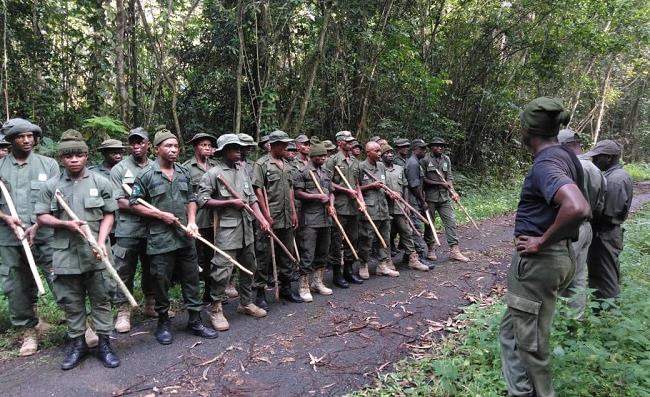
More than a year after President Bola Ahmed Tinubu launched the Presidential Forest Guards Initiative to tackle insecurity in Nigeria’s forests and remote communities, growing incidents of kidnapping and banditry have sparked renewed debate about the programme’s effectiveness, visibility, and operational readiness.
The initiative was conceived in February 2024 following consultations between the President and state governors and formally launched on May 15, 2025. It was designed to reclaim forests from criminal groups, strengthen intelligence gathering, and provide an additional layer of security in areas often inaccessible to conventional security forces.
Under the programme, states were directed to recruit between 2,000 and 5,000 forest guards each, with the guards expected to work closely with the military, police, intelligence agencies, and local security networks to combat banditry, kidnapping, illegal mining, and other criminal activities.
Fresh Kidnappings Renew Scrutiny
The latest scrutiny of the initiative follows a series of high-profile abductions, including the kidnapping of more than 80 schoolchildren and teachers in parts of Borno State and Oyo State, as well as students in Zamfara State.
The abduction of dozens of pupils and school staff in Oriire Local Government Area of Oyo State has particularly intensified public concern about whether the forest guards are adequately deployed and equipped to prevent such attacks.
During a visit to the affected community, National Security Adviser Nuhu Ribadu announced the deployment of an additional 1,000 forest guards, underscoring the government’s determination to strengthen security in vulnerable areas.
However, many Nigerians are asking a critical question: Where are the thousands of forest guards already recruited and deployed?
Ambitious Security Vision
The Forest Guards Initiative was envisioned as a specialised security structure operating under the strategic supervision of the Office of the National Security Adviser, with operational coordination involving the Department of State Services, the National Park Service, and other security agencies.
According to government plans, the guards were to be trained in surveillance, intelligence gathering, forest operations, and community engagement. They were also expected to collaborate with local hunters and community security groups familiar with difficult terrains often exploited by criminal gangs.
Officials described them as a frontline security force capable of serving as first responders in remote areas where conventional security agencies face logistical challenges.
Mixed Reports Across States
Investigations across several states reveal a complex picture of progress, delays, and operational uncertainty.
In Borno State, members of the Forest Security Service confirmed that they had undergone training and begun receiving allowances through the federal government. However, many said they were still awaiting deployment directives, weapons, and operational assignments despite being prepared for field work.
Some operatives disclosed that while uniforms and equipment had started arriving, they had yet to receive the resources needed to conduct full-scale security operations.
In Benue State, recruitment efforts remain ongoing, with successful applicants reportedly still undergoing training. State officials acknowledged the programme’s importance but indicated that deployment has not yet reached full operational capacity.
The situation appears different in Kebbi State, where more than 800 forest guards have reportedly completed training and were deployed to local government areas heavily affected by banditry. Officials say they work alongside the military, police, and intelligence agencies. However, some observers claim that a number of the recruits are being utilised in administrative security roles rather than active forest operations.
Kano and Kwara Show Greater Activity
Among states where the initiative appears more visible, Kano State and Kwara State stand out.
In Kano, forest guards have reportedly been assigned to major forest reserves, including the notorious Falgore Forest, which was once considered a hotspot for banditry and organised crime. The state government says the guards are helping combat illegal logging, environmental degradation, and criminal activity.
Kwara State has gone even further, expanding its forest guard programme significantly over recent years. State authorities say more than 700 guards were already operating before an additional 1,000 were recruited, with plans for further expansion.
Forest guards in Kwara have participated in surveillance missions, intelligence operations, and joint security patrols. However, the programme has also suffered casualties. Several operatives have reportedly lost their lives during anti-kidnapping operations, highlighting the dangers faced by personnel working in heavily forested security flashpoints.
Challenges of Equipment and Welfare
Despite the initiative’s ambitious goals, recurring complaints have emerged regarding equipment, training, and welfare.
In Niger State, some forest guards said they continue to rely on locally made firearms while confronting criminal groups armed with sophisticated weapons. Several operatives reported losing colleagues to attacks and kidnappings while carrying out their duties.
Others complained about low wages and inadequate logistical support, arguing that effective forest security operations require modern communication systems, transportation, intelligence support, and better protective equipment.
Security analysts warn that without sustained investment, the initiative may struggle to achieve its intended objectives.
Limited Visibility in Some States
In states such as Taraba State and Nasarawa State, residents say the presence of forest guards remains largely invisible despite government announcements regarding recruitment and deployment.
Farmers and community leaders interviewed in rural areas reported seeing little or no evidence of regular forest patrols, even as farming activities resume and security concerns persist.
Similarly, Edo State is still in the recruitment and training phase, with authorities conducting screening, medical examinations, and background checks before deploying successful applicants.
Experts Call for Stronger Coordination
Security experts argue that recruitment alone cannot solve the country’s forest-related security challenges.
According to security consultant Mamman Ilyasu, the success of the initiative depends on continuous training, proper equipment, intelligence-sharing, adequate welfare, and close collaboration with conventional security agencies.
He noted that Nigeria’s vast forests present enormous operational challenges, including difficult terrain, limited manpower, and heavily armed criminal groups.
A retired senior officer of the Department of State Services, Orgem Angulum, argued that while recruiting additional forest guards is important, urgent action must also focus on rescuing kidnapping victims currently in captivity.
According to him, existing security agencies should be given clear operational directives to tackle ongoing threats while the forest guard programme continues to evolve.
A Promising Initiative Facing a Crucial Test
One year after its launch, the Presidential Forest Guards Initiative remains one of Nigeria’s most ambitious attempts to secure forests and rural communities that have become safe havens for kidnappers, bandits, and other criminal groups.
While some states report measurable deployment and operational activity, others are still grappling with recruitment, training, funding, and coordination challenges. The absence of comprehensive public data on deployments, operational successes, casualties, and performance indicators has further fueled questions about the programme’s overall impact.
As kidnappings continue to occur in forested regions and schoolchildren remain vulnerable to attacks, pressure is mounting on authorities to demonstrate that the initiative is not merely a policy announcement but a fully functioning security framework capable of delivering tangible results.
For many Nigerians, the central question remains unanswered: if thousands of forest guards have already been recruited, trained, and deployed, why does insecurity in many forest corridors continue to persist at alarming levels?