


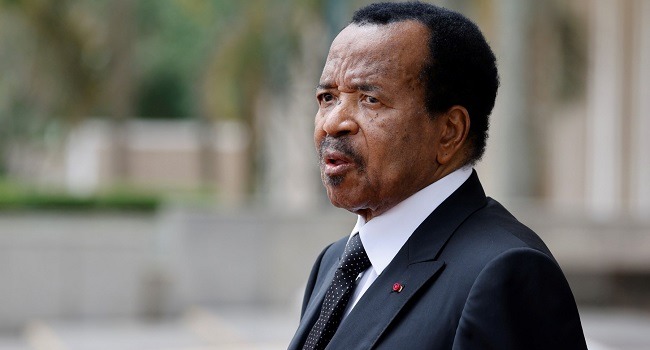
Cameroonian President Paul Biya has returned to the country after spending 73 days abroad, ending a prolonged absence that had fueled speculation about his health and concerns over the leadership of the country.
President Paul Biya arrived in Yaoundé on Thursday at about 4:00 p.m. GMT after travelling from Geneva, Switzerland, where he had been staying since June 7.
Biya, who has ruled Cameroon since 1982, had described his stay in Geneva as a “short private stay.” However, his extended absence sparked renewed questions about his health and who was effectively overseeing the affairs of the country.
The 93-year-old president, the world’s oldest serving head of state, left the airport alongside First Lady Chantal Biya and waved to supporters as they travelled towards the presidential palace.
Dozens of ruling-party supporters gathered at the airport to welcome him, with some carrying images of the president.
Health Concerns Fuel Speculation
Biya’s health has been the subject of speculation for years, particularly because of his frequent trips to Geneva.
Cameroon’s Communication Minister, René Emmanuel Sadi, denied reports in June that the president had been hospitalised at a clinic in Geneva.
However, his latest 73-day absence intensified criticism from opposition figures, who accused the government of operating under an “institutional vacuum” while key appointments, including a new government and vice-president, remained pending.
Government officials have rejected suggestions that Biya was unable to govern during his absence, insisting that he remained in charge of state affairs.
Opposition Questions His Leadership
Despite his return, some opposition figures continued to question the significance of his presence.
Univers opposition party leader Prosper Nkou Mvondo criticised what he described as a political “spectacle”, arguing that Biya’s return would not change the way the country is governed.
Biya’s prolonged absences have become a source of frustration among some Cameroonians, particularly as the president continues to face questions about his age, health and eventual succession.
Questions Over Cameroon’s Future
Biya was re-elected to an eighth term in October 2025 following an election that triggered protests and a violent government response. Authorities acknowledged several dozen deaths but did not provide a definitive figure.
His latest stay abroad also intensified discussions about who could eventually succeed him, with political figures positioning themselves for a post-Biya era.
Cameroon does not currently have a vice-president. Under the country’s constitutional succession arrangements, the Senate president, Aboubakary Abdoulaye, would be next in line in the event of a vacancy in the presidency, pending the organisation of a presidential election.
Paul Biya Returns To Cameroon After 73-Day Absence


- Advertisment -