


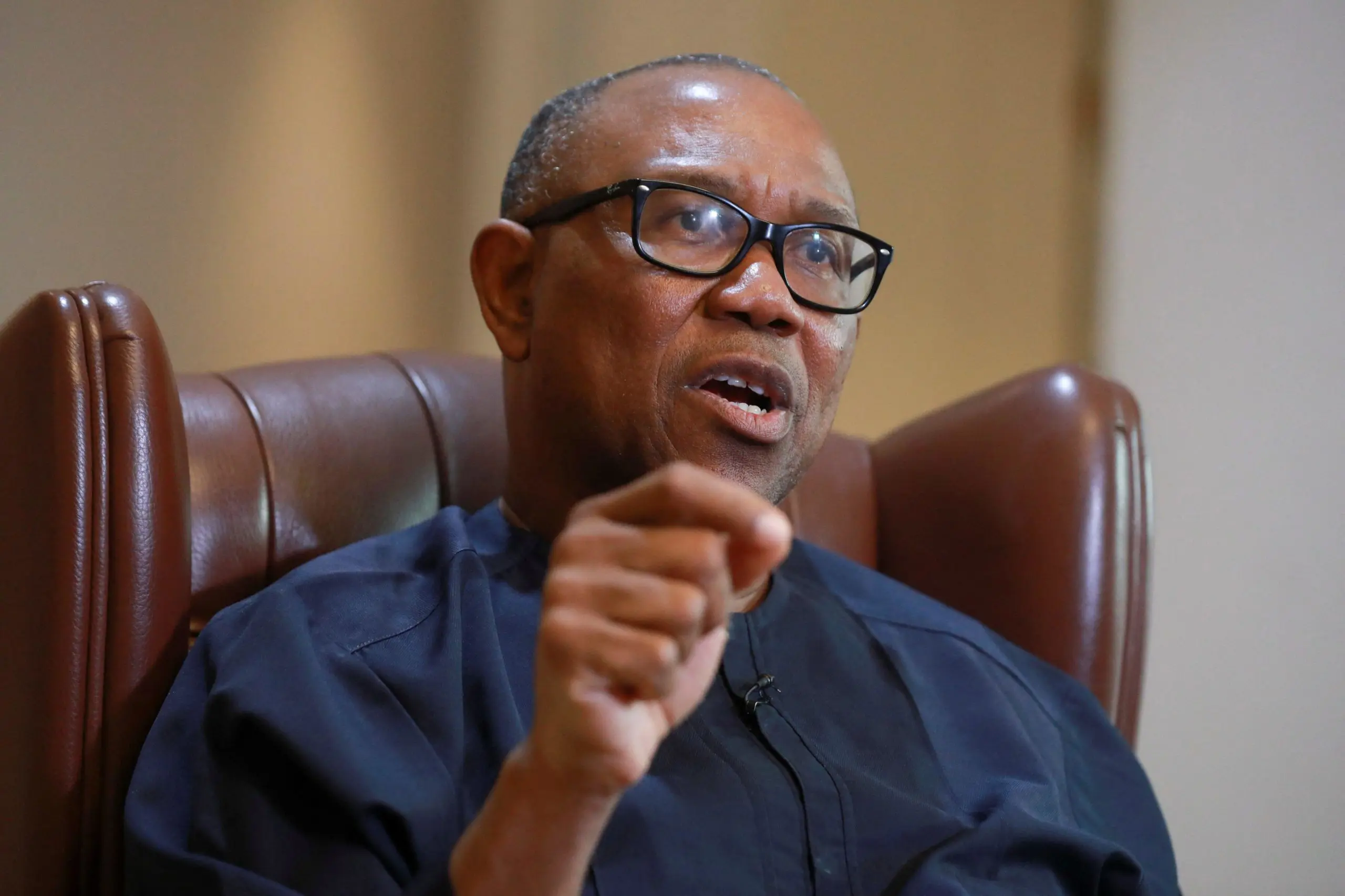
Presidential candidate of the Nigeria Democratic Congress (NDC), , has pledged to significantly improve Nigeria’s electricity sector by ensuring the country generates, transmits, and distributes at least 10,000 megawatts of power within four years if elected president.
Obi made the commitment during an interview on the BlackBox programme hosted by media personality and journalist , where he discussed his vision for addressing one of Nigeria’s most persistent developmental challenges.
The former governor of Anambra State described improved electricity supply as a critical requirement for economic growth, industrial expansion, job creation, and improved living standards. According to him, achieving stable and reliable power generation would unlock enormous opportunities for businesses, manufacturers, and households across the country.
During the interview, Obi stated that a minimum of 10,000 megawatts of available electricity within four years was both realistic and achievable under a competent administration. He argued that Nigeria possesses sufficient resources, technical expertise, and investment potential to improve power generation beyond current levels if the right policies and leadership are put in place.
However, when pressed to explain the specific strategies he would deploy to reach the target, Obi declined to reveal the details of his plan. He maintained that political leadership should ultimately be judged by credibility, competence, and previous records of achievement rather than by publicly disclosing every aspect of policy implementation before assuming office.
Defending his position, Obi drew comparisons with campaign promises made by other political leaders, arguing that politicians are often elected based on public confidence in their ability to deliver results. He suggested that voters should focus on the track record and integrity of candidates rather than demand detailed operational blueprints during political campaigns.
The former presidential candidate emphasized that his confidence in achieving the target stems from his experience in governance and management, insisting that delivering improved electricity would be one of the priorities of his administration if elected.
His comments have generated mixed reactions among political observers and energy stakeholders. While supporters praised the ambitious target and argued that Nigeria urgently needs bold commitments to address its power deficit, critics questioned why the candidate declined to provide a clearer explanation of how the objective would be achieved.
Energy experts note that increasing electricity supply to 10,000 megawatts would require substantial investments across the entire power value chain, including generation, transmission, and distribution infrastructure. They argue that simply increasing generation capacity would not be sufficient unless transmission networks are upgraded and distribution companies improve their ability to deliver power to consumers efficiently.
Nigeria has struggled with electricity shortages for decades despite multiple reforms and billions of naira invested in the sector. The country’s installed generation capacity is significantly higher than the amount of electricity regularly delivered to homes and businesses, largely due to transmission bottlenecks, aging infrastructure, inadequate gas supply, equipment failures, and operational inefficiencies.
Frequent power outages continue to affect economic productivity nationwide, forcing many households and businesses to rely on expensive diesel and petrol generators. Manufacturers have repeatedly identified unreliable electricity as one of the biggest obstacles to industrial growth, competitiveness, and investment.
Analysts believe that achieving a stable supply of 10,000 megawatts would require a combination of reforms, including increased private-sector participation, expansion of transmission infrastructure, improved gas availability for power plants, stronger regulatory oversight, investment in renewable energy, and the modernization of distribution networks.
Some industry stakeholders have also pointed out that Nigeria’s growing population and expanding economy require even higher power generation targets over the long term. They argue that while 10,000 megawatts would represent a significant improvement, the country ultimately needs tens of thousands of megawatts to meet the demands of a modern industrial economy.
The debate surrounding Obi’s pledge highlights the central role electricity will likely play in the build-up to the 2027 presidential election. Power supply remains one of the most important issues for voters, businesses, and investors seeking solutions to Nigeria’s economic and developmental challenges.
As political campaigns gradually gather momentum, Nigerians are expected to scrutinize promises from candidates more closely, particularly on critical sectors such as power, infrastructure, security, education, and the economy. For many citizens, the ability of any future administration to deliver reliable electricity will remain a key measure of governance performance and national progress.
While Obi’s promise of achieving 10,000 megawatts within four years has generated considerable interest, observers say the focus will eventually shift from campaign commitments to practical strategies capable of transforming Nigeria’s struggling power sector and delivering lasting benefits to millions of Nigerians.