


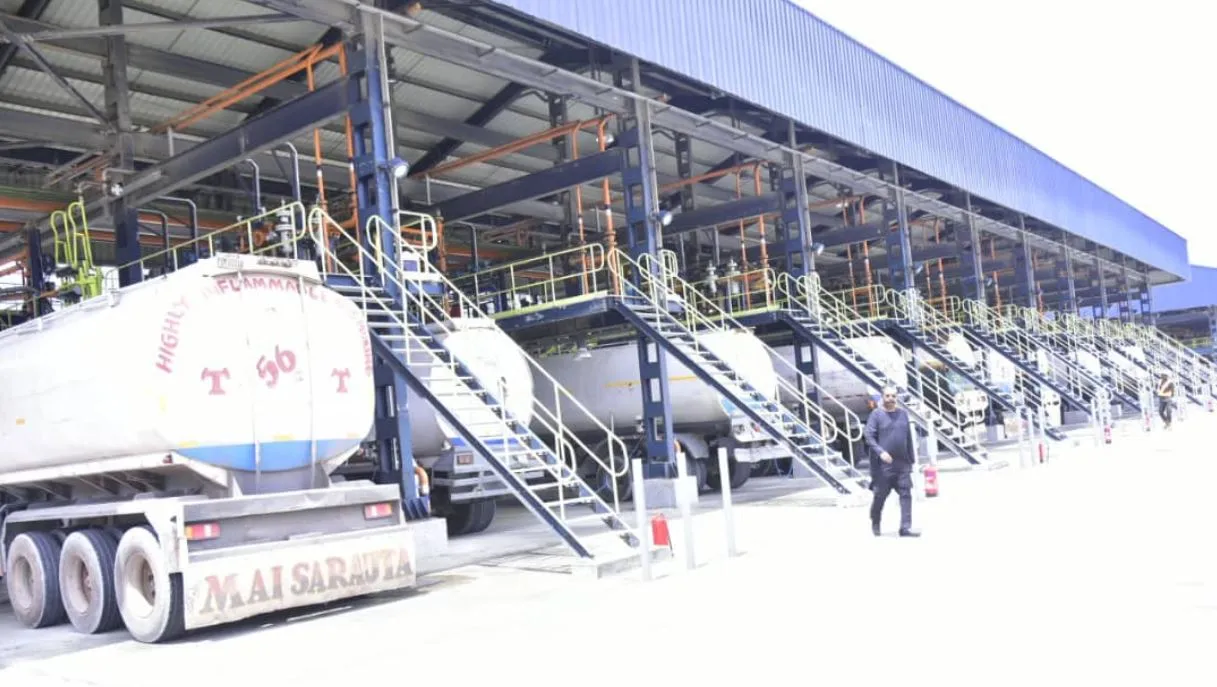
The battle between the Dangote Petroleum Refinery and petroleum marketers over petrol imports and pricing has intensified, with the refinery considering restrictions on supplies to major marketers that continue to import Premium Motor Spirit (PMS).
The proposed move, which could take effect this week pending further consultations, comes as petrol prices rise above ₦1,300 per litre in several parts of Nigeria, putting additional pressure on motorists and commercial transport operators.
Sources familiar with the refinery’s position said Dangote is particularly concerned about allegations that some marketers may be blending imported petrol with products purchased from the refinery before distributing them to consumers.
The refinery reportedly fears that such practices could make it difficult to establish the source and quality of products sold to Nigerians.
Dangote has also raised concerns about the capacity of regulators to independently verify the specifications and quality of imported petroleum products entering the Nigerian market.
The disagreement highlights a broader battle over the future of Nigeria’s downstream petroleum sector.
While the Dangote refinery has argued that continued petrol imports undermine domestic refining and increase pressure on foreign exchange, marketers maintain that imports remain necessary to guarantee adequate supply and promote competition.
Marketers accuse Dangote of seeking market control
Some petroleum marketers have rejected the refinery’s concerns, describing the proposed restrictions as an attempt to limit competition and give Dangote greater control over the domestic petrol market.
One marketer who spoke to Daily Trust dismissed the allegation of blending substandard imported petrol with Dangote products, arguing that the central issue was competition rather than product quality.
The marketer said restricting imports could leave consumers dependent on a single major supplier and potentially result in higher prices.
Another marketer claimed that the refinery had already stopped coastal loading to some marketers weeks earlier and had adjusted its gantry price several times between August 21 and August 29.
According to the marketer, the cumulative increase was about ₦100 per litre, despite movements in international crude oil prices.
Petrol prices surge across major cities
The dispute comes as motorists face another round of petrol price increases.
In Lagos, pump prices have climbed to between ₦1,300 and ₦1,350 per litre, with some stations selling at prices approaching ₦1,400.
Checks across several filling stations showed prices ranging from about ₦1,310 to ₦1,320 per litre at some major outlets.
Kano has also witnessed fresh increases, with several stations adjusting prices to between ₦1,305 and ₦1,355 per litre.
In Abuja, petrol is selling for around ₦1,350 per litre at some outlets.
The rising prices are already affecting commercial transport operators, many of whom say higher fuel costs are cutting deeply into their earnings.
Drivers told Daily Trust that they were making fewer trips because of the amount spent on petrol, while commuters were increasingly complaining about transportation costs.
Expert calls for independent investigation
Professor Emeritus of Petroleum Economics, Wumi Iledare, said the allegations made by the refinery should be independently investigated rather than treated as established facts.
He argued that the dispute goes beyond the question of petrol imports, describing it as a test of Nigeria’s ability to move from an import-dependent petroleum market to a competitive domestic refining sector.
Iledare said the Nigerian Midstream and Downstream Petroleum Regulatory Authority (NMDPRA) must remain independent and ensure that competition is based on quality, efficiency, supply reliability and price.
He stressed that the ultimate objective of regulation should be to protect consumers through quality assurance, competitive prices, reliable supply and energy security.
NMDPRA responds
The NMDPRA said it remains responsible for determining the quality parameters applicable to petroleum products supplied in Nigeria, whether they are imported or refined locally.
The regulator also noted that the Dangote refinery, as a business entity, has the right to decide who it wants to transact with under a willing-buyer, willing-seller arrangement.
With petrol prices climbing and tensions between the refinery and marketers escalating, Nigerians now face growing uncertainty over how the dispute will affect fuel availability and pump prices in the weeks ahead.


