


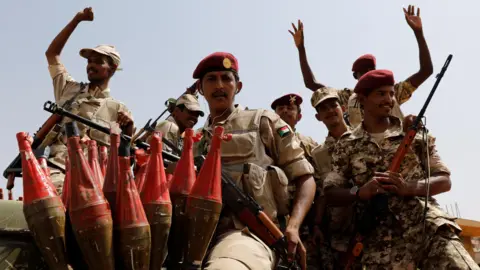
 A new investigative report has alleged that a network of Colombian mercenaries backed by the United Arab Emirates provided critical military support to Sudan’s paramilitary Rapid Support Forces, helping it seize the western city of el-Fasher during one of the most violent phases of the country’s ongoing civil war.
The findings were published by the Conflict Insights Group, which said its investigation relied on mobile phone tracking data, satellite imagery, flight records, social media content, and open-source intelligence gathered over several months.
According to the report, Colombian fighters were involved in drone operations, artillery support, and battlefield coordination that strengthened RSF capabilities during its campaign in Darfur. Investigators say the evidence provides what they describe as the clearest link yet between the UAE and the RSF, despite repeated denials from Emirati authorities.
The UAE has long rejected accusations that it supports the RSF. Emirati officials have previously dismissed such claims as false and unfounded, while condemning atrocities committed during the Sudan conflict.
The war in Sudan began in 2023 after a power struggle between the Sudanese Armed Forces and the RSF escalated into open warfare. Since then, the conflict has devastated large parts of the country, causing what aid agencies describe as one of the world’s worst humanitarian crises.
Tens of thousands of people have been killed, millions displaced, and critical infrastructure destroyed. Darfur, in western Sudan, has emerged as one of the worst affected regions, with repeated reports of ethnic violence, famine risks, and mass civilian casualties.
El-Fasher, the capital of North Darfur, became a major battleground during the war. The city endured an 18-month siege before eventually falling to RSF forces last year. International observers described the capture of the city as one of the conflict’s darkest chapters.
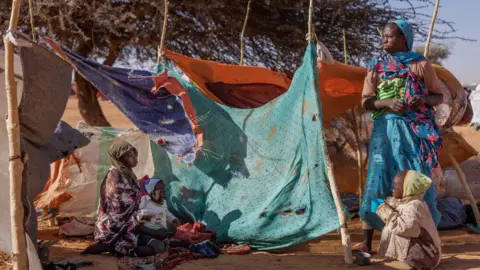
The prosecutor of the International Criminal Court said atrocities committed in and around el-Fasher may amount to war crimes and crimes against humanity. United Nations investigators said the violence bore the hallmarks of genocide.
The Conflict Insights Group argues that foreign military assistance played a decisive role in enabling the RSF offensive.
According to the report, analysts tracked more than 50 mobile devices believed to belong to Colombian mercenaries operating in Sudan between April 2025 and January this year. The phones were allegedly located in RSF-controlled areas from which drone attacks were launched.
Investigators say the data revealed a logistics pipeline linking Colombia, the UAE, and Sudan. One device was reportedly tracked from Colombia to Zayed International Airport and then to a UAE military training site in Ghayathi, Abu Dhabi.
At the same location, researchers identified several additional devices configured in Spanish, the language spoken in Colombia. Some of those phones later appeared in Sudan’s South Darfur region and in Nyala, a strategic city widely regarded as the RSF’s de facto capital in Darfur.
The report says some devices connected to wireless networks named “ANTIAEREO” and “AirDefense,” suggesting possible links to anti-aircraft and drone operations.
Nyala has become a central military and logistical hub in the conflict. Analysts say it has played a major role in coordinating RSF operations and receiving external support.
In another case study, investigators tracked a mobile device from Colombia to Nyala and later to el-Fasher during the final stages of the RSF takeover. While in the city, the phone reportedly connected to a Wi-Fi network named “ATACADOR,” the Spanish word for attacker.
Researchers say additional devices associated with Colombian personnel were also present in el-Fasher during the same period.
The report claims the mercenaries operated as part of a unit known as the Desert Wolves brigade, serving as drone pilots, artillery operators, and military trainers.
One device reportedly connected to networks named “DRONES” and “LOBOS DEL DISIERTO,” interpreted as a misspelled Spanish reference to “Desert Wolves.”
The brigade is reportedly led by retired Colombian army Colonel Alvaro Quijano. According to Colombian media reports, Quijano is based in the UAE and has been sanctioned by both the United States and the United Kingdom for allegedly recruiting Colombian fighters to participate in the Sudan war.
The report also alleges that the Desert Wolves were employed and financed by a UAE-based company with documented links to senior Emirati officials.
Beyond Sudan, researchers said they detected Spanish-language devices at a port in Somalia and in southeastern Libya—locations believed to be part of supply routes used to move weapons and personnel into Sudan.
The number of Colombian fighters active in Sudan has previously been estimated in the low hundreds.
The use of foreign mercenaries in modern conflicts has become an increasing concern for international policymakers, particularly where private recruitment networks operate across borders with limited accountability.
Last year, Gustavo Petro condemned the recruitment of Colombian fighters for Sudan, describing them as “spectres of death” and calling the practice a form of human trafficking.
The United States Treasury Department has twice imposed sanctions on Colombian nationals and companies accused of recruiting mercenaries for the Sudan conflict once in December and again last week.
While US officials have stated that Colombian fighters supported the RSF capture of el-Fasher, they have stopped short of publicly drawing a direct connection between those operations and the UAE government.
Analysts widely agree that foreign backing for both sides in the Sudan war has prolonged the fighting and expanded its scale.
Sudan’s military has also received support from regional allies and private networks, creating a proxy dimension to the conflict that has complicated peace efforts.
The latest allegations are likely to intensify international pressure for greater scrutiny of external actors accused of fueling the war.
For Sudanese civilians, however, the geopolitical contest has translated into daily suffering, displacement, hunger, and insecurity.
As investigations continue, the report reinforces growing calls for accountability not only for combatants on the ground, but also for those abroad accused of financing, arming, or enabling one of the most destructive conflicts in the world today.

