


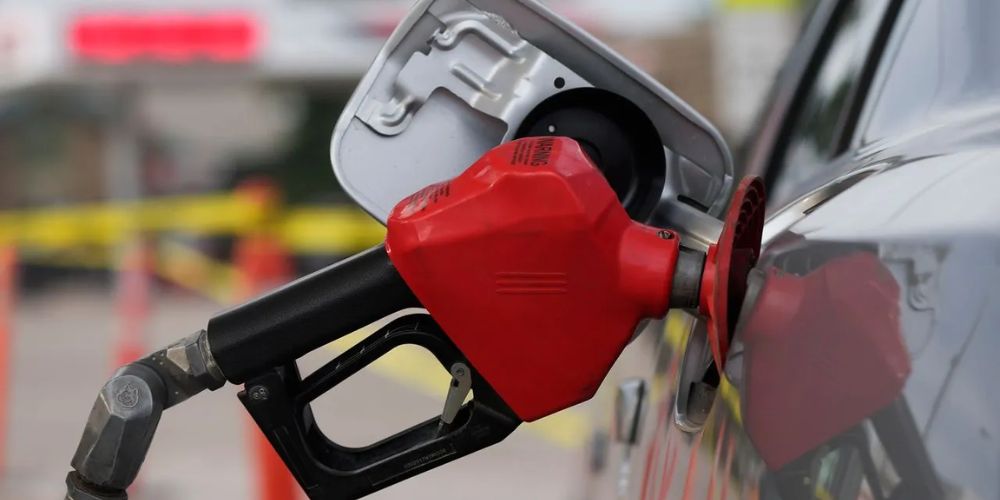
Many civil servants in the Federal Capital Territory (FCT) are increasingly abandoning the use of personal vehicles as fuel prices continue to surge, significantly raising the cost of living and daily transportation expenses in Nigeria’s capital city.
Workers say the rising cost of petrol has made commuting to work financially burdensome, forcing them to adopt coping strategies such as staff buses, carpooling, and informal ride-sharing arrangements.
According to several civil servants who spoke in Abuja, the situation has turned what was once routine commuting into a daily financial challenge, with some describing driving personal cars to work as a “luxury.”
Mrs Anita Ocheme, a federal ministry staff member, said she had permanently parked her vehicle due to the unsustainable cost of fueling it.
“There was a time I drove to work every day, but now it is no longer sustainable. Driving to work is now a luxury,” she said. “I have never liked public transportation, but I either join the staff bus or contribute money for fuel when I ride with colleagues.”
Her experience reflects a broader trend among public sector workers adjusting their lifestyles to cope with economic pressures.
Similarly, Mr David Onah, a senior civil servant, said his car has remained unused for over five months due to fuel costs.
“Since the fuel crisis started and prices went up, it has not been easy fueling my car,” he said. “I used to drive to church and family outings, but for the past five months, the car has just been parked.”
Onah, however, welcomed recent government assurances of improved allowances for civil servants, expressing hope that implementation would provide some relief.
“I am happy that the Federal Government has remembered us by increasing our allowances. We are hoping it will be implemented so we can get relief,” he added.
Despite the challenges, some workers have adopted alternative strategies to manage transportation costs. Mr Chikamso Obidike, who still drives to work, said he offsets expenses by carrying passengers and colleagues along his route.
“I carry colleagues who contribute to fuel my car, and sometimes I pick commuters along my axis who also pay,” he said. “This has helped reduce the burden of fuel costs significantly.”
Obidike also noted that global geopolitical tensions, particularly in the Middle East, have contributed to rising fuel prices in Nigeria, further worsening the situation for consumers.
The hardship has also led to informal workplace arrangements aimed at reducing commuting frequency. Mr Akintola Abdullahi, another civil servant, explained that some departments have adopted flexible attendance systems.
“In my office, we now operate a roster. Not everyone comes daily except Mondays when we have meetings,” he said. “This helps us save transport costs and manage expenses better while waiting for government intervention.”
He added that although the arrangement is unofficial, it has helped workers cope with rising living costs.
Economic analysts say the situation reflects broader inflationary pressures affecting households across the country.
Dr Gideon Maigida, an economist, explained that when transportation costs rise faster than incomes, workers are forced to adjust their behaviour.
“What we are seeing is a coping mechanism. When transport becomes unaffordable, people reduce travel or adopt shared mobility systems,” he said.
He also recommended that government consider flexible work arrangements and improved public transportation systems to reduce pressure on workers.
Similarly, public policy analyst Mrs Adenike Adeusi warned that prolonged strain on commuting costs could affect productivity in the public service.
“If workers are constantly worried about transportation or reducing physical presence at work, it may impact efficiency and output,” she said. “There is a need for urgent policy response.”
Fuel prices have surged sharply in recent months, driven by global oil market volatility and domestic supply challenges. The escalation of geopolitical tensions, particularly the U.S.–Iran conflict, has disrupted supply chains and contributed to rising crude oil prices globally.
According to data from the National Bureau of Statistics (NBS), the average retail price of petrol rose from N1,051.47 in February 2026 to N1,288.54 in March, representing a 22.55 per cent increase within a single month.
More recent market reports indicate that petrol now sells between N1,370 and N1,400 per litre at filling stations across the country, further intensifying the burden on households and workers.
Transport expenses have consequently become one of the largest monthly costs for many Nigerians, particularly civil servants whose salaries have not increased proportionately with inflation.
As a result, many workers are adopting survival strategies, including ride-sharing, reduced travel, and rotational attendance systems, to manage costs.
While some civil servants continue to appeal for government intervention through transport allowances and cost-of-living adjustments, others say immediate relief remains uncertain as inflationary pressures persist.
For now, the daily reality for many public sector workers is adjustment and sacrifice, as rising fuel prices continue to reshape commuting patterns, workplace routines, and household budgets across Abuja and beyond.
Economic experts warn that without targeted intervention, the trend could deepen financial strain on workers and further affect productivity in the public service sector.

