


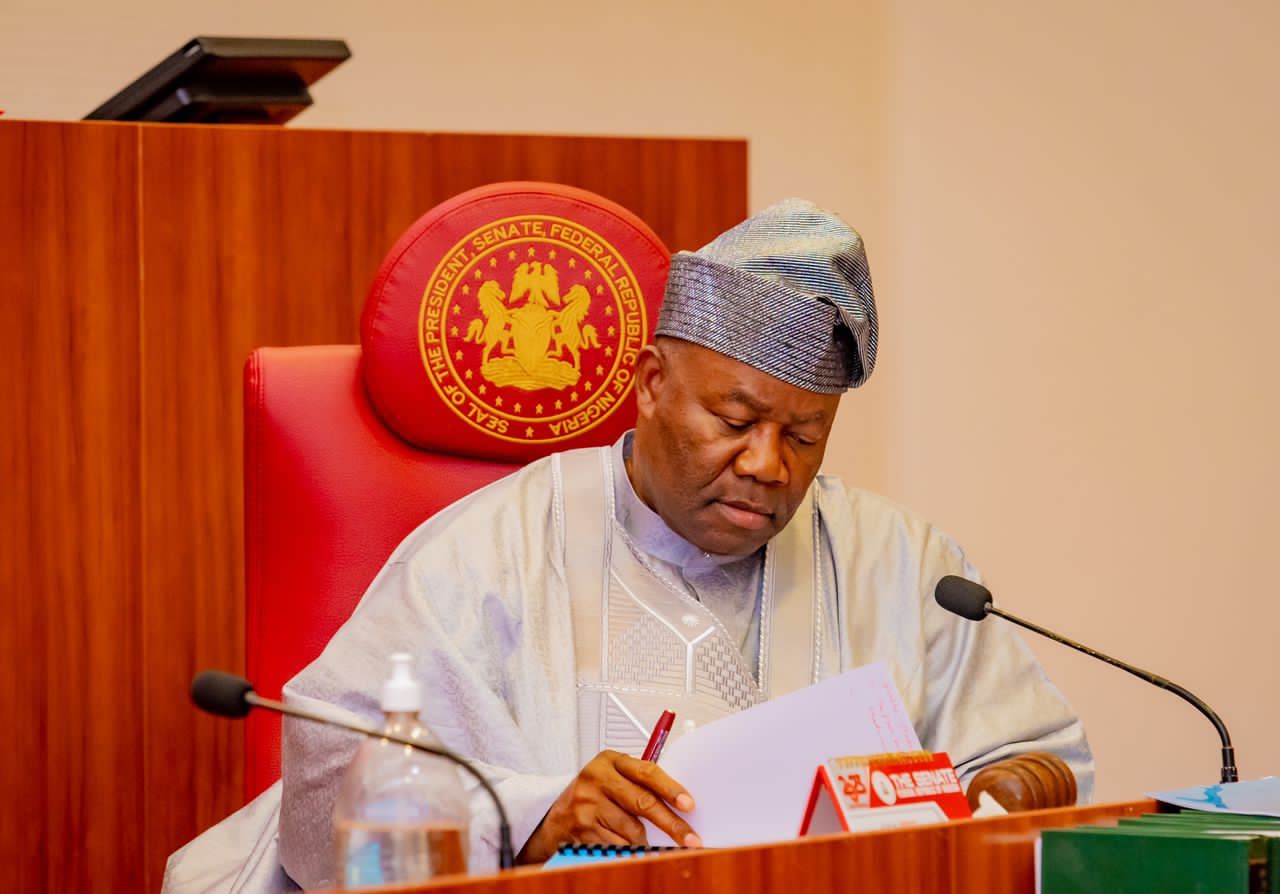
The Nigerian Senate has taken a major step toward regulating the country’s rapidly growing cryptocurrency and digital asset sector, advancing the Virtual Asset Service Providers Regulation Bill, 2026, to second reading.
The proposed legislation seeks to establish a comprehensive legal and regulatory framework for virtual assets, digital currencies, and Virtual Asset Service Providers, commonly known as VASPs. The bill aims to bring cryptocurrency exchanges, digital investment platforms, and other virtual asset operators under official supervision through mandatory licensing, compliance requirements, and transparency standards.
Leading the debate on behalf of the bill’s sponsor, Deputy Senate President Jibrin Barau, Senator Tahir Monguno warned that the absence of clear regulations has allowed billions of naira in investments, jobs, and potential government revenue to remain outside the formal economy. He noted that while Nigeria remains one of Africa’s largest cryptocurrency markets, the lack of oversight exposes investors and businesses to significant risks.
Lawmakers argued that cryptocurrencies and virtual assets have become an integral part of the modern global economy and can no longer be ignored. They stressed that proper regulation would help protect investors from fraud, scams, and financial exploitation while encouraging innovation and economic growth.
During the debate, senators highlighted concerns that the unregulated nature of the industry could facilitate money laundering, terrorism financing, and other financial crimes.
They warned that if the sector remains outside government oversight, Nigeria risks losing valuable economic opportunities while criminal elements exploit existing loopholes.
Supporters of the bill maintained that regulation would not hinder technological innovation. Instead, they said it would provide clear rules that create confidence among investors, businesses, and consumers. The legislation is also designed to align Nigeria with international standards established by organizations such as the Financial Action Task Force and the International Monetary Fund.
Senator Natasha Akpoti-Uduaghan emphasized the economic cost of Nigeria’s regulatory gaps, noting that many technology entrepreneurs are establishing their businesses outside the country because of uncertainty surrounding digital regulations. She argued that Nigeria is missing out on billions of dollars in investment opportunities as companies seek more predictable operating environments elsewhere on the continent.
Former Edo State governor and Senator Adams Oshiomhole described the bill as a necessary response to evolving technological realities, urging lawmakers to support measures that strengthen investor protection and encourage innovation.
Meanwhile, Senator Adetokunbo Abiru called for careful coordination between the proposed law and existing financial regulations, including the Investments and Securities Act and the Bank and Other Financial Institutions Act. He warned that overlapping regulations could create confusion unless a harmonized framework is developed for the broader digital finance sector.
Closing the debate, Deputy Senate President Barau reiterated that the legislation is intended to protect both investors and operators while unlocking the economic potential of Nigeria’s digital economy. He said a clear legal framework would foster accountability, transparency, and confidence in the virtual asset ecosystem.
The Senate subsequently referred the bill to its Committee on Capital Market for further review and public consultations. The committee has been given four weeks to submit its report.
If eventually passed into law, the legislation would place Nigeria alongside countries such as South Africa, Kenya, and Ghana, which have already introduced regulatory frameworks for digital assets. The move is expected to strengthen consumer protection, improve government oversight, attract investment, and support Nigeria’s ambition of building a globally competitive digital economy.


