


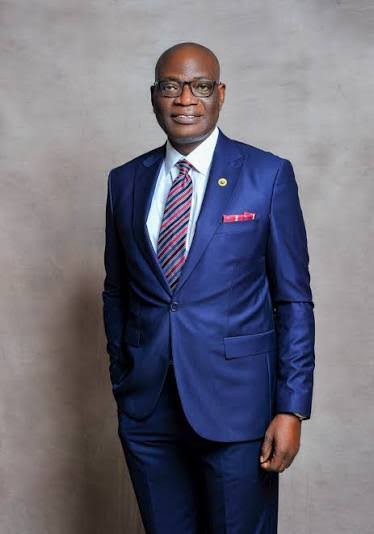
President Bola Ahmed Tinubu has appointed former Vice-Chancellor of the University of Lagos (UNILAG), Professor Oluwatoyin Temitayo Ogundipe, as the new Chairman of the Governing Board of the National Universities Commission (NUC), a move aimed at strengthening leadership within Nigeria’s higher education regulatory body.
The appointment was announced in a statement issued by the President’s Special Adviser on Information and Strategy, Bayo Onanuga, on Monday. Professor Ogundipe takes over from Emeritus Professor Olufemi Raphael Aina, who resigned from the position less than a year after his appointment.
Professor Aina had been appointed by President Tinubu in July 2025, while members of the board were formally inaugurated in November of the same year. The reasons behind his resignation were not disclosed in the statement.
Professor Ogundipe is widely regarded as one of Nigeria’s leading academics and administrators, having served as Vice-Chancellor of the University of Lagos from 2017 to 2022. During his tenure, he oversaw several reforms and initiatives aimed at improving academic standards, research output and institutional development at one of the country’s foremost universities.
A distinguished professor of Botany, Ogundipe specialises in Molecular Plant Taxonomy, Biosystematics, Ethnobotany, Cytogenetics, Forensic Botany and Ecological Conservation. His extensive academic background and decades of experience in teaching and research have earned him recognition within Nigeria and internationally.
He holds a Doctor of Philosophy (PhD) degree in Botany from Obafemi Awolowo University, Ile-Ife, and also possesses a Master of Business Administration (MBA) degree from the University of Lagos, a combination that reflects both academic and administrative expertise.
Beyond his role at UNILAG, the 66-year-old scholar currently serves as Pro-Chancellor of Redeemer’s University in Ede, Osun State. Over the years, he has held several strategic positions in the scientific and educational community, contributing significantly to policy development and research advancement.
Professor Ogundipe is a fellow of several prestigious professional bodies, including the Nigerian Academy of Science, the Linnean Society of London and the Royal Society of Biology in the United Kingdom. He has also served as President of the Botanical Society of Nigeria and chaired the Lagos State Science, Research and Innovation Council (LASRIC), where he played a key role in promoting innovation and scientific research.
As Chairman of the National Universities Commission, Professor Ogundipe will oversee the board responsible for providing strategic direction to Nigeria’s university system. The NUC serves as the principal regulatory agency for higher education institutions in the country, with responsibilities that include accreditation, quality assurance, policy formulation, institutional development and coordination of funding mechanisms.
His appointment comes at a time when Nigeria’s university system faces several challenges, including inadequate funding, infrastructure deficits, frequent industrial disputes, brain drain and the need to improve global competitiveness and research capacity.
According to the Presidency, President Tinubu expects the former UNILAG Vice-Chancellor to provide visionary leadership capable of strengthening academic standards, enhancing institutional stability and sustaining the credibility of the Nigerian university system.
The administration also believes that his wealth of experience and academic credentials will support the implementation of the Renewed Hope Agenda in the education sector, particularly in areas relating to quality assurance, access to higher education, innovation and integrity.
Education stakeholders are expected to closely watch Professor Ogundipe’s tenure as Chairman of the NUC, especially as the commission continues efforts to modernise the university system, promote international partnerships and address longstanding issues affecting teaching, research and learning across tertiary institutions.
His appointment has been widely viewed as a strategic decision that places an experienced academic administrator at the helm of one of the country’s most important institutions responsible for shaping the future of higher education in Nigeria.