


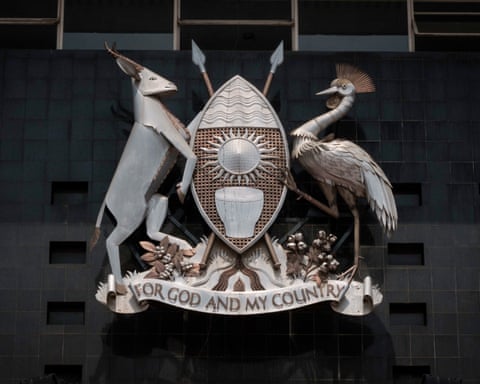
Uganda’s coat of arms. Critics of the proposed protection of sovereignty bill call it the ‘very definition of a coup d’état’.
A controversial draft law in Uganda has sparked widespread criticism from opposition leaders, human rights groups and legal experts, who say it could severely restrict civil liberties and silence dissent.
The proposed Protection of Sovereignty Bill 2026, currently being fast-tracked through parliament ahead of the presidential swearing-in scheduled for 12 May, introduces penalties of up to 20 years in prison for individuals or organisations deemed to be promoting “foreign interests”. It also places new limits on entities receiving funding or working in partnership with overseas organisations.
Internal Affairs Minister Gen David Muhoozi told a parliamentary committee on 23 April that the bill is intended to strengthen safeguards against foreign influence that could undermine national security, economic stability and social cohesion.
However, critics argue the legislation is broadly worded and could be used to target civil society, independent media, and political opposition. Joel Ssenyonyi, Uganda’s opposition leader, described it as “a copy and paste of Russian and Chinese laws” designed to weaken civic space and opposition activity.
He warned that the bill could damage Uganda’s economy, deter foreign investment, and reduce funding for political pluralism and accountability efforts.
The draft law includes provisions capping foreign financial assistance at 400 million Ugandan shillings (about £79,000) within any 12-month period, while also granting authorities powers to inspect premises and access organisational documents.
Legal experts and civil society actors have raised concerns about vague definitions in the bill, arguing that journalists, advocacy groups, private organisations, and even some corporations could face criminal liability under its provisions.
Earlier drafts reportedly classified Ugandan citizens living abroad as “foreigners”, though this clause has since been removed following amendments presented by Attorney General Kiryowa Kiwanuka.
International institutions have also expressed concern. The World Bank warned in a letter to parliament that the bill could criminalise routine development activities and place international partners under sweeping legal restrictions.
Uganda receives significant levels of external funding for health, education, and development programmes. Analysts warn that restrictions on such funding could reduce inflows and negatively affect key sectors including healthcare, education, and infrastructure.
President Yoweri Museveni has defended the bill’s intent, stating that Uganda must protect its sovereignty and avoid foreign interference in domestic decision-making. He dismissed concerns over economic consequences, describing them as exaggerated.
Despite government assurances, critics argue the legislation represents a broader attempt to tighten political control. The Uganda Law Society has warned that the bill undermines constitutional principles, with its vice-president describing it as a fundamental shift away from people-centred governance.
The bill continues to face mounting scrutiny as parliamentary debate approaches its final stages.