


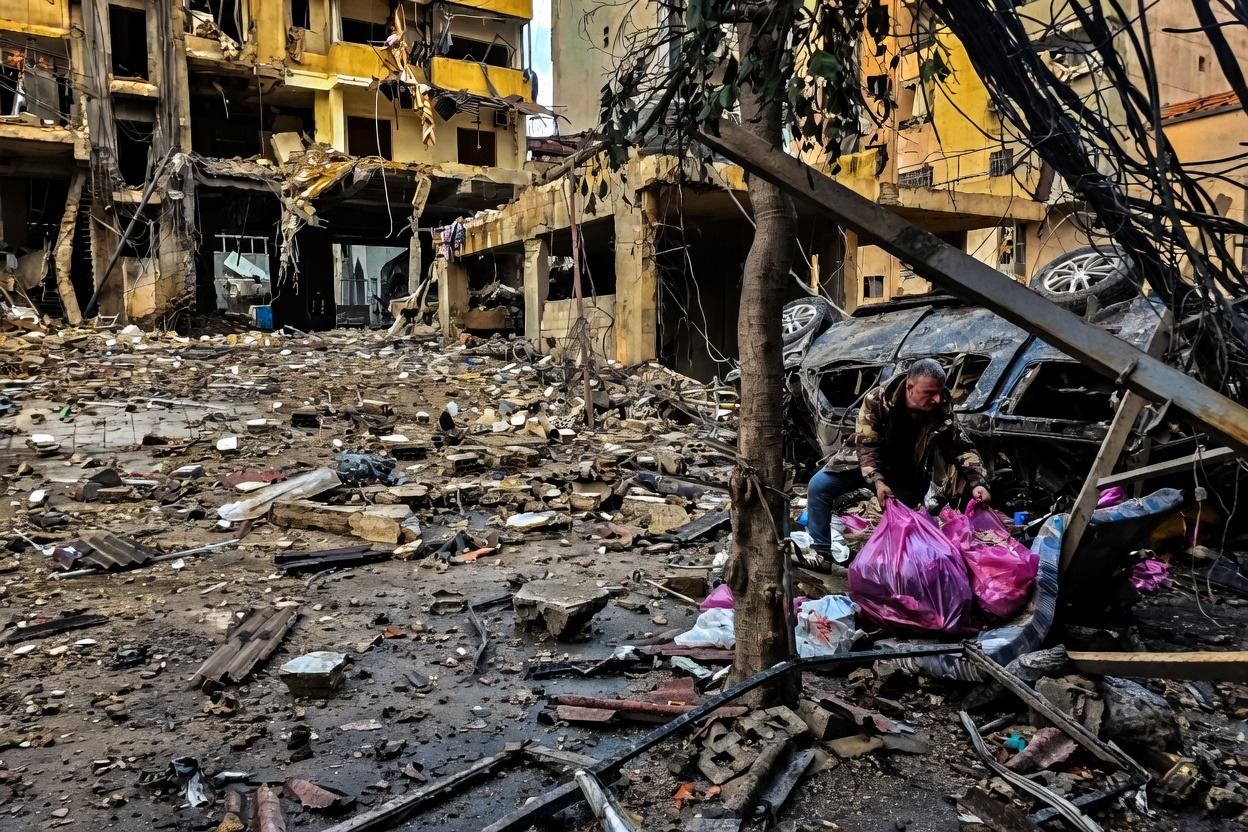
Airstrikes struck southern Beirut targeting positions held by the militant group Hezbollah, resulting in a mounting humanitarian crisis. Lebanese authorities report that over 1,100 civilians have been killed and more than one million residents displaced since the escalation began, highlighting the severe human toll of the conflict.
The attacks focused on densely populated neighborhoods in southern Beirut, including the Dahieh District, an area long associated with Hezbollah’s political and military infrastructure. Witnesses reported continuous bombardment of residential areas such as Haret Hreik and Chiyah, causing mass panic and forcing thousands of families to flee toward northern suburbs like Achrafieh and rural towns in the Mount Lebanon Governorate.
Lebanese Prime Minister Najib Mikati condemned the strikes, calling them “indiscriminate attacks on civilians” and urging the international community to intervene immediately. Hezbollah Secretary-General Hassan Nasrallah denounced the airstrikes as “aggression by foreign powers,” warning that the group reserves the right to retaliate against targets in Israel.
The Lebanese Red Cross, led by Secretary-General George Kettani, described the situation as “catastrophic,” noting that emergency shelters in Beirut and nearby towns such as Jdeideh and Bourj Hammoud are overwhelmed, leaving many civilians exposed to harsh conditions and limited access to food, water, and medical care.
Regional powers have expressed alarm over the escalation. Iranian Foreign Minister Hossein Amir-Abdollahian called on all parties to exercise restraint and warned against further attacks on Lebanese territory. Saudi Arabia’s Foreign Minister Faisal bin Farhan Al Saud condemned the strikes as “a threat to regional stability” and urged a ceasefire to protect civilians. The United Nations Secretary-General António Guterres called for an independent investigation into civilian casualties and emphasized the need for safe humanitarian corridors.
The airstrikes mark a significant intensification of the conflict in Lebanon, which is already destabilized by political turmoil, economic collapse, and spillover from regional hostilities. Analysts warn that continued targeting of civilian areas could inflame sectarian tensions further and trigger broader confrontation in the region.
With over a million people displaced and the death toll rising, Lebanon is facing an unprecedented humanitarian crisis. International observers stress that without immediate intervention, the destruction of infrastructure and loss of civilian life could precipitate a full-scale disaster, with southern Beirut, the Dahieh District, and surrounding towns at the center of the unfolding tragedy.


