


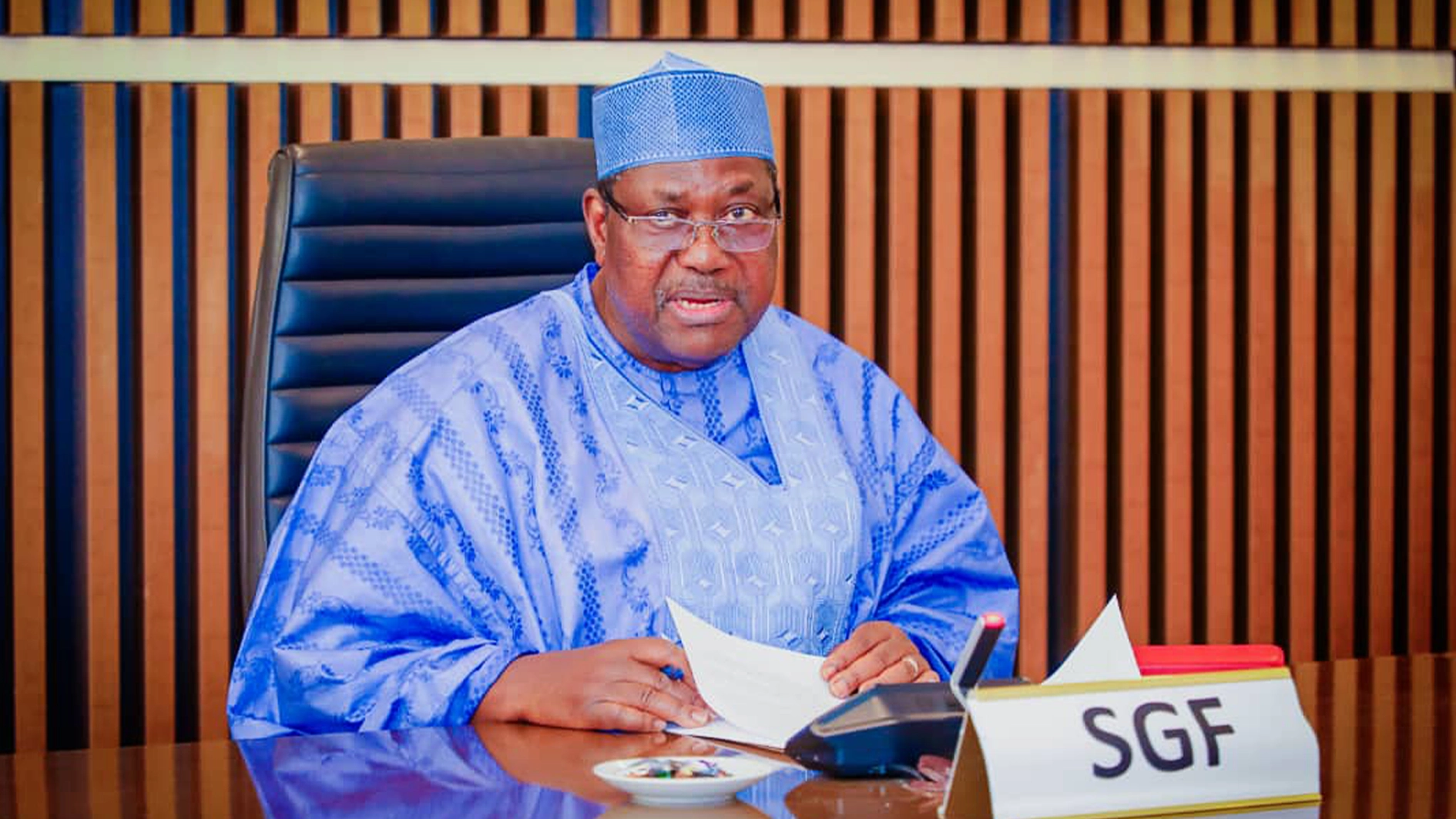
Secretary to the Government of the Federation, Senator George Akume, has called for urgent reforms to address challenges affecting the credibility of Nigeria’s electoral system, warning that public confidence in democracy can only be sustained when elections are transparent, credible, and reflect the will of the people.
Akume made the call during a public lecture held at the State House Conference Centre in Abuja as part of activities marking the 2026 Democracy Day celebration. The event brought together government officials, policymakers, civil society representatives, academics, and democracy advocates to reflect on Nigeria’s democratic journey and the future of governance in the country.
Speaking on the theme, “27 Years of Democratic Governance: Achievements, Challenges and the Road Ahead,” the SGF described Nigeria’s democratic experience since the return to civilian rule in 1999 as a story of resilience, growth, and institutional development. He noted that the country has successfully conducted eight consecutive general elections and witnessed peaceful transfers of power, including historic transitions between ruling and opposition political parties.
Despite these achievements, Akume said significant concerns remain about electoral credibility, accountability, and public trust in democratic institutions. He stressed that strengthening electoral processes and ensuring that every vote counts are essential for preserving the legitimacy of democracy and encouraging greater citizen participation in governance.
According to him, democracy extends beyond periodic elections and must guarantee fairness, transparency, equal representation, and respect for the rule of law. He urged stakeholders to confront allegations of electoral malpractice and corruption within the electoral process, noting that unresolved concerns could weaken citizens’ confidence in democratic governance.
The SGF also highlighted some of the gains recorded under democratic rule, including economic expansion, improvements in financial inclusion, infrastructure development, and social investment programmes. He cited major projects such as the Lagos-Calabar Coastal Highway and the Sokoto-Badagry Superhighway as examples of ongoing efforts to modernize the country’s infrastructure and stimulate economic growth.
Akume further pointed to reforms in education and healthcare, including initiatives aimed at expanding access to quality education, student financing, and healthcare coverage for millions of Nigerians. He said these programmes demonstrate the potential of democratic governance to improve the welfare of citizens when institutions function effectively.
However, he warned that ethnic, religious, and regional divisions continue to pose serious challenges to national unity and democratic stability. He called on political leaders, community groups, and citizens to reject divisive rhetoric and work together to strengthen national cohesion.
The SGF emphasized that democracy thrives when citizens actively participate in governance, hold leaders accountable, and contribute to the development of strong institutions. He urged Nigerians to remain committed to democratic values and to play constructive roles in shaping the country’s future.
According to Akume, the Democracy Day celebration provides an opportunity not only to commemorate the sacrifices of those who fought for civil rule but also to assess how far the country has progressed and what more needs to be done to deepen democratic culture.
He concluded by affirming that Nigeria remains worth every sacrifice required to preserve its unity and democratic system, urging future generations to build on the foundations laid by pro-democracy activists and leaders who struggled for the restoration of civilian governance.
Political observers say the call for electoral reforms reflects growing national conversations around improving transparency, voter confidence, institutional independence, and accountability as Nigeria continues efforts to consolidate its democracy after nearly three decades of uninterrupted civilian rule.


