


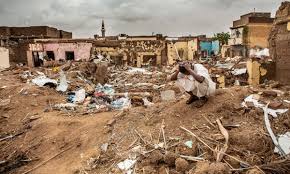
Six months after the military retook Khartoum, the capital of Sudan, residents returning to the city are now grappling with severe environmental hazards that pose grave risks to public health. The prolonged conflict between the army and the paramilitary Rapid Support Forces (RSF), spanning over two and a half years, has left widespread destruction across industry, infrastructure, and basic services with consequences still unfolding.
Many factories and industrial sites were damaged or burned during the fighting. Some still house hazardous chemicals whose containment failed when control was lost; with no functioning oversight or cleanup operations, toxic substances are now seeping into neighbouring residential areas, endangering families already reeling from war.
The destruction isn’t limited to factories. Water treatment and sanitation plants have been wrecked, leaving waste systems defunct. Solid and liquid waste are accumulating in open areas and draining into the Nile, contaminating water supplies and creating the perfect conditions for outbreaks of waterborne diseases.
Local health professionals warn of immediate and long-term dangers: toxic dust from rubble containing asbestos and other hazardous materials remains airborne, while contaminated water fuels outbreaks of malaria, cholera, typhoid and dengue. Some returnees report falling ill days after returning.
This environmental collapse comes on top of a war‑torn public health system. Hospitals and clinics were reportedly occupied or destroyed during the conflict; medical staff were targeted and ambulances looted, crippling the capacity to respond to disease outbreaks or accidents.
Observers warn that the damage to Khartoum’s environment, healthcare infrastructure, and public utilities may take years, possibly decades to repair. Without urgent international and domestic intervention, the city’s return to normalcy may remain a distant hope.


