


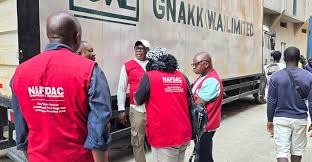
The National Agency for Food and Drug Administration and Control (NAFDAC) has raised fresh concerns over the growing circulation of counterfeit products in Nigeria, revealing that fake cosmetics, food items, and beverages now account for more than half of all counterfeit goods seized across the country.
Speaking during a news conference to mark the 2026 International Anti-Counterfeit Month, the Director-General of NAFDAC, Professor Mojisola Adeyeye, disclosed that the agency continues to battle a sophisticated network of counterfeiters whose activities pose significant threats to public health, consumer safety, and the nation’s economy.
Represented by the Director of Investigation and Enforcement, Dr. Martins Iluyomade, the NAFDAC chief stated that cosmetics remain the most frequently counterfeited products in Nigeria, followed closely by food and beverages. Together, the categories account for over 50 percent of all counterfeit products confiscated during the agency’s enforcement operations nationwide.
According to NAFDAC, the widespread availability of fake cosmetics and food products has become a major concern because many consumers unknowingly purchase and use them, exposing themselves to potentially harmful chemicals, contaminated ingredients, and unsafe production standards. The agency warned that prolonged use of counterfeit beauty products could lead to severe skin conditions, allergies, organ damage, and other health complications.
The agency also reported significant seizures of fake and substandard pharmaceutical products. These include medicines containing incorrect ingredients, inadequate active pharmaceutical substances, or in some cases, no active ingredients at all. Such products not only fail to treat illnesses but can worsen medical conditions, contribute to drug resistance, and endanger lives.
NAFDAC expressed particular concern about the changing methods employed by counterfeit syndicates. Unlike in the past, when importers physically travelled abroad to source products, counterfeiters now take advantage of digital technology and online procurement systems to order fake products directly from foreign manufacturers without leaving Nigeria.
The agency explained that counterfeit goods are increasingly being produced overseas, particularly in parts of Asia, and shipped into Nigeria through sophisticated supply chains. Criminal networks closely monitor consumer demand and quickly manufacture imitation versions of popular brands. These fake products often mimic original packaging, trademarks, labels, and security features so convincingly that even experienced retailers may struggle to identify them.
Another major challenge identified by NAFDAC is the growing use of cargo consolidation systems, commonly known as groupage. Under this arrangement, several importers share a single shipping container, making it difficult for customs officials and regulators to trace ownership and detect suspicious consignments. Counterfeiters exploit this loophole to hide illegal products among legitimate imports and evade regulatory scrutiny.
The agency warned that the continued influx of counterfeit goods threatens not only public health but also legitimate businesses that invest heavily in quality assurance and regulatory compliance. Manufacturers of genuine products often suffer financial losses, damaged brand reputation, and reduced consumer confidence due to the activities of counterfeit operators.
To address the problem, NAFDAC said it is strengthening surveillance mechanisms, enhancing border inspections, and collaborating with local and international partners to disrupt counterfeit supply chains. The agency is also working to improve product authentication and verification systems that will enable manufacturers and regulators to confirm the authenticity and origin of imported goods more efficiently.
Professor Adeyeye emphasized that combating counterfeiting requires collective action from government agencies, manufacturers, distributors, retailers, and consumers. She urged Nigerians to purchase products only from reputable sources, carefully examine packaging and registration details, and report suspicious products to the agency.
As Nigeria joins the global community in observing International Anti-Counterfeit Month, NAFDAC reiterated its commitment to protecting consumers from fake and substandard products while intensifying enforcement operations against individuals and organisations involved in the illicit trade.
The agency maintained that safeguarding public health remains its top priority and warned that counterfeiters would continue to face stricter sanctions as efforts are intensified to rid Nigerian markets of dangerous fake products.