


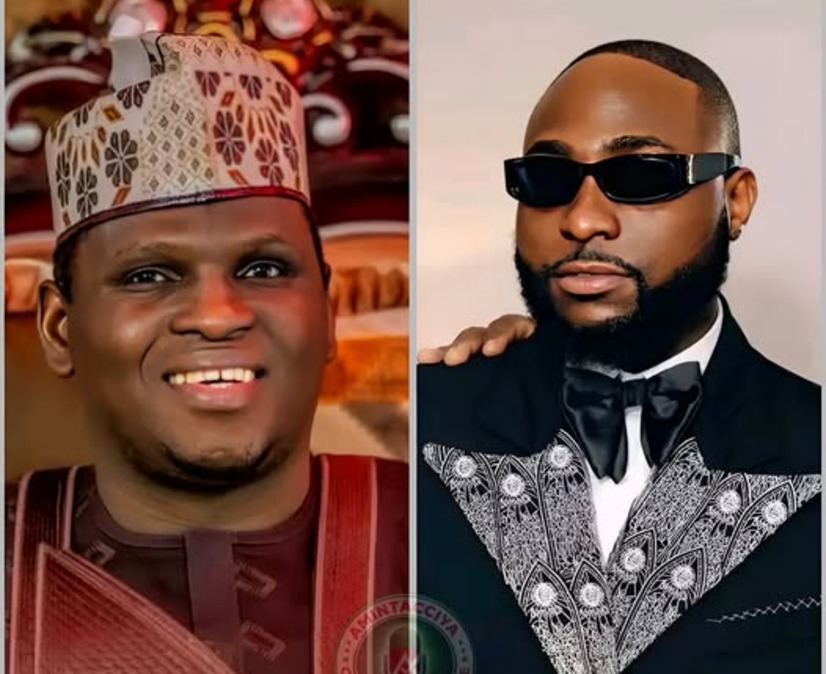
A heated public debate has erupted across social media following comments by political praise singer Dauda Kahutu Rarara criticizing Afrobeats superstar Davido over his recent campaign against insecurity in Nigeria.
The controversy began after Davido, whose real name is David Adeleke, appeared at the FIFA World Cup 2026 Countdown Concert in Los Angeles wearing a jacket bearing the inscription “Bring Them Home” alongside the names of abducted schoolchildren from Oyo State. The gesture was widely interpreted as a call for urgent action against kidnapping and insecurity in Nigeria and drew praise from many Nigerians who viewed it as an effort to use a global platform to highlight the plight of victims.
However, Rarara condemned the move in a video posted online, arguing that Davido’s action projected Nigeria negatively before an international audience. According to him, sensitive national challenges should not be showcased on global stages in a manner that could damage the country’s image.
His remarks quickly generated backlash from Nigerians who accused him of focusing on image management rather than addressing the serious security concerns affecting citizens. Many social media users argued that insecurity, kidnappings, and violent attacks had become too widespread to ignore and commended Davido for drawing international attention to the issue.
The disagreement gained further momentum when Davido responded on X, formerly Twitter, with a brief but widely shared post reading “Debidoo,” a playful reference to Rarara’s pronunciation of his name. While many supporters saw the response as harmless banter, others interpreted it as a mockery of the Hausa accent, adding an ethnic dimension to the debate.
Several users defended Davido’s actions, insisting that celebrities have a responsibility to use their influence to advocate for social causes. They argued that the singer’s message reflected the frustrations of millions of Nigerians who continue to face threats from kidnappers, bandits, and other criminal groups.
Critics of Rarara questioned why he appeared more concerned about Nigeria’s international image than the plight of victims and their families. Some pointed to the numerous cases of abductions and killings in northern Nigeria, arguing that public figures should unite in demanding stronger government action against insecurity rather than attacking those speaking out.
Others, however, sided with Rarara, maintaining that national issues should be addressed through appropriate channels and warning against actions that could tarnish Nigeria’s reputation abroad. Some also criticized Davido’s “Debidoo” response, describing it as insensitive to linguistic and cultural differences.
As opinions continued to divide online, Davido released a statement in both English and Hausa, reaffirming his position. He urged Nigerians not to remain silent in the face of growing insecurity and warned against allowing political loyalties to overshadow the realities confronting citizens.
The singer stressed that patriotism involves speaking the truth about national challenges and supporting efforts aimed at protecting lives and improving the country. He called on Nigerians to place the interests of the nation above politics and work collectively toward addressing insecurity.
The controversy has since evolved into a broader conversation about freedom of expression, celebrity activism, national image, and the role public figures should play in drawing attention to pressing social issues. It also highlights the growing public concern over insecurity and the expectation that influential voices use their platforms to advocate for meaningful change.
While the debate between Davido and Rarara continues to generate reactions, it has once again brought the issue of kidnapping and insecurity to the forefront of national discourse, with many Nigerians demanding concrete solutions rather than political arguments.