


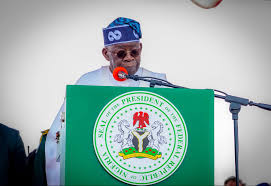
The Minority Caucus of the House of Representatives has issued a strong warning to President Bola Ahmed Tinubu, urging him to either redirect his administration’s full attention toward tackling Nigeria’s growing security and economic crises or consider stepping aside. The lawmakers argued that the nation is facing one of its most difficult periods, marked by rising insecurity, economic hardship, judicial controversies, and growing concerns about the state of democracy ahead of the 2027 general elections.
Speaking at a press conference at the National Assembly in Abuja, Minority Leader Fred Agbedi accused the federal government of prioritising political activities and preparations for the 2027 elections while millions of Nigerians continue to suffer from violence, kidnappings, inflation, and poverty.
The opposition lawmakers expressed concern over the worsening security situation across the country. They cited recent cases of mass abductions involving schoolchildren in Borno, Oyo, and Kogi states, as well as the death of retired Major General Abubakar Rabe, who reportedly died while in the custody of kidnappers after being abducted alongside his wife in Katsina State. According to the caucus, these incidents demonstrate the inability of the state to adequately protect its citizens.
The lawmakers argued that the continued attacks by bandits and terrorist groups across several states, including Benue, Plateau, Niger, Sokoto, Zamfara, and Kwara, have created widespread fear, displacement, and economic disruption. They lamented that many communities now live under constant threat, with residents unable to farm, conduct business, or move freely without fear of attack.
Agbedi described the death of General Rabe as a national embarrassment and a serious indictment of the country’s security system. He questioned how a retired senior military officer who had dedicated his life to defending Nigeria could fall victim to kidnappers, warning that such incidents further undermine public confidence in government institutions.
The caucus called on President Tinubu to immediately suspend all political activities related to his anticipated 2027 re-election campaign and instead launch a six-month National Security and Economic Recovery Programme. According to the lawmakers, governance has been overshadowed by political calculations, endorsement rallies, defections, and campaign strategies at a time when citizens are demanding urgent solutions to insecurity and economic hardship.
The lawmakers also expressed outrage over the continued captivity of abducted schoolchildren and teachers, particularly those kidnapped in Oyo State. They described the situation as a failure of government responsibility and warned that every additional day spent in captivity threatens the future of affected children and weakens confidence in public education.
Beyond security concerns, the caucus raised alarm over what it described as attempts to weaken opposition parties through the judicial system ahead of the 2027 elections. The lawmakers criticised a recent Federal High Court judgment directing the Independent National Electoral Commission (INEC) to deregister five opposition political parties. They argued that the ruling could undermine political pluralism and democratic participation if allowed to stand.
According to the opposition lawmakers, Nigeria’s democracy thrives on competition and diverse political voices. They therefore called on both the judiciary and INEC to protect democratic institutions and ensure that all political parties are given a fair opportunity to participate in the electoral process.
The caucus further highlighted the severe economic difficulties facing Nigerians. Rising inflation, the high cost of living, currency instability, and increasing unemployment were cited as evidence that many citizens are struggling to survive. The lawmakers argued that while households battle hunger and financial hardship, political leaders appear more focused on future elections than on present governance challenges.
Meanwhile, retired military officer and former Kaduna State governor Abubakar Dangiwa Umar also urged President Tinubu to make national security his highest priority. In an open letter, Umar reminded the president that protecting citizens was one of the core ideals behind the June 12 democratic struggle. He stressed that without security, no democracy, economic reform, or governance programme can succeed.
Adding to concerns about the nation’s security situation, the National Human Rights Commission reported that 390 people were killed and 202 others kidnapped across Nigeria in May 2026 alone. The commission also received more than 268,000 complaints relating to human rights violations and social challenges during the month. It described the period as one of the most troubling in recent years, citing attacks on schools, places of worship, communities, and security personnel.
Despite the criticism, the federal government maintains that it is actively addressing the security crisis. President Tinubu recently announced increased investment in defence and security, including the recruitment of over 50,000 police officers and significant funding for military operations. The administration also highlighted successes in counterterrorism efforts, stating that thousands of insurgents have been neutralised and many former fighters have surrendered through rehabilitation programmes.
Nevertheless, opposition lawmakers insist that much more needs to be done. They are demanding a comprehensive overhaul of the country’s security architecture, the immediate rescue of abducted schoolchildren, a thorough investigation into the death of General Rabe, and greater focus on governance rather than political campaigning.
As insecurity, economic hardship, and political tensions continue to dominate national discourse, the debate over the government’s performance is expected to remain a major issue in the lead-up to the 2027 general elections. The opposition believes the administration must urgently demonstrate tangible results in protecting lives and improving living conditions if it hopes to restore public confidence and national stability.


