


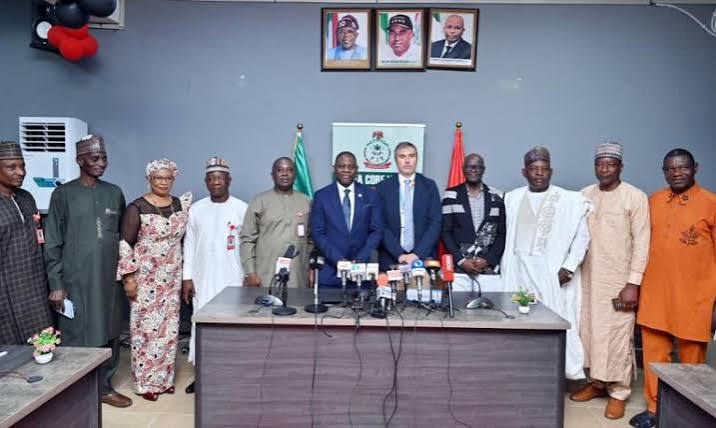
The National Drug Law Enforcement Agency (NDLEA) and the United Nations Office on Drugs and Crime (UNODC) have intensified calls for a coordinated and united response to the growing threat of drug abuse, illicit trafficking, and emerging narcotics-related crimes across Nigeria and the world.
The appeal was made during a joint press briefing held in Abuja ahead of the 2026 International Day Against Drug Abuse and Illicit Trafficking, widely known as World Drug Day. The event brought together government officials, development partners, civil society organisations, security agencies, educational institutions, and public health stakeholders committed to combating the global drug menace.
This year’s World Drug Day theme, “The World Drug Problem: Persisting Issues, New Challenges, Innovative Responses,” highlights the changing nature of drug-related crimes and the need for modern solutions to address increasingly complex threats.
Speaking at the briefing, Chairman and Chief Executive Officer of the NDLEA, Brigadier-General Mohamed Buba Marwa (retd.), noted that the global drug landscape has evolved significantly over the years, creating new challenges for governments and law enforcement agencies.
Represented by the Secretary of the Agency, Shadrach Haruna, Marwa explained that traditional drug trafficking methods have been replaced by more sophisticated criminal networks that now exploit technology, digital platforms, and international supply chains to distribute illicit substances.
He warned that the growing production and circulation of synthetic drugs, including dangerous laboratory-manufactured substances, pose a significant threat to public health and national security. According to him, criminal organisations are increasingly using encrypted communication channels, online marketplaces, and digital payment systems to evade detection and expand their operations.
Marwa stressed that no single agency or government can effectively tackle the problem alone, emphasizing the importance of collective action involving communities, schools, religious organisations, families, civil society groups, and international partners.
He pointed to the success of the NDLEA’s flagship War Against Drug Abuse (WADA) campaign, launched in 2021, as evidence that community participation can play a critical role in reducing drug demand and preventing substance abuse among young people.
According to him, the initiative has evolved into a nationwide movement that promotes awareness, prevention, rehabilitation, and community engagement. Through partnerships with schools, faith-based institutions, traditional rulers, youth groups, and local communities, the campaign has helped bridge the gap between law enforcement and citizens.
Marwa reaffirmed the agency’s commitment to sustaining aggressive operations against drug cartels while simultaneously expanding public education and rehabilitation programmes aimed at helping victims of addiction recover and reintegrate into society.
Also speaking at the event, the UNODC Country Representative, Cheikh Ousmane Toure, represented by Deputy Country Representative Danielo Campisi, emphasized that the global drug problem remains one of the most pressing transnational challenges facing governments today.
Campisi noted that Nigeria occupies a strategic position in regional and international anti-drug efforts and must continue adapting to new threats while addressing long-standing drug-related challenges.
He explained that drug trafficking networks have become increasingly organised and interconnected, making international cooperation more important than ever. According to him, sustained progress can only be achieved through intelligence sharing, evidence-based policymaking, innovation, and coordinated enforcement efforts.
The UNODC official stressed that effective responses must also focus on prevention, treatment, rehabilitation, social inclusion, and economic empowerment, particularly among vulnerable populations who are often targeted by drug syndicates.
He reaffirmed UNODC’s commitment to supporting Nigeria through technical assistance, capacity building, research, policy development, and international collaboration aimed at strengthening the country’s anti-drug framework.
As part of activities marking the 2026 World Drug Day celebration, the NDLEA and UNODC unveiled a week-long programme designed to raise awareness about the dangers of drug abuse and encourage greater public participation in prevention efforts.
The activities commenced with a national press conference and a special Juma’at prayer session at the National Mosque in Abuja. Other events include a Walk Against Drugs organised in collaboration with Baze University, Nile University, and the MTN Foundation, a thanksgiving church service, the finals of a national essay competition, NGO engagement programmes, and sensitisation campaigns targeting out-of-school youths in markets and motor parks across the Federal Capital Territory.
The outreach programmes are expected to educate thousands of young Nigerians on the dangers of substance abuse, while also encouraging healthy lifestyle choices and community vigilance against drug-related activities.
The week-long commemoration will culminate on June 26 with a grand finale at the State House Conference Centre in Abuja. The event is expected to attract senior government officials, diplomats, development partners, healthcare professionals, security experts, and international stakeholders.
During the ceremony, participants are expected to unveil new strategies and policy frameworks aimed at addressing emerging trends in drug abuse, synthetic narcotics, organised trafficking networks, and technology-driven criminal activities.
Marwa expressed appreciation to President Bola Ahmed Tinubu, state governments, development agencies, international partners, and security institutions for their continued support in the fight against illicit drugs.
Observers say the renewed partnership between NDLEA and UNODC reflects growing recognition that drug abuse and trafficking are not merely law enforcement issues but broader social, economic, and public health challenges that require a comprehensive and collaborative response.
As Nigeria joins the global community to mark World Drug Day 2026, stakeholders are hopeful that stronger partnerships, innovative strategies, and increased public awareness will help reduce the impact of illicit drugs and protect future generations from the devastating consequences of addiction and organised crime.