


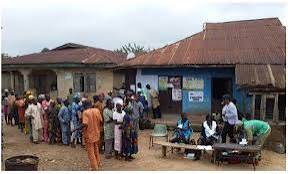
More than one million eligible voters across Ekiti State are set to determine the state’s political future today as the governorship election gets underway in all 16 local government areas.
According to figures released by the Independent National Electoral Commission (INEC), Ekiti State has 1,059,360 registered voters. However, only 1,028,929 residents who have collected their Permanent Voter Cards (PVCs) are eligible to participate in the crucial election expected to shape the state’s leadership for the next four years.
Voting is scheduled to take place across 2,445 polling units spread throughout the state, with electoral officials, security personnel, political party agents, election observers, and civil society groups closely monitoring the process.
The governorship race features 15 political parties, but political analysts believe the contest is largely a battle among the state’s major political platforms. Incumbent Governor Biodun Oyebanji of the All Progressives Congress (APC) is seeking a fresh mandate, while Dr. Wole Oluyede represents the Peoples Democratic Party (PDP). Ambassador Dare Bejide is contesting on the platform of the African Democratic Congress (ADC), while businessman David Opeyemi Falegan is flying the flag of the Accord Party.
The election is widely regarded as a significant political test, not only for Ekiti State but also for Nigeria’s democratic process ahead of future national elections. Political observers say the outcome could influence party strategies and alliances in the build-up to the 2027 general elections.
Preparations for the exercise have reached an advanced stage, with INEC confirming that both sensitive and non-sensitive electoral materials have been distributed to all local government areas. Election officials have also assured voters that technological tools, including the Bimodal Voter Accreditation System (BVAS), are ready to ensure transparency and credibility in the voting process.
Security agencies have equally intensified deployment across the state to maintain peace and prevent electoral violence. Personnel from the Nigeria Police Force and other security organisations have been stationed at polling units, collation centres, major highways, and boundary communities linking Ekiti with neighbouring Ondo and Osun states.
The Commissioner of Police in charge of Election Planning, Monitoring and Evaluation, Abayomi Shogunle, disclosed that a comprehensive security architecture approved by the Inspector-General of Police has been activated to guarantee the safety of voters and election officials. He warned that any attempt to disrupt the electoral process would be met with decisive action in line with the Electoral Act and the Constitution.
Meanwhile, civil society organisations and election observers have called on all stakeholders to ensure a peaceful and transparent process. Members of the EU-SDGN Election Observation Hub urged INEC to guarantee the timely arrival of electoral materials and ensure that BVAS devices function effectively throughout the exercise.
The organisations also appealed to political parties and candidates to honour previously signed peace accords, avoid inflammatory rhetoric, and pursue any grievances through lawful and democratic channels. They further condemned vote buying, voter intimidation, and the use of political thugs, warning that such practices undermine public confidence in elections.
Election observers have stressed that while recent electoral reforms have improved transparency, the credibility of the poll will ultimately depend on the conduct of political actors, electoral officials, security agencies, and voters themselves.
Across Ado-Ekiti and other major towns, residents expressed optimism and readiness to participate in the election. Many voters described the poll as an opportunity to influence governance, improve accountability, and strengthen democratic institutions in the state.
Journalists and media organisations have also been urged to verify information before publication and avoid spreading unconfirmed reports that could generate tension or misinformation during the election period.
As polling begins, attention will focus on voter turnout, the performance of election officials, security arrangements, and the speed of result collation. The successful conduct of the election is expected to reinforce confidence in Nigeria’s democratic institutions and provide another important benchmark for future electoral contests.
With more than one million voters expected to cast their ballots, the people of Ekiti State now hold the responsibility of choosing who will lead the state through its next chapter of development, governance, and political stability.


