


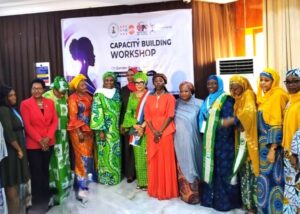
The Presidency has called on women leaders in Nigeria’s health sector to take a more active and strategic role in tackling Gender-Based Violence (GBV), stressing that the growing crisis requires stronger institutional responses, sustained advocacy and coordinated action across communities and government agencies.
The call was made by the Special Adviser to the President on Health, Salma Ibrahim Anas, during a Capacity Building Workshop on Gender-Based Violence for Women Leaders in Health held in Abuja.
Addressing participants at the workshop, Dr. Anas said women constitute more than 90 per cent of Nigeria’s healthcare workforce, placing them in a unique position to identify, prevent and respond to cases of abuse and violence affecting women and girls across the country.
“Women are the backbone of the health sector. We can develop policy and guidance at the national level, but implementation must happen in your institutions. You are the leaders,” she stated.
She described gender-based violence as a widespread social and public health crisis that continues to affect women physically, emotionally, psychologically and economically at different stages of life. According to her, meaningful national development cannot be achieved while a significant portion of the population continues to suffer discrimination, violence and exclusion.
Dr. Anas also stressed the need for increased funding, stronger institutional frameworks and consistent implementation of existing laws and policies aimed at addressing GBV.
She noted that while government policies and strategic plans are important, real impact can only be achieved when healthcare institutions integrate GBV response mechanisms into routine service delivery, including counselling, emergency care, referrals and survivor support systems.
In her goodwill message, Muriel Mafico, the Nigeria Representative of the United Nations Population Fund (UNFPA), warned that progress toward achieving gender equality under the Sustainable Development Goals remains alarmingly slow.
According to her, the global fight against gender-based violence is lagging behind, and at the current pace, achieving gender-related development targets could take several centuries.
“The cost of GBV translates into loss of life, morbidity, psychosocial trauma, and loss of productive economic hours. The cost is too high,” she said.
Mafico called for stronger leadership and institutional commitment within the health sector to address the long-term consequences of violence against women and girls.
Also speaking at the event, Stanley Ukpai of the Development Research and Projects Centre (dRPC), highlighted community-based interventions currently being implemented to challenge harmful cultural norms and behaviours that fuel GBV.
He said the organisation has been engaging religious leaders, traditional institutions and elderly women within communities to influence behavioural change and strengthen grassroots advocacy against abuse.
Programme Officer at Education as a Vaccine, Bimbo Ajayi, said the organisation has spent more than two decades promoting sexual and reproductive health rights and combating gender-based violence in Nigeria.
“We want to continue to partner and carry on the work we have been doing,” she said.
The APC National Women Leader, Mary Idele, linked the fight against GBV to women’s political participation and representation in governance.
According to her, women must occupy more leadership and decision-making positions to influence laws, policies and budgetary allocations that support gender protection programmes.
“Everything goes back to politics. Where will the money come from? Politics,” she stated.
She lamented the cultural and social barriers discouraging women from participating actively in politics and governance, noting that women’s voices remain underrepresented in legislative and policy processes.
“If they want to pass a bill, four women cannot shout down over a hundred men,” she added, while calling for more mobilisation of young women into leadership and political spaces.
Former Minister of Women Affairs, Pauline Tallen, also encouraged women leaders to remain focused and resilient in advocating for gender equality and institutional reforms.
“We can never run away from politics if we want to change society… we must be focused, resilient, and deliberate,” she said.
Representing the Secretary to the Government of the Federation, Kamilatu Mustapha described GBV as one of Nigeria’s most urgent social and public health concerns.
“Addressing gender-based violence requires coordinated, multi-sectoral, and sustained action,” she noted, urging participants to move beyond discussions and implement practical reforms within their institutions.
The representative of the World Health Organization (WHO), Ini Oyintoye, emphasised the critical role healthcare systems play as the first point of contact for many survivors of violence.
“Equipping women with the right knowledge, skills, and tools is vital,” she said, while pledging WHO’s continued support for prevention programmes, policy development and survivor-centred healthcare services.
Founder of the Women in Leadership Advancement Network Global, Abosede George-Ogan, raised concerns over the growing threat of technology-facilitated gender-based violence, including online harassment, cyberbullying, digital blackmail and abuse targeting women on social media platforms.
“The same people offline are the same people online. As the internet grows, so does women’s exposure to risk,” she warned, adding that many survivors still fail to seek help due to stigma, fear and lack of support systems.
Stakeholders at the workshop expressed optimism that stronger collaboration among government agencies, healthcare institutions, development partners and civil society groups would significantly improve Nigeria’s response to gender-based violence.
Participants were urged to translate discussions from the workshop into concrete institutional reforms, awareness campaigns and survivor-support initiatives capable of reducing violence and promoting safer environments for women and girls across the country.

