


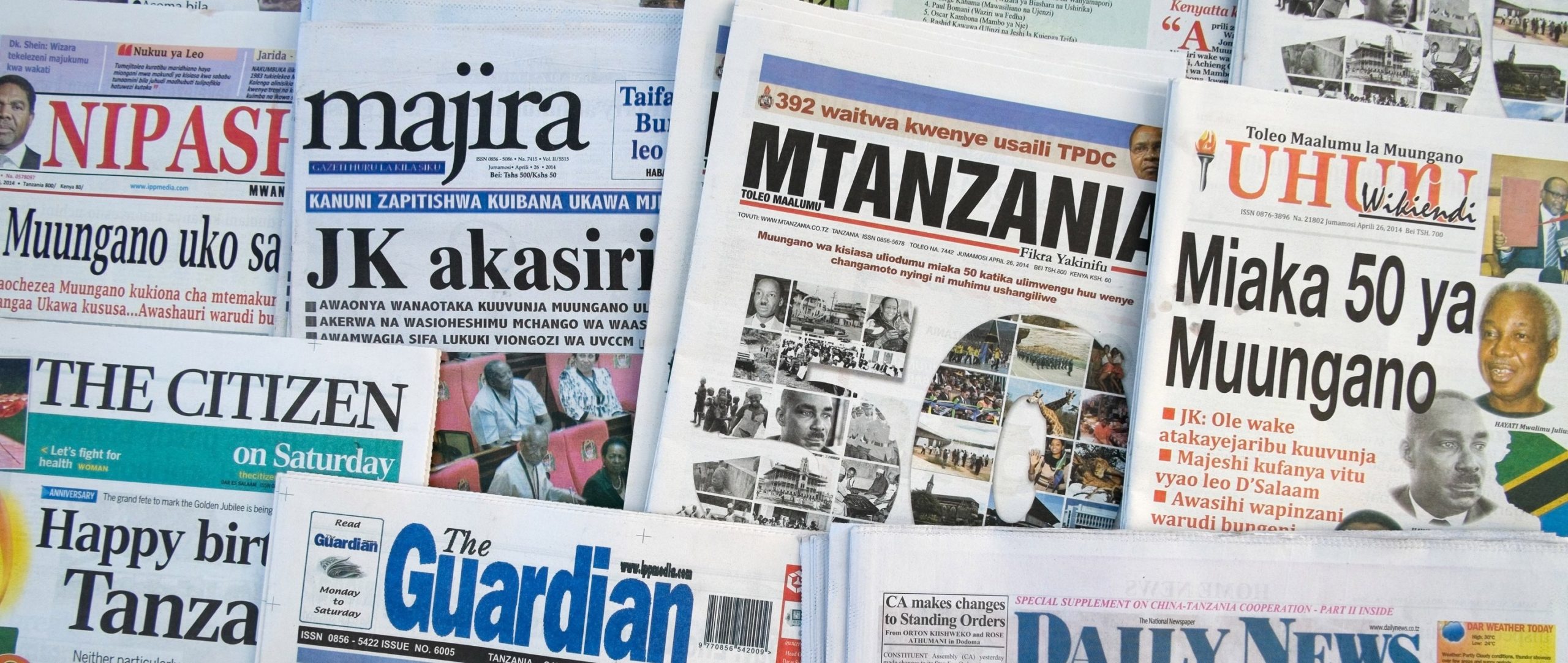
Concerns over press freedom have resurfaced in the Tanzania as journalists, media houses, and rights organizations report increased regulatory pressure on reporting, particularly on governance, elections, and corruption-related investigations. The debate has intensified in recent weeks in Dar es Salaam and other urban centres, where several media outlets claim they are operating under heightened scrutiny linked to licensing requirements, content monitoring, and enforcement of media compliance rules.
According to statements from journalist associations and media watchdog groups, at least a number of privately owned newspapers, radio stations, and online platforms have reported receiving warnings or directives from regulatory authorities regarding coverage of politically sensitive stories. These claims have focused on reporting related to public accountability, opposition activities, and state institutions, with journalists alleging that editorial independence is being increasingly constrained through administrative and legal pressure rather than formal bans.
The concerns come against the backdrop of Tanzania’s regulatory framework for media, which includes the Tanzania Communications Regulatory Authority (TCRA), responsible for licensing broadcasters and overseeing compliance with communications standards. Media practitioners argue that while regulation is necessary, enforcement has at times been perceived as uneven, particularly in cases involving investigative reporting or criticism of public officials.
International press freedom monitors, including the Committee to Protect Journalists (CPJ) and Reporters Without Borders, have previously flagged concerns about shrinking civic space in Tanzania, citing incidents involving temporary suspensions of outlets, restrictions on live political coverage, and legal disputes over reporting standards. In past years, these organizations have ranked Tanzania as a country where journalists face moderate to significant operational constraints, particularly during politically sensitive periods.
Media workers in Tanzania argue that the current climate has contributed to growing self-censorship, with editors reportedly avoiding topics considered high-risk, including allegations of corruption, electoral disputes, and governance failures. Some journalists say that even indirect signals—such as informal warnings or regulatory reminders—can influence editorial decisions, especially in smaller outlets with limited legal resources.
Authorities, however, have strongly rejected allegations of censorship. The government maintains that media regulations are designed to ensure professionalism, prevent misinformation, and safeguard national security. Officials argue that enforcement actions are based on violations of broadcasting and publication standards rather than political considerations, emphasizing that Tanzania continues to uphold constitutional protections for freedom of expression under its legal framework.
The Ministry of Information, Culture, Arts and Sports (Tanzania) has reiterated that all media organizations must comply with existing laws governing accuracy, licensing, and ethical reporting. Government representatives have also pointed to the rise of digital misinformation as a key justification for stronger oversight, arguing that unregulated content could undermine public trust and national cohesion.
Despite these assurances, journalist unions and civil society groups are calling for clearer legal safeguards to protect editorial independence, including reforms to ensure transparent enforcement procedures and independent review mechanisms for disputed regulatory actions. They argue that ambiguity in media laws can leave room for discretionary enforcement, which may affect coverage of sensitive political issues.
Analysts note that Tanzania’s media environment has fluctuated over the past decade, with periods of liberalization followed by tighter regulation, particularly around election cycles. They also point out that the current debate reflects a broader regional trend in East Africa, where governments are increasingly tightening controls over both traditional and digital media in response to political tensions and the rapid spread of online information.
As discussions continue, stakeholders are urging dialogue between regulators, journalists, and civil society to balance national security concerns with the need for independent reporting. For now, uncertainty remains within the media sector as outlets navigate evolving regulatory expectations while continuing to report on governance and public interest issues under close scrutiny.