


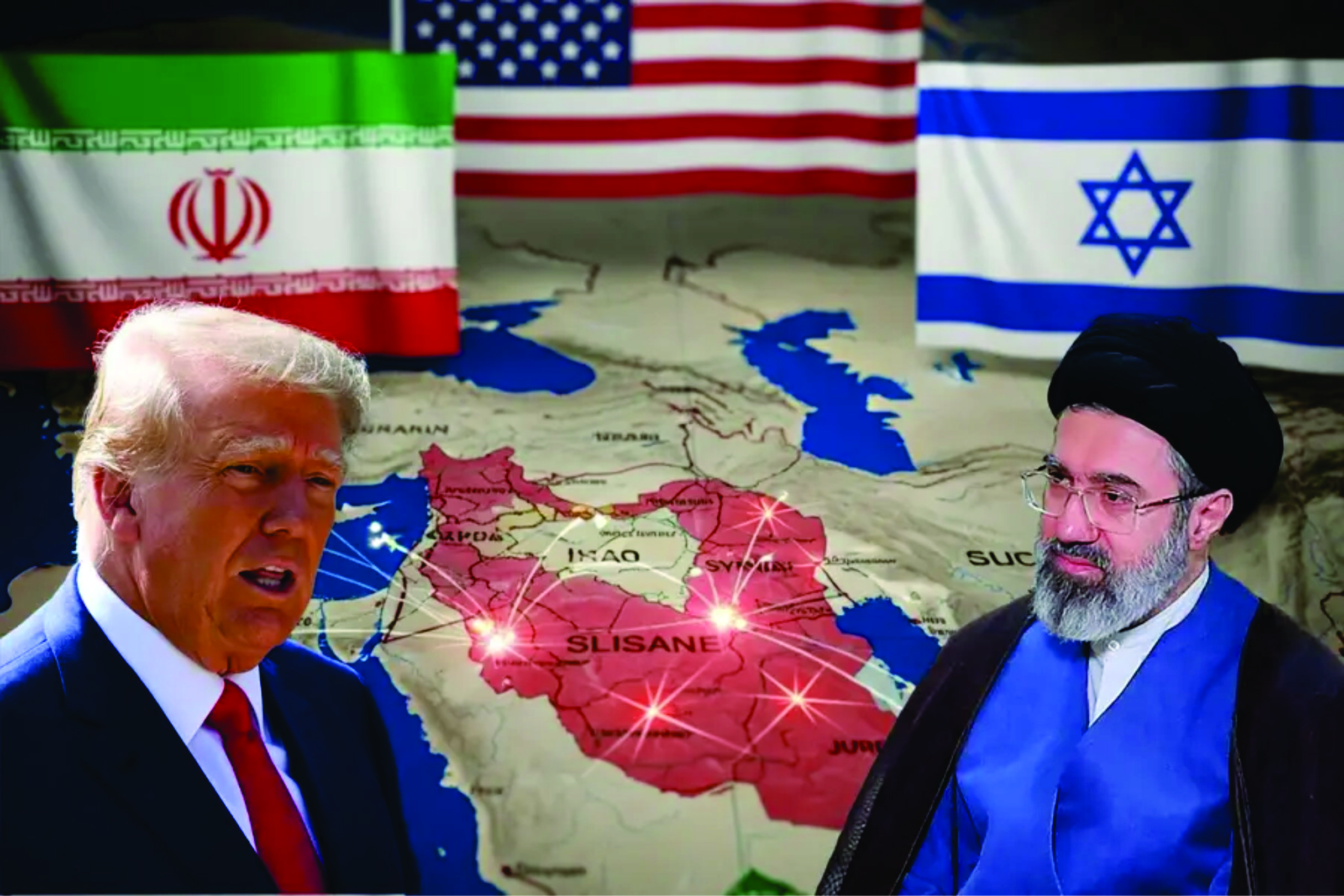
A fragile ceasefire between the United States and Iran is facing mounting pressure, as renewed tensions, unresolved disputes, and continued military activity across the Middle East threaten to unravel a truce that was meant to halt weeks of escalating conflict and restore a measure of stability to global security and energy markets.
The ceasefire, announced between April 7 and April 8, 2026, came after nearly six weeks of sustained hostilities that marked one of the most dangerous confrontations between Washington and Tehran in recent years. The conflict saw coordinated U.S. and allied strikes targeting Iranian military installations, missile infrastructure, and strategic positions across parts of the Gulf, alongside retaliatory actions by Iranian forces and affiliated groups operating in Iraq, Syria, and maritime zones near the Strait of Hormuz. The agreement, reportedly facilitated through backchannel diplomacy involving regional intermediaries in Islamabad and Muscat, was designed as a temporary de-escalation measure, giving both sides space to negotiate broader security arrangements.
Despite initial optimism, the ceasefire has proven highly fragile. Within 48 hours of its announcement, disputes began to emerge over its interpretation and implementation. Central to the disagreement is the status of the Strait of Hormuz, a narrow but vital maritime passage through which a substantial portion of the world’s oil supply transits daily. The United States, under President Donald Trump, has insisted that the ceasefire requires the immediate and unconditional reopening of the waterway to all commercial traffic. U.S. officials argue that any restrictions, delays, or conditions imposed on shipping effectively undermine the agreement and risk triggering broader economic consequences.
Iran, however, has taken a markedly different position. Authorities in Tehran have maintained that while they are not formally closing the strait, they retain full sovereign authority to regulate maritime traffic for security purposes. Iranian naval patrols have increased their presence in the area, conducting inspections and, in some cases, delaying vessels for extended periods. By April 9, maritime tracking data indicated that hundreds of ships were either queued or rerouted, creating a backlog that has disrupted global supply chains. Iranian officials have also floated the possibility of introducing transit frameworks or monitoring mechanisms, proposals that Washington and its allies have rejected outright.
The standoff over the Strait of Hormuz has quickly become a flashpoint within the ceasefire, symbolizing deeper mistrust between the two sides. President Trump has issued a series of increasingly stern warnings, stating that failure to ensure full and open access to the waterway could lead to a resumption of military operations. U.S. naval assets, including carrier strike groups and surveillance aircraft, remain deployed across the Gulf in a posture that underscores the tenuous nature of the truce.
Compounding the situation is the lack of clarity surrounding the ceasefire’s broader terms. Officials in Washington and Tehran have offered conflicting accounts of what was agreed, particularly regarding enforcement mechanisms, timelines, and expectations for de-escalation beyond immediate hostilities. The White House has framed the agreement as a strategic success that has forced Iran to reconsider its posture, while Iranian leaders have emphasized that they have made no concessions on core issues, including their regional alliances and nuclear activities.
This divergence in narratives has fueled a steady exchange of accusations. U.S. officials have alleged that Iran is violating the spirit of the ceasefire through its actions in the Gulf and through the continued activities of allied militias in the region. Iranian authorities, in turn, have accused the United States of maintaining aggressive surveillance operations, sustaining a heavy military footprint, and indirectly supporting actions by regional allies that contradict the objectives of de-escalation. These competing claims have heightened the risk of miscalculation, particularly in an environment where forces remain in close proximity.
Beyond the immediate U.S.–Iran dynamic, the broader regional landscape continues to complicate efforts to sustain the ceasefire. Israeli military operations in Lebanon have persisted, with airstrikes targeting positions linked to Iranian-backed groups. Tehran has strongly criticized these actions, arguing that they undermine the credibility of the ceasefire and expose what it describes as a double standard in U.S. policy. Iranian officials have signaled that continued violence involving U.S. allies could influence their willingness to adhere to the agreement, raising concerns that the ceasefire could collapse not only due to direct confrontation but also because of parallel conflicts.
The humanitarian and security implications of the recent hostilities remain significant. In parts of southern Iraq and eastern Syria, where Iranian-aligned groups maintain a presence, local populations continue to face instability, displacement, and disruptions to essential services. Military analysts warn that even a localized incident—such as an accidental naval encounter, a misinterpreted radar signal, or an attack by a non-state actor—could rapidly escalate into a broader confrontation, given the current level of tension and the absence of a robust verification mechanism.
The economic impact of the crisis is already being felt worldwide. Oil markets have reacted sharply to the uncertainty surrounding the Strait of Hormuz, with prices climbing amid fears of supply disruptions. Energy-dependent economies, particularly in Africa and Asia, are bracing for potential inflationary pressures and increased import costs. Shipping companies have reported rising insurance premiums for vessels operating in the Gulf, while some have begun rerouting cargo to avoid the entirely, adding to delays and logistical challenges.
Financial markets have also shown signs of volatility. European and Asian indices have fluctuated in response to developments in the Gulf, reflecting investor anxiety over the possibility of renewed conflict. Analysts note that the current situation underscores the interconnected nature of geopolitical risk and global economic stability, with even limited disruptions in a critical region capable of producing far-reaching consequences.
Diplomatic efforts to stabilize the ceasefire are ongoing but face significant hurdles. Talks are expected to continue in Islamabad, where intermediaries are working to reconcile differences and establish clearer parameters for the agreement. Oman has also been identified as a potential venue for follow-up negotiations, given its history of facilitating dialogue between Washington and Tehran. However, progress has been slow, with both sides appearing reluctant to make concessions that could be perceived domestically as a sign of weakness.
Observers suggest that while neither the United States nor Iran appears eager to return to full-scale conflict, the current trajectory remains uncertain. The ceasefire, as it stands, is less a comprehensive agreement than a temporary pause in hostilities, lacking the detailed framework needed to ensure long-term stability. Without clearer terms, stronger communication channels, and mutual confidence-building measures, the risk of collapse remains high.
As of April 10, 2026, the ceasefire continues to hold in a technical sense, but its foundations are increasingly fragile. The coming days are expected to be critical, as diplomatic engagements intensify and both sides assess their strategic options. Whether the truce can evolve into a more durable arrangement or gives way to renewed confrontation will depend largely on the ability of leaders in Washington and Tehran to navigate a complex web of military, political, and economic pressures in one of the world’s most volatile regions.