


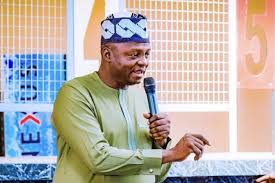
The National Chairman of the All Progressives Congress, Professor Nentawe Yilwatda, says Governor Siminalayi Fubara was duly cleared to contest the party’s governorship primary in Rivers State before voluntarily withdrawing from the race.
Yilwatda dismissed claims that the governor was pressured out of the process, insisting that Fubara fully participated in the APC nomination procedure by purchasing forms, appearing before the screening committee, and successfully securing clearance to contest.
He explained that the governor later chose to step down on personal grounds before the commencement of the primary election, stressing that the party did not disqualify or sideline him at any stage.
According to him, “He pulled out, he stepped down. It is personal to him. He bought the forms, came for screening, passed the screening, and we were waiting for the primaries before he opted out.”
The APC chairman also rejected suggestions that the Minister of the Federal Capital Territory, Nyesom Wike, influenced the party’s internal process in Rivers State, stating that Wike is not a member of the ruling party and has no control over its decisions.
He maintained that the APC conducted a transparent and orderly screening process in line with its internal guidelines ahead of the primaries.
Governor Fubara had earlier announced his withdrawal from the APC governorship race, describing it as a personal sacrifice aimed at promoting peace, unity, and stability in Rivers State ahead of the 2027 general elections.
The governor, however, insisted that his decision should not be seen as weakness or surrender, saying he remains focused on completing his current tenure and delivering governance to the people of the state.
Meanwhile, political tensions in Rivers State continue to intensify, with competing factions within the state’s political structure trading accusations over control of party machinery and influence ahead of the next election cycle.
Observers say the developments highlight the deepening political realignments in Rivers State, where rival blocs continue to shape emerging electoral strategies ahead of 2027.


