


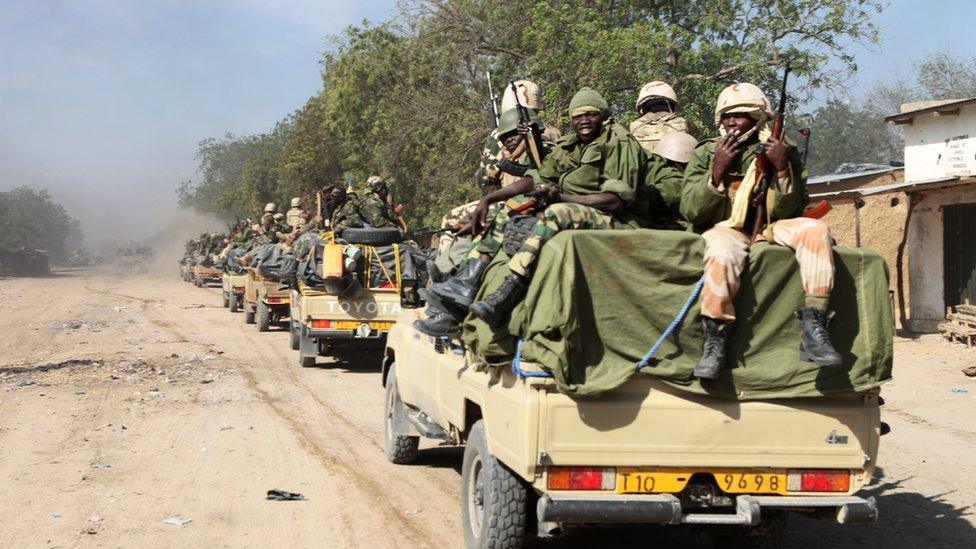
Chad has declared a 20-day state of emergency in its troubled Lake Chad region following a fresh wave of deadly attacks by Boko Haram insurgents, raising fears of escalating insecurity across the Lake Chad Basin.
The emergency measure was announced on Thursday after coordinated assaults on military positions left at least 26 Chadian soldiers dead, including two senior generals. The attacks have triggered nationwide mourning and prompted the government to intensify military operations against insurgent groups operating around the lake.
Government spokesman Gassim Cherif said the decision followed an emergency security review by authorities, who expressed concern over the worsening humanitarian and security situation in the region. According to him, repeated Boko Haram raids have forced many civilians to flee their homes, while communities continue to face growing threats to lives, livelihoods, and property.
One of the deadliest incidents occurred at the Barka Tolorom military base near Lake Chad, where heavily armed insurgents launched a surprise attack that reportedly killed at least 24 soldiers and injured several others. Security officials say the attackers used the difficult terrain and remote island networks around the lake to carry out the ambush before retreating.
In response, Chadian troops have launched fresh counterterrorism operations aimed at tracking down militant hideouts and restoring order in the affected areas. Authorities say additional security personnel and equipment have also been deployed to reinforce vulnerable communities and military formations.
President Mahamat Idriss Deby has meanwhile commended Nigeria for its continued cooperation and support in regional counterterrorism efforts. Chad and Nigeria, alongside Cameroon and Niger, have worked together under the Multinational Joint Task Force to combat Boko Haram and Islamic State West Africa Province, ISWAP, whose activities continue to threaten stability in the region.
The Lake Chad area, which borders Chad, Nigeria, Niger, and Cameroon, has for years remained a major hotspot for extremist violence. The vast marshlands and isolated islands have provided cover for insurgent fighters, making military operations difficult despite repeated offensives by regional forces.
Security analysts warn that the renewed attacks highlight the resilience of Boko Haram factions and the urgent need for stronger regional coordination, intelligence sharing, and humanitarian support for displaced communities affected by the prolonged conflict.

