


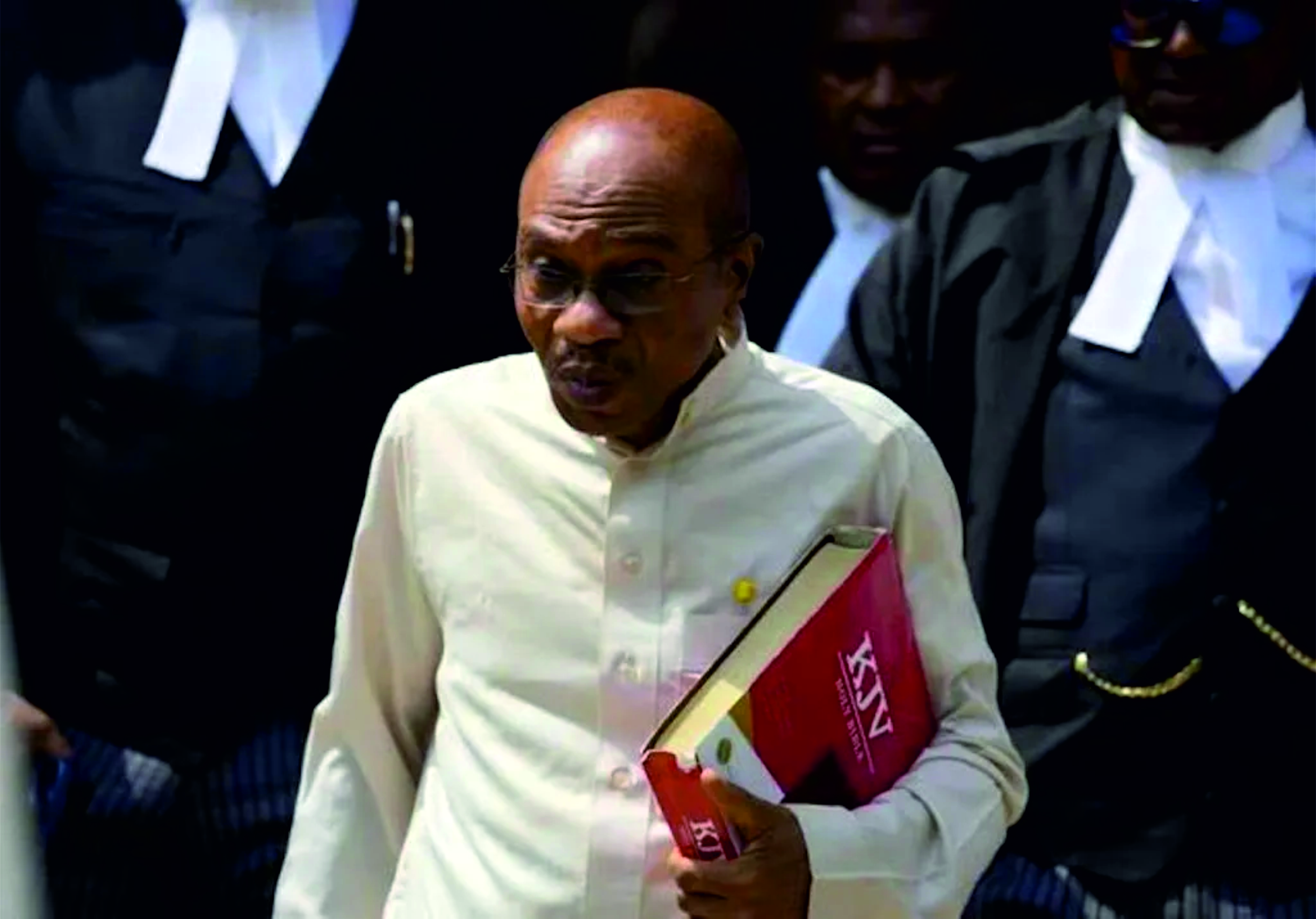
A defence counsel in the ongoing fraud trial involving former Central Bank of Nigeria (CBN) Governor Godwin Emefiele has told a Lagos court that the Economic and Financial Crimes Commission (EFCC) allegedly pressured his client to provide incriminating evidence against the ex-CBN chief. The allegation emerged on Thursday, 15th January during a trial-within-a-trial before Justice Rahman Oshodi of the Special Offences Court in Ikeja, where the judge is examining whether statements made by co-defendant Henry Omoile to the EFCC were voluntarily given.
Omoile and Emefiele are jointly facing allegations of corruption, unlawful acceptance of gifts, gratification and fraud relating to approximately $4.5 billion and ₦2.8 million in contested transactions. Both defendants pleaded not guilty to all counts. During his testimony, defence lawyer Nnamdi Offial told the court that EFCC investigators allegedly promised Omoile bail and possible non-prosecution if he cooperated by providing evidence linking the former CBN governor to wrongdoing. Offial claimed this inducement was presented as a leniency offer to secure testimony against Emefiele. Investigators also allegedly conducted the questioning in a strict question-and-answer format, restricting Omoile’s ability to write responses unless they conformed to what his interrogators wanted.
Offial said that during one session, an EFCC officer identified as “David” confronted him when he questioned the interrogation process and removed him from the premises. Omoile was reportedly detained for 21 days before a Federal High Court granted him bail, with remand in Ikoyi Correctional Centre until bail conditions were met. Under cross-examination, Offial acknowledged that Omoile was cautioned in his presence, signed a cautionary statement, and that the judge in the fundamental rights suit did not find the EFCC guilty of misconduct. The trial-within-a-trial was adjourned to continue on January 16, 2026, with the court expected to rule on the admissibility of Omoile’s statements as evidence in the main case on both defendants.