


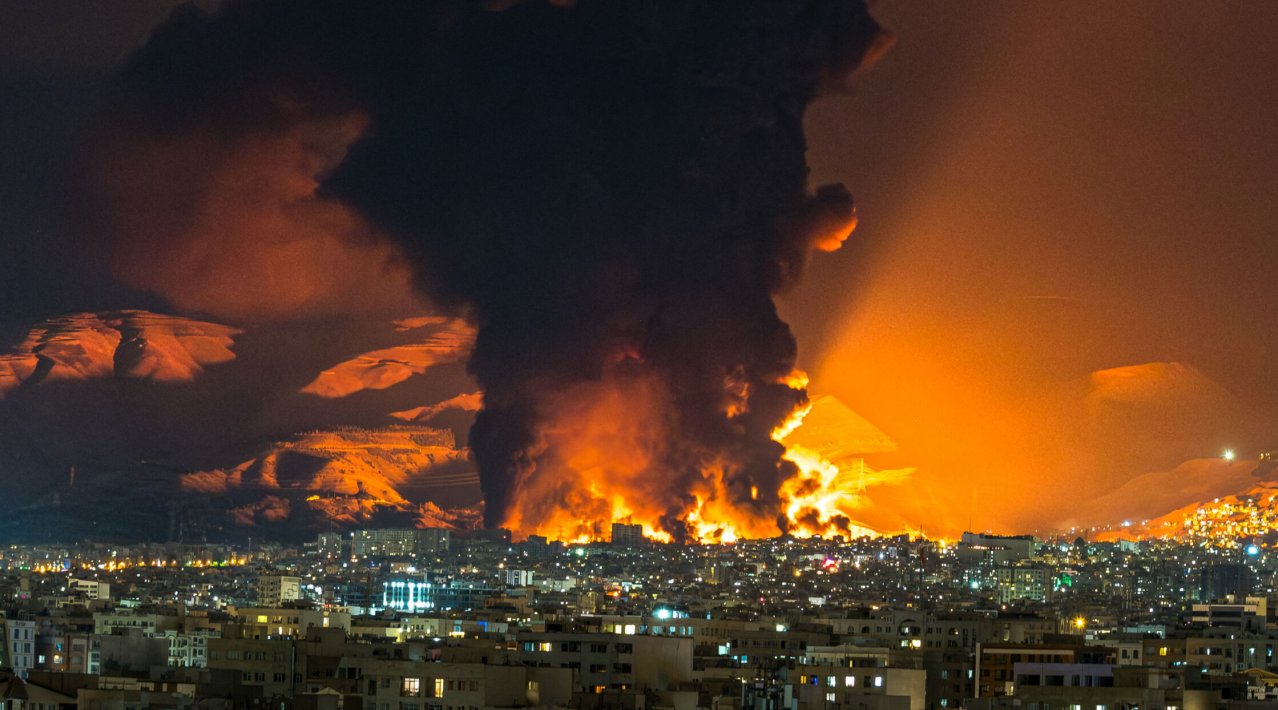
On 25 March 2026, a drone attack triggered a significant fire at Kuwait International Airport, heightening tensions across the Gulf region amid an already volatile security environment linked to ongoing Middle East conflicts.
According to official statements released by Kuwait’s General Civil Aviation Authority, the incident occurred in the early hours of Wednesday when multiple unmanned aerial vehicles entered Kuwaiti airspace and targeted critical infrastructure within the airport vicinity. One of the drones struck a fuel storage facility located within the airport complex, causing a powerful explosion that ignited a large fire. Thick plumes of smoke were seen rising from the site, prompting immediate emergency response measures.
Firefighters, civil defence units, and airport emergency teams were rapidly deployed to the scene. Authorities confirmed that the blaze was contained after an intensive firefighting operation that lasted several hours. Despite the severity of the fire, no fatalities were recorded, and only minor injuries were reported among airport personnel. Emergency medical teams treated affected workers on-site, preventing the situation from escalating into a larger humanitarian crisis.
Kuwait’s Ministry of Defence, through its official spokesperson Colonel Staff Saud Al-Atwan, disclosed that the country’s air defence systems were activated immediately upon detection of the incoming threats. According to the ministry, several drones and projectiles were successfully intercepted and neutralized before reaching their intended targets. However, at least one drone managed to evade interception and strike the fuel depot, leading to the explosion and subsequent fire.
Although Kuwaiti authorities have not officially confirmed the origin of the attack, security analysts and regional observers have linked the incident to a broader pattern of escalating hostilities involving Iran and its regional proxies. The attack is believed to be part of a coordinated wave of drone and missile strikes targeting strategic infrastructure across the Gulf, including oil facilities, military bases, and transportation hubs in countries such as Bahrain and Jordan.
The incident marks one of several recent security breaches affecting Kuwait’s key infrastructure. Earlier in March 2026, the airport reportedly experienced similar drone-related incidents that caused damage to sections of its radar systems and operational facilities. While those earlier attacks resulted in limited disruption, they raised serious concerns about the vulnerability of civilian aviation infrastructure in conflict-prone regions.
Despite the latest attack, Kuwaiti authorities reassured the public and international partners that operations at Kuwait International Airport remain largely functional. Flights experienced temporary delays during the emergency response, but normal operations resumed shortly after the fire was brought under control. Aviation authorities emphasized that safety protocols were strictly followed, and no passengers were placed in direct danger during the incident.
The government has since ordered a comprehensive investigation into the attack, focusing on identifying the source, flight path, and technological specifications of the drones used. Security around key national assets, including airports, facilities, and government installations, has been significantly reinforced, with additional surveillance and defence measures deployed across the country.
The attack has drawn international attention, with global leaders expressing concern over the increasing use of drones in modern warfare and their potential to disrupt civilian infrastructure. Analysts warn that such incidents could have far-reaching implications for global energy markets, aviation security, and regional stability, particularly in the Gulf, which remains a critical hub for international trade and oil production.
As tensions continue to rise, the situation underscores the growing risks faced by countries in the Middle East, where evolving military technologies and geopolitical rivalries are increasingly intersecting with civilian life. The fire at Kuwait’s main airport serves as a stark reminder of how rapidly regional conflicts can spill over into critical infrastructure, posing threats not only to national security but also to global economic stability.