


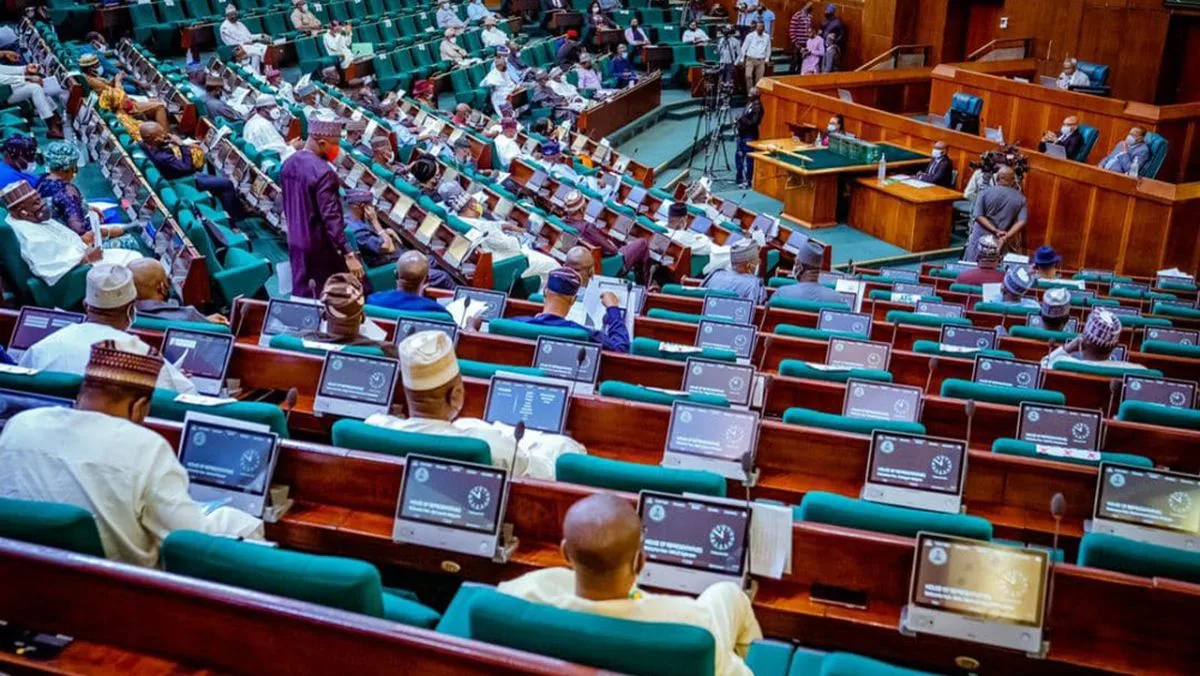
Tension flared on the floor of Nigeria’s House of Representatives on Wednesday after lawmakers engaged in a heated exchange over a proposal to invite President Bola Tinubu to explain the slow implementation of the 2025 Appropriation Act.
The drama unfolded during plenary when Benedict Etanabene, the lawmaker representing the Okpe/Sapele/Uvwie Federal Constituency of Delta State, raised concerns about a recent directive issued by Accountant-General of the Federation, Shamseldeen Ogunjimi.
Etanabene criticized a June 29 circular instructing all federal Ministries, Departments and Agencies (MDAs) to immediately suspend the processing of payments for Constituency and Zonal Intervention Projects (ZIPs) until the projects receive clearance from the Federal Ministry of Special Duties and Intergovernmental Affairs.
According to the lawmaker, the directive introduces an unnecessary layer of bureaucracy that was not included in the 2025 Appropriation Act. He warned that the move could delay the execution of already approved constituency projects, affecting development efforts across the country.
In response, Etanabene called on the House to invite President Tinubu to provide an explanation for the slow pace of budget implementation and the reasons behind the new payment restrictions.
His proposal immediately divided lawmakers. While some members backed the call for greater executive accountability, others opposed the idea of inviting the President, arguing against the move. The disagreement quickly escalated into a rowdy session, with lawmakers shouting across the chamber and briefly disrupting proceedings.
The controversial circular, issued on June 29, requires all MDAs to obtain approval from the Ministry of Special Duties and Intergovernmental Affairs before payments for constituency and zonal intervention projects can be processed. Government officials say the measure is designed to improve oversight and accountability in project implementation.
However, critics insist the directive could further slow the release of funds and undermine the timely delivery of projects already captured in the 2025 federal budget.
As of the time of the debate, the House had not reached a formal resolution on whether President Tinubu would be invited to appear before lawmakers.