


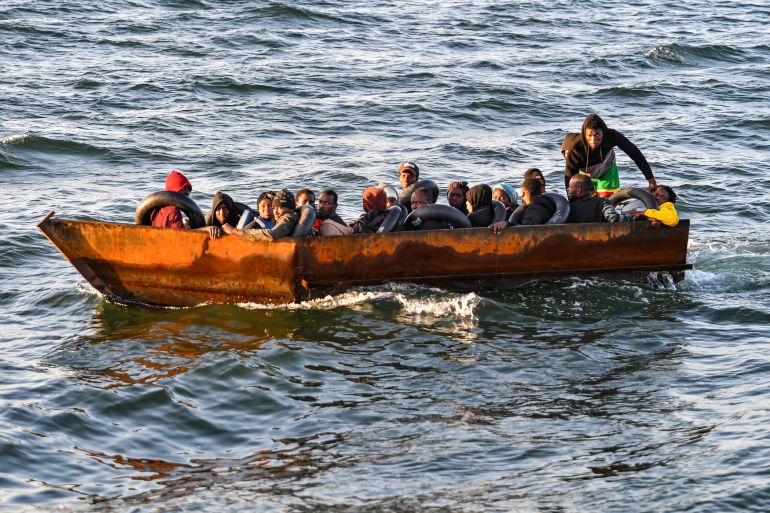
Nearly 8,000 people died or disappeared along global migration routes in 2025, according to new data released by the International Organization for Migration, highlighting the continuing human cost of dangerous journeys taken by people fleeing conflict, poverty, persecution, and climate-related hardship.
The agency said 7,904 migrants were recorded as dead or missing last year. Although lower than the record 9,197 reported in 2024, officials warned that the decline does not necessarily reflect safer migration conditions. Instead, they said the reduction may partly be linked to missing data and underreporting, with around 1,500 suspected cases remaining unverified due to cuts in humanitarian assistance and monitoring operations.
The figures were published in the IOM’s latest global report on migrant deaths and disappearances, which tracks fatalities across major land and sea migration corridors.
Officials described the findings as a reminder of the international community’s failure to protect vulnerable people on the move.
“These figures bear witness to our collective failure to prevent these tragedies,” said Maria Moita, who heads the agency’s humanitarian and response department.
According to the report, sea crossings toward Europe remained the deadliest migration routes in 2025. More than four in every 10 recorded deaths or disappearances occurred on maritime paths leading to the continent.
Many of those cases involved what the agency calls “invisible shipwrecks” incidents in which overcrowded or unsafe boats vanish at sea without survivors, witnesses, or confirmed wreckage.
Such tragedies often leave families with no information about the fate of loved ones, no remains to bury, and no formal closure.
The Mediterranean Sea and surrounding maritime corridors have long been among the world’s most dangerous migration routes, with migrants departing from North Africa, the Middle East, and parts of Asia in hopes of reaching Europe.
Even as total arrivals to Europe reportedly declined in 2025, the IOM said migration patterns changed significantly.
The report noted that nationals of Bangladesh became the largest group arriving in Europe last year, while the number of arrivals from Syria fell following political and policy changes.
This shift suggests migration pressures are increasingly influenced not only by war, but also by economic instability, climate stress, labour displacement, and changing border enforcement strategies.
Elsewhere, the West African migration route northward accounted for approximately 1,200 deaths.
That route, used by migrants attempting to reach North Africa or the Canary Islands before entering Europe, has become increasingly dangerous in recent years due to long sea distances, unregulated smuggling networks, and harsh ocean conditions.
The report also recorded a record number of deaths across Asia.
Among those victims were hundreds of Rohingya refugees fleeing violence in Myanmar or desperate living conditions in overcrowded refugee camps in Bangladesh.
For many Rohingya families, unsafe sea journeys remain one of the few perceived escape routes from prolonged displacement and insecurity.
The IOM said the data shows migration routes are not becoming safer, but are instead changing shape in response to global pressures.
Conflicts, environmental shocks, political instability, border crackdowns, and economic hardship are pushing migrants onto longer, riskier, and less visible routes.
“Routes are shifting in response to conflict, climate pressures and policy changes, but the risks are still very real,” said IOM Director General Amy Pope.
She added that behind every number is a human story.
“Behind these numbers are people taking dangerous journeys and families left waiting for news that may never come,” Pope said.
Since 2014, more than 82,000 migrant deaths and disappearances have been recorded worldwide, according to the agency.
The IOM estimates that roughly 340,000 family members have been directly affected by those losses, including spouses, parents, children, and siblings left without answers.
Humanitarian organisations say the real number is likely far higher because many deaths go unrecorded, especially in deserts, remote border zones, forests, rivers, and open seas where bodies are never recovered.
The agency emphasised that reliable data remains essential for saving lives.
By understanding where people are dying, why routes are changing, and which populations are most vulnerable, governments and aid groups can design better interventions.
Those may include search-and-rescue operations, safer legal migration pathways, stronger asylum systems, anti-smuggling efforts, and emergency support in transit regions.
Without such measures, experts warn, desperate people will continue to rely on traffickers and unsafe journeys.
The report arrives as migration remains a deeply contested political issue in many parts of the world, particularly Europe and North America.
Some governments have tightened borders and expanded deportation policies, while rights groups argue that deterrence strategies often push migrants into even greater danger.
The IOM did not frame migration solely as a border management issue, but as a humanitarian challenge requiring international cooperation.
For many migrants, the choice to move is not driven by opportunity alone, but by survival.
Whether fleeing war, persecution, hunger, collapsing economies, or climate disasters, millions continue to risk everything in search of safety.
The nearly 8,000 deaths recorded in 2025 serve as a stark reminder that behind global migration debates are lives lost in silence, families left grieving, and routes that remain as deadly as ever.

