


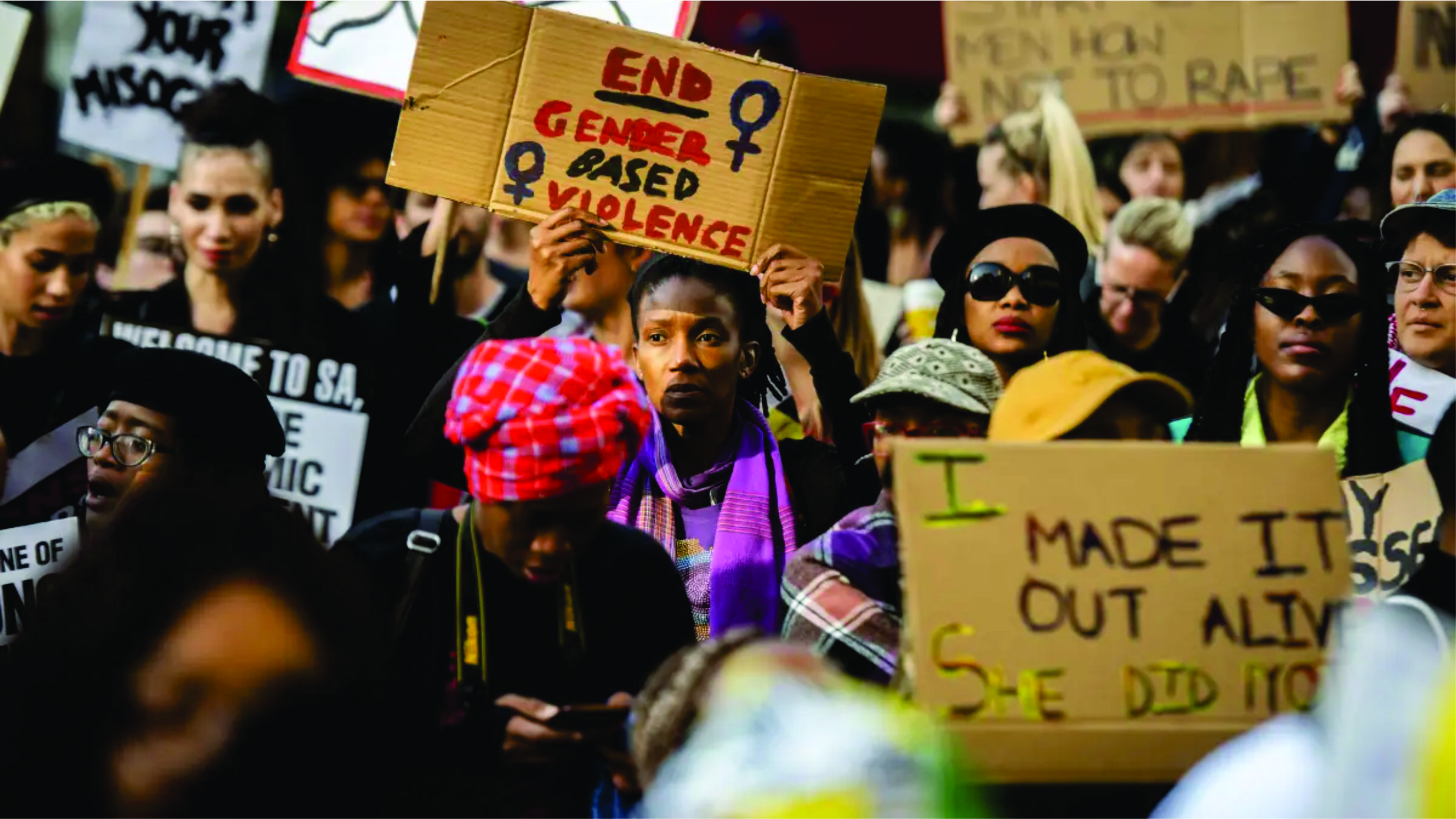
South Africa is once again confronting a deepening social crisis as renewed public outrage spreads across major cities over rising cases of teenage pregnancy, child sexual abuse, and gender-based violence. The situation, which activists and civil society groups now describe as a “national emergency,” has triggered protests, policy demands, and urgent calls for systemic reform.
The crisis has intensified in recent weeks following multiple reports highlighting alarming statistics of child pregnancies, including cases involving girls reportedly as young as 10 to 12 years old in parts of KwaZulu-Natal, Eastern Cape, and Eastern Cape.
According to preliminary briefings shared by child protection organizations, tens of thousands of teenage pregnancies have been recorded over the past year, though activists argue the true figures may be significantly higher due to underreporting, particularly in rural and underserved communities.
In Pretoria, pressure is mounting on the administration of President Cyril Ramaphosa, as advocacy groups accuse the state of failing to adequately enforce child protection laws and safeguard vulnerable minors.
The South African Police Service (SAPS), led by National Commissioner Fannie Masemola, has also come under scrutiny following renewed allegations that rape and sexual assault cases involving minors are being underreported or delayed in investigation.
Officials within the Department of Women, Youth and Persons with Disabilities, alongside provincial authorities in Gauteng, KwaZulu-Natal, and Eastern Cape, have acknowledged growing pressure but maintain that existing child protection frameworks remain in place while reforms are being reviewed.
Civil society organizations, including Sonke Gender Justice and Save the Children South Africa, have jointly condemned what they describe as “systemic failures in child safeguarding mechanisms,” urging immediate national intervention.
Between April 8 and April 12, 2026, demonstrations were reported in Johannesburg, Cape Town, and Durban, where protesters marched under slogans demanding “Justice for Children” and “End Gender-Based Violence Now.”
In Johannesburg’s Braamfontein district, student-led groups from the University of the Witwatersrand (Wits University) and women’s rights coalitions staged sit-ins outside government offices, calling for faster prosecution of sexual offenders and improved school-based protection systems.
In Cape Town, activists gathered near the Western Cape Provincial Legislature, urging lawmakers to prioritize emergency funding for survivor support centers and child protection units.
Health officials in Limpopo Province, Eastern Cape, and parts of KwaZulu-Natal have raised concerns over inconsistent reporting mechanisms between hospitals, schools, and police stations, including delays in opening case files at local police stations such as Johannesburg Central SAPS and Durban Central SAPS.
Authorities have confirmed that several investigations are ongoing across multiple districts, but have not publicly released the names of alleged perpetrators or victims, citing legal protections for minors and the sensitivity of active cases.
A senior official within the National Prosecuting Authority (NPA) in Pretoria stated that case backlogs remain a significant challenge, particularly in sexual offence courts, though dedicated units are being expanded to address the rising caseload.
Advocacy groups argue that official statistics still do not reflect the full scale of abuse, citing gaps in rural reporting systems, limited access to healthcare in remote communities, and fear of stigma that discourages victims from speaking out.
A spokesperson for a Pretoria-based child protection coalition reiterated that “what is being reported is only a fraction of what is actually happening on the ground,” warning that South Africa is facing a “silent epidemic of abuse” that requires urgent national coordination.
As pressure intensifies, South Africa finds itself at a critical juncture between policy reform and continued public unrest. Activists warn that without immediate and coordinated intervention, the crisis could deepen further, eroding trust in institutions and leaving thousands of vulnerable children without protection.
For now, protests continue to spread across major urban centers, while civil society groups are calling for sustained national mobilization until meaningful reforms are implemented.


